

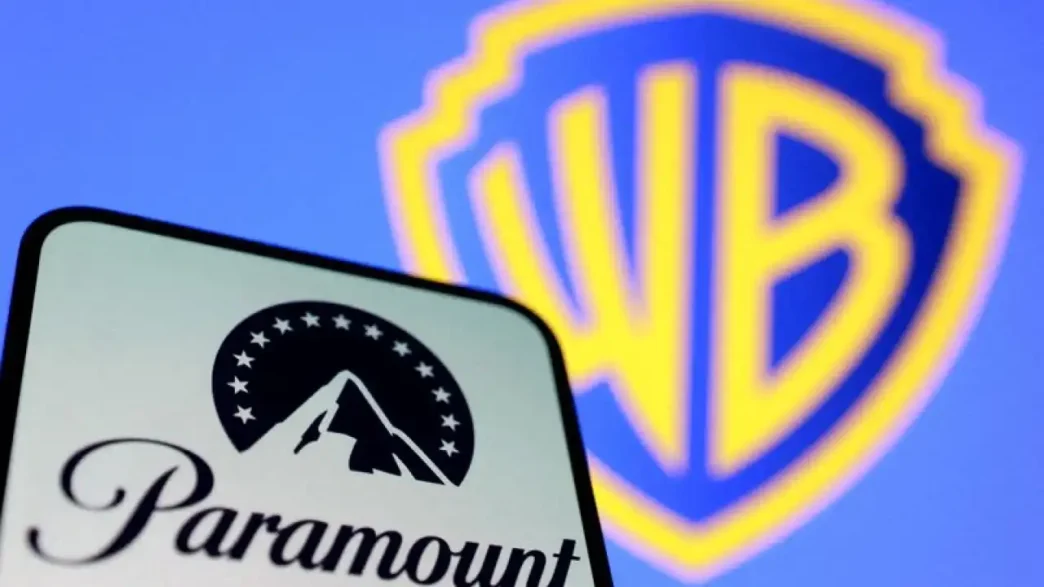
A judge Monday temporarily blocked Paramount Skydance Corp.’s $110 billion takeover of fellow media giant Warner Bros. Discovery Inc.
U.S. District Judge Araceli Martinez-Olguin granted a request for a temporary restraining order in a lawsuit by 12 states alleging the proposed merger violates federal antitrust law.
The order in U.S. District Court for the Northern District of California stalls the case for 14 days while the judge considers a full preliminary injunction, which would suspend the merger until the lawsuit concludes.
The next hearing in the case is set for Aug. 3, according to court documents.
California Attorney General Rob Bonta is leading the multistate coalition in the lawsuit and welcomed Monday’s ruling.
“This is a critical first win in our case to ensure this megamerger never sees the light of day,” Bonta said in a statement. “History tells the tale of what happens when a few people have great power over markets that are central to Americans’ lives: fewer opportunities for more people, worse products and services for all people. With our lawsuit, we’re fighting for a free and fair market and a thriving film and television industry that serves creatives and audiences alike. We have a full tank of gas, the law on our side and look forward to continuing to make our case.”
Paramount, which is based on Melrose Avenue in Hollywood, provided a statement about the ruling on Tuesday.
“We are grateful for the Court’s swift order on the motion for a (temporary restraining order),” a company spokesperson said. “Like the timing agreement to which we were willing to stipulate, this TRO preserves the status quo while the Court considers the antitrust issues presented.
“We are confident the evidence will demonstrate that the State AGs’ antitrust arguments are without merit as their alleged markets and claims of anticompetitive effects are without any basis in modern market realities,” the statement continued. “This merger is lawful, pro-competitive, and will benefit consumers, creators, workers, and the entertainment industry. We will continue to vigorously defend the transaction and will look forward to the hearings on the substance of the State AGs’ action.”
Attorneys delivered arguments Friday, but the court did not immediately issue a ruling on the bid for the two-week halt to the litigation.
The states’ lawsuit was filed July 13, alleging that Paramount’s takeover bid violates Section 7 of the Clayton Act. The statute says mergers are illegal if they significantly lessen competition or tend to create a monopoly.
Paramount CEO David Ellison wants to acquire Burbank-based Warner Bros. Discovery in a $110 billion deal that was expected to close during this year’s third quarter.
According to the states’ lawsuit, the merger would “lead to higher prices, lower quality and less content for film and television, harming movie theaters, basic cable distributors, and ultimately, audiences on every sofa and movie theater seat in the U.S.”
In a July 13 statement, a Paramount spokesperson said the merger “will create a stronger, well-capitalized, creative-first media company that is better positioned to compete with companies like Netflix that have come to dominate the industry for audiences, premium content, and creative talent. Put simply, any attempt to block this transaction undermines the very principles antitrust law is designed to promote: more competition, more choice for consumers, and more opportunities for creators and workers.”
In addition to the U.S. Justice Department, competition regulators around the world have concluded that the merger will not pose any threat to competition, according to the company. Regulators in Australia, Austria, Brazil, Canada, China, the Common Market for Eastern and Southern Africa, Kuwait, Montenegro, New Zealand, North Macedonia, Saudi Arabia, Serbia, South Africa, South Korea and Ukraine have given competition clearances to Paramount’s proposed takeover. Paramount has also received foreign direct investment clearances in Australia, Germany, France, Spain, Slovenia, Belgium, Czechia, New Zealand, Italy and Romania.
The proposed merger is considered one of the largest media deals in history. Bonta said it would put one company in charge of nearly one-third of all theatrical motion picture and basic cable programming.
The Writers Guild of America filed a lawsuit Tuesday to kill the deal, claiming it violates federal antitrust law and would cause harm to writers.
The guild’s lawsuit, filed jointly in California’s Northern District by the WGA East and West, alleges the merger would reduce opportunities, lower pay and make writers’ working conditions worse.
The WGA suit contends that eliminating a large competitor and the creation of a new dominant corporation would reduce the number and content variety of theatrical films and television shows as the combined conglomerate would have more capability to reduce production output.
The writers’ suit also asserts that the merger would bolster the ability for the few remaining companies to tacitly coordinate to further suppress competition for writers’ work.
“With fewer competitors, the merged Paramount-Warner Bros. entity would have both the incentive and the ability to lower costs by suppressing writers’ wages and reducing output,” according to the WGA complaint. “Writers will be paid less and have fewer employment opportunities.”
According to Bonta’s office, movie theaters and TV distributors rely on competition between Paramount and Warner Bros. to incentivize creativity and secure competitive prices and terms for the companies and for their audiences. TV distributors negotiate with Paramount, Warner Bros. and other cable channel owners to acquire the rights to distribute that content to cable streaming subscribers.
Alternatives are essential in these negotiations as is the leverage that each entertainment company provides to TV distributors and movie theaters, officials said.
“For example, if Paramount insists on onerous financial terms, its negotiating partner can gain leverage by turning to Warner Bros. and vice versa,” according to Bonta’s office. “Paramount’s proposed acquisition of Warner Bros. will end this competition, threatening viewers with higher prices, the decline of theatrical exhibition of films, and a reduction in the variety, quality and amount of content distributed.”
A copy of the ruling in the states’ lawsuit is available on the attorney general’s website. The suit’s initial filing is also online.
Updated July 22, 2026, 9:20 a.m.