

A half-cent sales tax increase in Los Angeles County to support health care services amid federal spending cuts passed Wednesday after voters gave Measure ER a slim come-from-behind victory.
Early vote totals following the primary election June 2 showed the measure falling short, but as ballot counting continued it gained momentum over the weekend and narrowly surpassed the required 50% support.
With virtually all ballots counted as of Wednesday afternoon, the measure received 1,008,914 supportive votes, a difference of 24,436, or roughly 50.6% versus ballots cast against the measure — 984,478, or 49.4%.
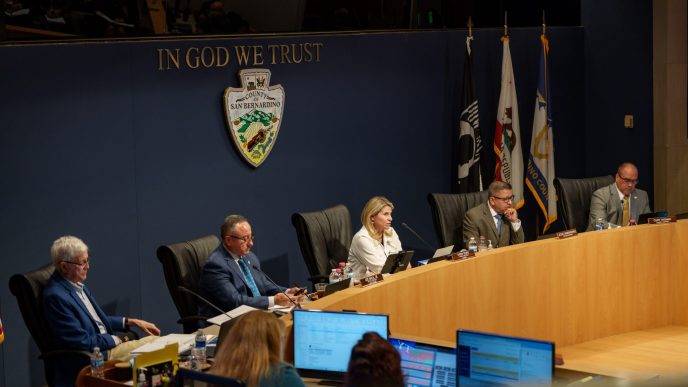
LA County Supervisors Holly Mitchell and Hilda Solis introduced Measure ER, or the Essential Services Restoration Act, in January. The half-cent general sales tax increase lasts through Oct. 1, 2031.
The current sales tax of 9.75% now rises to 10.25%.
County officials said the measure would generate about $1 billion in each of its five years intended to cover reductions in state and federal grant funding for health care programs.
“When you fight, we win,” Solis, who represents District 1, said at a gathering of Measure ER supporters Wednesday. “We have to continue to fight for these residents and their families. If we don’t stick up for them, who the hell is?”
The Board of Supervisors voted 4-1 in February to put the measure on the June ballot.
Supervisor Kathryn Barger dissented, saying the county’s sales tax was already among the highest in the nation and should not be forced on to residents who are “already stretched thin” as a result of inflation and other forms of economic pressure.
“Backfilling federal funding cuts on the backs of county taxpayers is not acceptable,” the District 5 supervisor said in February.
In a statement Wednesday she said, “The passage of Measure ER marks a significant financial commitment by Los Angeles County residents and businesses. Although I opposed this measure because of the additional burden it places on taxpayers at a time when the cost of living is already high, I respect the will of the voters.
“Moving forward, my responsibility is to ensure the revenues generated are managed with accountability and measurable results,” Barger said. “Taxpayers deserve to know how these funds are being spent, whether promised outcomes are being achieved. I will be a strong advocate for rigorous oversight and fiscal responsibility every step of the way.”
Mitchell warned in February of severe reductions to county health care services if no action was taken to restore funding that she said was canceled under the federal budget bill enacted earlier this year. She said the bill included “the largest federal funding cut to Medicaid in our nation’s history.”
“HR 1 pulled the rug out from under all of us. … That’s how we got here,” Mitchell said.
At the Measure ER victory rally Wednesday, she said, “Today is not a celebration, but more so a declaration of our commitment to be accountable to the public.”
Dr. Christina Ghaly, director of the LA County Department of Health Services, thanked voters “for standing up for patients and protecting life-saving care for the 10 million people who call LA County home,” she said in a statement.
“Measure ER is a desperately needed lifeline for our safety net healthcare system,” Ghaly said. “LA Health Services estimates it will receive $220 million each year for five years, helping keep our public hospitals and clinics afloat. However, taxpayers alone cannot foot the massive bill we have on our hands. Public hospitals are counting on California state leaders to step up and help close the $700 million gap created by state and federal changes to healthcare funding.”
The Howard Jarvis Taxpayers Association opposed the measure.
“The sales tax is already too high in Los Angeles County, so high that the most recent half-percent increase for homelessness services required special legislation from the state to allow it to exceed the cap on local sales taxes that is in state law,” according to an HJTA a statement. “Raising the sales tax again is unreasonable and unfairly harsh on those who are least able to afford it.”
The county sales tax increased in April 2025 with voter-approved Measure A. The half-cent hike replaced Measure H, a quarter-cent sales tax, that supports homelessness prevention efforts.
Mitchell, who represents the 2nd District, worked with a coalition of health care organizations and workers, called Restore Healthcare for Angelenos, on Measure ER.
According to the motion by Mitchell and Solis, the tax hike would address the immediate need for financial support to the county’s health care system as state and federal grants disappear.
“Unfortunately, after exhausting every existing alternative, this temporary emergency measure is the only option that can be implemented quickly enough to prevent hospital closures and the loss of health care access for at least hundreds of thousands of residents,” Mitchell and Solis wrote.
The federal budget legislation, known as the “One Big Beautiful Bill Act,” was approved by Congress and signed by President Donald Trump in July 2025, slashed billions in health care funding, according to the motion. Those reductions to Medi-Cal along with eligibility changes will cause county residents lose coverage or experience reduced access to medical care.
LA County has 3.3 million people who rely on Medi-Cal assistance, or 1 in 3 residents, including nearly 1 million children, Mitchell and Solis reported.
“The county’s most impacted departments face projected losses totaling $2.4 billion over the next three years,” the supervisors’ motion reads. “Due to funding losses, county officials have already initiated hiring freezes and are contemplating service consolidations, potential layoffs of 5,000 staff, and facility closures in the coming years.”
State funding cuts to health care programs are also affecting county budgets. California rolled back Medi-Cal coverage for undocumented immigrants and reduced funding for other programs.
In January, the California Department of Health Care Services stopped enrolling new adult patients who do not have legal immigration status in Medi-Cal, the agency’s state-funded health care program. The state is also expected to stop funding non-emergency dental care for undocumented immigrants already enrolled in the program.
State officials agreed to impose a $30 monthly premium starting in July 2027 for immigrants who remain on Medi-Cal, including those in the U.S. legally.
Federal law prohibits funding to support initiatives for immigrants in the country illegally.
The supervisors’ motion details how the county will spend the billions over five years generated by Measure ER:
- up to 45% to the county Department of Health Services;
- 5% to be distributed based on patient visits to nonprofit health care providers serving low-income and underserved county residents;
- about 4% to support health needs and programs in schools, as determined by the governing board of L.A. Care Health Plan;
- 10% is for the LA County Department of Public Health’s core public health functions;
- around 3% to be allocated to the county Department of Public Social Services for Medicaid outreach and enrollment activities as well as volunteer programs;
- 2.5% is for Correctional Health Services;
- approximately 22% goes to the Department of Health Services to safeguard public hospitals and clinics;
- around 5% to support nonprofit hospitals and other entities;
- 2.5% to support in-home supportive services for seniors and people with disabilities;
- about 1% supports the cities of Pasadena and Long Beach, which have health departments separate from the county; and
- any remaining funds would be distributed need-based and focused on a facility’s level of demand for emergency medical care.
The newly enacted voter initiative also establishes a nine-member oversight committee tasked with providing fiscal accountability for the money raised. The committee will organize annual independent audits and make recommendations on how to allocate the tax measure’s funds.
County supervisors appoint committee members to three-year terms.