

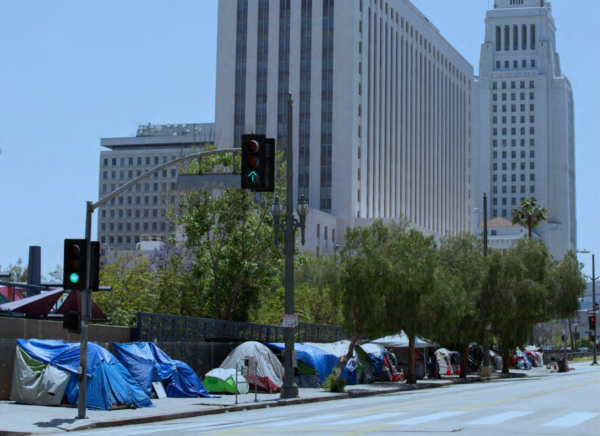
Reductions in the number of Los Angeles area residents living without a residence came to an end this year, according to the results of the annual Greater Los Angeles Homeless Count released Friday.
Following drops in 2024 and ’25, the number of people experiencing homelessness increased 1.2% to an estimated 73,040 in LA County and a 3.4% increase to 45,194 in the city of LA, the Los Angeles Homeless Services Authority reported.
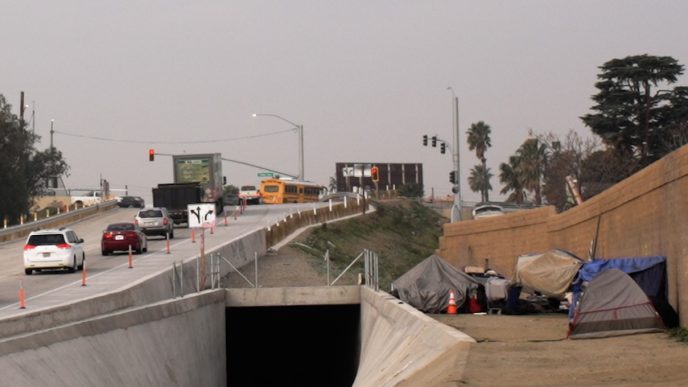
Unsheltered homelessness — living on the street or in tent encampments, public spaces, vehicles or makeshift shelters — increased 3.3% to 49,002 people in LA County and 7.9% to 29,115 in the city of Los Angeles.
Glendale, Pasadena and Long Beach conduct their own counts separate from the Continuum of Care that includes most cities in LA County.
According to data from Pasadena Partnership that administers the city’s count, 577 people were unhoused on the night of the 2026 count, 56% of whom were unsheltered. The city saw a 6% drop in unsheltered homelessness but a 7% rise in sheltered. Overall homelessness decreased 1%.
Long Beach’s count revealed an increase of 134 people, or 3.7% compared with the 2025 count. This year 2,588, or 69.4% of unhoused people were unsheltered in Long Beach, while 1,141, or 30.6% stayed in shelters or interim housing.
Glendale has not yet released the results of that city’s 2026 count, which like LAHSA’s and most other counts occurred in January.
Combined regional data from LAHSA shows the three cities each saw a roughly 3.5% rise in unsheltered homelessness. Last year, Glendale, Pasadena and Long Beach experienced a 4% drop in overall homelessness and a 10% unsheltered decrease.
Data from LAHSA, a joint LA County and city of Los Angeles agency that administers the annual count, indicates that the increase did not result from the failure of any particular programs, officials said. The main driver of the homelessness increase was a pause in new enrollments and permanent housing placements with Time Limited Subsidies. The TLS program provides temporary financial aid to help individuals pay rent.
Funding reductions forced the pause on TLS enrollments, according to LAHSA. As a result, the number of people newly housed using TLS dropped from 10,308 in 2024 to 6,590 in 2025, or 36%.
Officials said the plunge in TLS enrollments substantially contributed to the number of people permanently housed last year, which dropped to 23,532. That is roughly 5,100 fewer people compared with the record high of 28,625 permanently housed in 2024.
The lack of movement in the system left fewer available beds for people experiencing unsheltered homelessness and caused the unsheltered increases in the city and county, according to LAHSA.
“This year’s count confirms a fundamental truth: access to permanent housing ends homelessness,” LAHSA Interim Chief Executive Officer Gita O’Neill said in a statement. “When our unhoused neighbors lost access to rental subsidies, the system slowed, there was less upward movement in interim housing, and progress stalled. Our community needs to come together to reinvest in permanent housing resources and advocate for resources from our state and federal partners to clear this bottleneck and get our region back on track.”
The reduction in rent subsidies led to decreases in people moving from interim to permanent housing — 36%, or from 12,120 last year to 7,770 in 2026 — and from the street to interim housing — 8%, or from 16,724 to 15,380, LAHSA reported. Movement from interim housing back to the street increased by 24%, from 4,708 to 5,842 people.
TLS financial aid “is a flexible, low-barrier rental subsidy that helps unhoused households quickly move into affordable housing,” according to LAHSA.
The rental assistance lasts for up to two years, and recipients also get case management and stabilization services. Officials said the goal is to provide individuals and families a starting point on the path to self-sufficiency or transferring to a subsidy program for permanent housing.
“TLS works. It would be successful if all it did was help people secure affordable housing and provide the services to help them stabilize,” LAHSA Commission Chair-elect Stephanie Graves said in a statement. “But it does more than that. By ensuring the system is working as intended, it also helps other people take the steps, like moving from the street to interim housing, that will help them find a permanent home.”
Persistent economic pressures in the region also played a key role in causing the rehousing system slowdown, according to LAHSA. In LA County, a household must earn an annual income of $110,000 to afford the average rent of $2,745 per month while the region lacks more than 473,000 affordable homes required to meet current needs.
Citing the 2026 count’s demographic surveys, LAHSA officials noted that 59% of newly unhoused residents cited economic hardship as the primary reason for their homelessness. As a result, the number of people in the rehousing system for the first time or for the first time in the last two years rose to 55,691 individuals — 2.37 newly unhoused people enter the system for every single person the system successfully placed in permanent housing.
LAHSA officials called for “sustainable, consistent and flexible funding commitments” from the state and federal governments to get homelessness numbers trending downward again.
They also sought legal wins in the agency’s lawsuit against the U.S. Department of Housing and Urban Development, as well as suits filed by California and other states to stop the framework HUD adopted for its 2026 Continuum of Care Notice of Funding Availability. The lawsuits aim to stop the loss of rent subsidies for thousands of households living in permanent housing.
Volunteers and local officials canvassed the county over three nights in late January to conduct this year’s point-in-time count.
LA County Supervisor Hilda Solis issued a statement following the release of the 2026 data.
“Addressing homelessness requires commitment from every level of government,” Solis said. “We cannot solve this crisis by cutting investments or stepping away from programs that help people find stability. Los Angeles County will continue leading this work, but our state and federal partners must provide the sustained support necessary to ensure every resident has a safe place to call home.”
Supervisor Kathryn Barger noted a 37% reduction in unsheltered homelessness in the Antelope Valley but acknowledged that residents measure success by the look of their neighborhood streets.
“And too many still see people living in crisis,” Barger said in a statement. “We have to acknowledge that reality.”
The District 3 supervisor added that housing alone will not solve the homelessness crisis.
“We also need the ability to provide timely, intensive treatment for individuals experiencing severe mental illness and substance use disorders,” Barger said. “For years, I have advocated for greater local flexibility to expand access to those services because outdated federal restrictions continue to limit our ability to treat people at the scale this crisis demands. …
“We owe taxpayers accountability. We owe our communities safer and healthier neighborhoods. And, most importantly, we owe people experiencing homelessness every opportunity to recover and rebuild their lives.”
Sarah Mahin, director of the county’s Department of Homeless Services and Housing, said this year’s count results were disappointing but expected.
“Everyone in LA County deserves a safe, stable place to call home, and we remain committed to that goal,” Mahin said in a statement.
City and county officials have touted a 17.5% decrease in unsheltered homelessness in the LA area since 2024.
Los Angeles Mayor Karen Bass blamed the Trump administration Thursday for this year’s homelessness increase, saying federal policies have inflated the cost of living and reduced funding for safety net programs. She noted that reductions in state funding for homelessness have also impacted the city’s ability to respond to the crisis.
Bass also criticized the county for inadequate mental health care and substance-abuse counseling.
“For two years straight, we drove down homelessness by historic margins — but as expected, last year our efforts ultimately couldn’t keep up with policies and funding cuts at the federal and state levels that pushed more people onto the streets,” Bass said in a statement.
“The Trump Administration has driven up the cost of gas, groceries, and rent — pushing more families to the edge — and slashed critical safety net funding. And, last year’s 50% cut in state HHAP funding from $1 billion to $500 million — resulting in a $70 million hit to LA city alone — severely impacted our work to keep people housed and get more Angelenos off the streets. …
“Despite these headwinds, we have reduced homelessness in Los Angeles by 11% since 2023 — placing tens of thousands of Angelenos in interim housing, moving 6,000 people off the streets through Inside Safe, and housing more than 1,000 homeless veterans,” the mayor reported.
“We declared a homelessness state of emergency on day one, addressed 130 encampments, and helped keep 85,000 people in their homes through eviction defense,” Bass continued. “We’re doubling down on what works.”
A Los Angeles Times analysis found that since Inside Safe began about four years ago, roughly 41% of program participants had returned to homelessness.
Bass’s statement also lambasted LAHSA for fiscal mismanagement.
“We also have to be clear-eyed about what’s not working,” the mayor said. “For thirty years, this city has run its homeless response through LAHSA — and audits and the courts have now made plain what too many Angelenos already saw: the money wasn’t tracked, providers went unpaid, and public trust eroded. I’m not going to defend a broken system. The city must build something better — results-driven, transparent, and centered around the people we’re trying to help, not the bureaucracy.”
The county has taken over $300 million away from LAHSA beginning with the current fiscal year that started July 1, as well as personnel from LAHSA’s workforce to establish a homelessness department. Officials from the city of LA also are devising a plan to separate from LAHSA.
The agency was established in 1993 and has received criticism for failing to properly track millions of dollars to make sure taxpayer money was spent effectively. Officials recently have implemented new procedures, protocols and technology to improve those issues, according to LAHSA.
Last month the U.S. Department of Housing and Urban Development paused federal funding to LAHSA over alleged audit failures. The agency filed a lawsuit in response with the goal of unfreezing the funds to address homelessness.
Federal and state agencies use annual homelessness census data from local governments to determine grant funding amounts to address homelessness and housing.
More information on the 2026 Greater Los Angeles Homeless Count is on LAHSA’s website. Officials also provided online a set of data summaries from the count.