

Airborne dust from the world’s deserts the may play a more influential role in shaping weather and climate conditions than previously understood, possibly leading to more accurate forecasts and climate-change assessments, according to a UCLA study published Tuesday.
According to the study, atmospheric dust traps about twice as much heat as earlier estimates suggested, a finding that could significantly alter how scientists create forecasting models for short-term weather patterns as well as long-term climate change.
The research team led by UCLA atmospheric scientist Jasper Kok determined that dust’s ability to trap heat is about 10% of the warming that results from human-emitted carbon dioxide, compared with previous estimates of around 5%.
Dust in the atmosphere plays a dual role in the climate system — it reflects sunlight back into space while simultaneously absorbing and trapping heat like an insulating blanket. Despite the belief that dust has a slight overall cooling effect, the UCLA study indicated airborne dust’s warming influence has been underestimated.
“Improving how models represent warming caused by dust could therefore help improve both weather forecasts and climate projections,” Kok said in a statement. “Regions with more dust will be a little warmer, leading to higher surface temperatures and faster evaporation. This can alter atmospheric motions and shift where and when rainfall occurs — for example, by suppressing precipitation in some regions while enhancing it in others. Such effects are expected to be strongest in regions downwind of major deserts such as in the Sahara, the Middle East and East Asia.”
The study used information from satellite observations, aircraft measurements, climate simulations and meteorological data to devise a global estimate of how dust affects temperature and atmospheric conditions.
“Climate models are slightly too conservative, because they typically omit the ways dust scatters heat emitted by Earth’s surface and atmosphere back downward,” Kok said. “Our previous research showed that the models also undercount the amount of very coarse dust particles in the atmosphere, which are especially effective at trapping heat. There are about 20 million metric tons of very coarse dust in the sky — the mass of roughly 4 million African elephants — and models account for only about a quarter of that.”
Factors including particle size, elevation and concentration enable dust to either cool the Earth by reflecting sunlight or warm the planet by absorbing and emitting the heat again. Prior studies found that these competing effects result in a slight overall cooling effect, slowing a bit but not stopping global warming, according to the study.
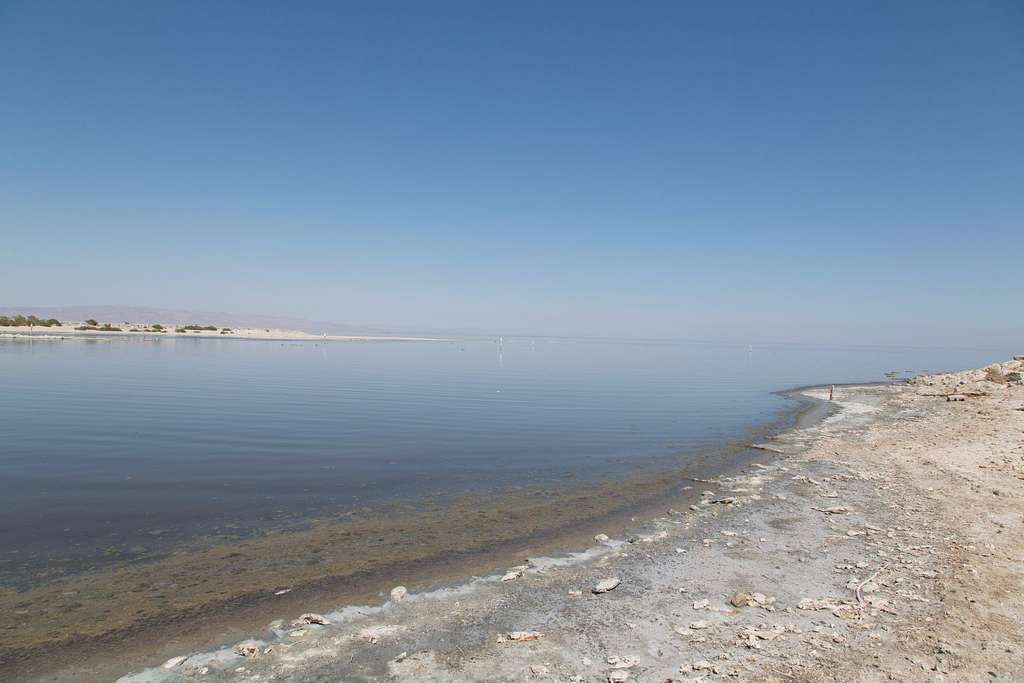
Dust in the atmosphere increased worldwide during the 20th century, peaking in the 1980s, and remain elevated compared with levels before the Industrial Revolution of the late 1800s, researchers said. Dust sources include major deserts such as the Sahara in North Africa and the Gobi in China and Mongolia, as well as drying lakebeds including California’s Salton Sea and Owens Valley and Utah’s Great Salt Lake.
“Current climate models undercount the heating effect of dust by about half,” Kok said. “The climate models remain effective and useful, and this will make them even more precise.”
The study was published in Nature Communications and is available on the publication’s website.