

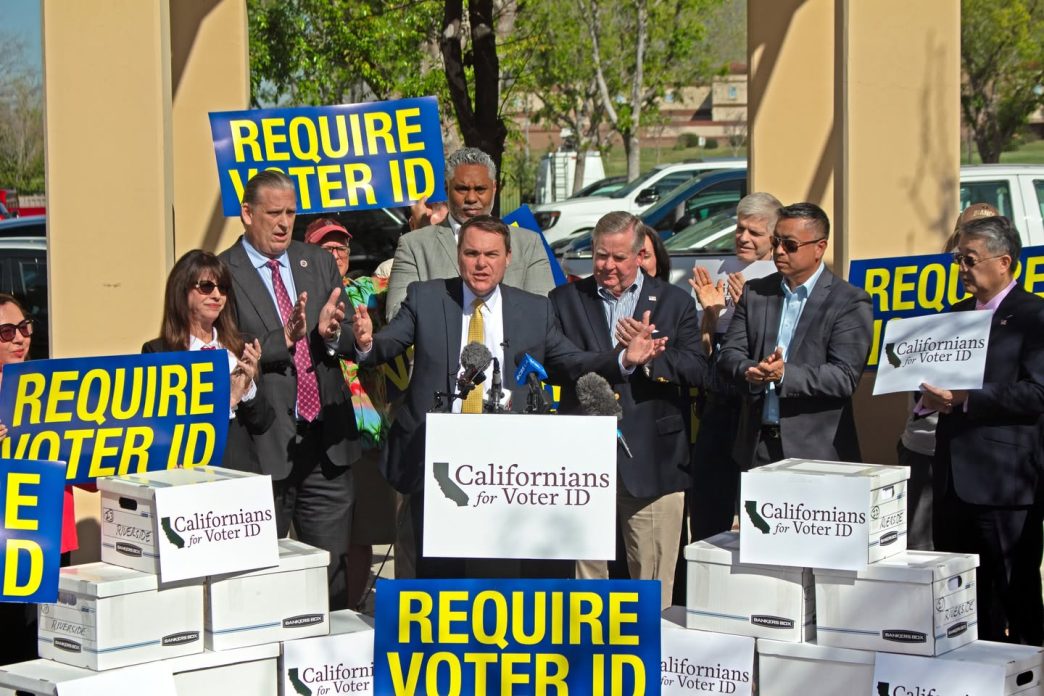
A ballot initiative calling for new voter identification and citizenship verification requirements qualified for the November ballot, state officials said Friday.
The proposed constitutional amendment would require voters to present government-issued identification such as a driver’s license at the polls or the last four digits of a social security number when voting by mail, according to Secretary of State Shirley Weber. The ballot measure would also compel the state to provide voter ID cards on request and require county elections officials to annually report the percentage of voters whose citizenship they have verified.
A measure can become eligible via random sampling of petition signatures if the sampling projects that the number of valid signatures is greater than 110% of the required number. The voter ID initiative needed at least 962,106 projected valid signatures to become eligible by random sampling, and it has exceeded that threshold, Weber reported. In order to become eligible for the ballot, the initiative needed 874,641 valid signatures, which equals 8% of the votes cast in the 2022 election for governor.
The initiative will appear on the Nov. 3 ballot.
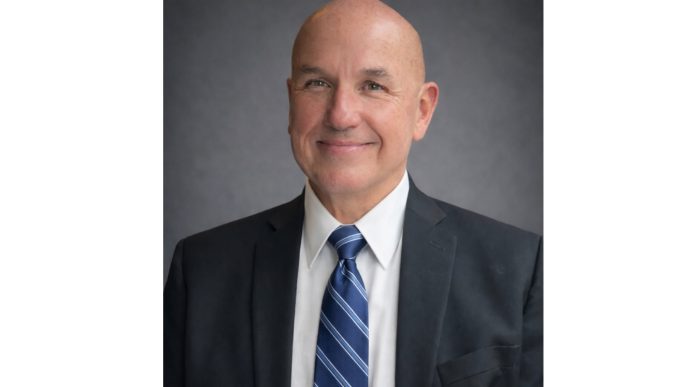
Proponents include state Assemblyman Carl DeMaio, R-San Diego, state Sen. Tony Strickland, R-Huntington Beach, and Donald J. DiCostanzo, a business owner.
“The California Voter ID Initiative is a common-sense and bipartisan way to restore the trust and confidence all voters should have in our election system,” DeMaio said in a statement. “Our measure simply holds government officials accountable to maintain accurate voter lists and verify the identity of individuals casting ballots in our elections.”
Strickland said in a statement, “There is a cancer growing in our democracy where too many people have lost confidence in our elections — and enacting a Voter ID law should be seen as the best bipartisan solution to this problem.”
Voting rights advocates have opposed the measure because it may complicate the voting process, making it more difficult for some state residents to participate in elections and possibly reducing overall voter turnout.
“Since 2008, states across the country have passed measures to make it harder for Americans — particularly black people, the elderly, students and people with disabilities — to exercise their fundamental right to cast a ballot,” according to the American Civil Liberties Union. “Over 30 states have considered laws that would require voters to present a government-issued photo ID in order to vote. Studies suggest that up to 11% of American citizens lack such an ID and would be required to navigate the administrative burdens to obtain one or forego the right to vote entirely.”
Labor unions have also indicated opposition to the California voter ID measure, which is now set for formal ballot certification June 25 unless supporters withdraw it.
A fiscal analysis by state officials estimated one-time implementation costs in the tens of millions of dollars, with ongoing annual costs potentially reaching into the low hundreds of millions.
A Berkeley Institute of Governmental Studies poll in March reported 44% of voters surveyed were in favor of the measure, with 45% against it and 12% undecided.
Strickland and others who have helped lead the campaign have attributed the initiative’s rapid certification to Julie Luckey, mother of tech billionaire Palmer Luckey who contributed most of the $10 million the initiative’s committee has raised throughout this past year.
More information about how an initiative qualifies for the ballot in California is on the secretary of state’s website.