

An animal advocacy group has placed the controversial new home of two former Los Angeles Zoo elephants on an annual Top 10 list of the continent’s worst facilities for the world’s largest endangered species.
Asian elephants Billy and Tina were relocated in May to the Tulsa Zoo in Oklahoma, which placed tenth on In Defense of Animals’ 21st annual list of the 10 Worst Zoos for Elephants in North America. Rather than the wildlife preserve that zoo and city officials promised to Angelenos, the group claims the Tulsa Zoo has too many animals and focuses on aggressive breeding, not sanctuary.
“Tulsa Zoo’s ‘preserve’ masks a crowded facility,” Courtney Scott, elephant consultant for In Defense of Animals, said in a statement. “We cannot let Billy, Tina or the other elephants die in this place of suffering, loss, and broken lives. It’s time to end failed breeding attempts immediately and truly preserve elephants in a sanctuary with the expansive space they need and deserve.”
Officials from the Los Angeles and Tulsa zoos did not immediately respond to requests for comment.
The LA Zoo announced May 21 that Billy and Tina were moved to Tulsa.
“The Association of Zoos and Aquariums requires accredited zoos to maintain a herd of at least three elephants because they are social animals, and keeping them in larger groups is crucial for their well-being,” according to the zoo. “With only Billy and Tina remaining, the L.A. Zoo no longer met that standard. The Zoo spent the past year carefully evaluating its elephant program following the loss of two older elephants, Jewel (age 61) in 2023 and Shaunzi (53 years old) in 2024. Both elephants were in declining health and ultimately euthanized due to age-related health issues.”
Activists said the move betrayed decades of public pleas from LA-area residents and celebrities such as Cher and Lily Tomlin to send the elephants to a bona fide sanctuary.
Zoo officials said in May that they “evaluated all available options including AZA-accredited sanctuaries. Mayor Bass inquired about moving the elephants to a sanctuary — the Zoo worked to ensure that all viable options had been considered during the course of the Zoo’s comprehensive evaluation. The decision to move the elephants to the Tulsa Zoo was made with the health and well-being of the individual elephants as the top priority and at the recommendation of the Association of Zoos and Aquariums and its Elephant Species Survival Plan which advises on the management of the entire population of elephants in AZA-accredited institutions as a single herd.”
The Tulsa Zoo was the No. 1 recommendation of the Species Survival Plan “based on space, herd dynamics, and expertise of the staff,” zoo officials said. “This option also ensured that Billy and Tina would be able to remain together.”
LA City Councilman Bob Blumenfield was critical of the move.
“For 30 years, Angelenos have shared heartfelt concern for these elephants, and recently lawsuits were filed on their behalf,” he said in a statement in May. “Angelenos are deeply invested in their well being and the public deserved a transparent process considering all options before a decision was made. How do we trust that all options were truly evaluated, without any evidence of any analysis? The disregard for the public’s concern is patronizing and disrespectful to the thousands of Angelenos who have been calling for a viable sanctuary alternative.”
Blumenfield said animal advocates were willing and ready to finance Billy and Tina’s transfer to a wildlife sanctuary and out of captivity.
“Sanctuaries would give Billy and Tina thousands of acres with top notch medical care at no expense to the City,” Blumenfield said. “The LA Zoo chose to send them to a place where they have a few acres with more captive elephants in limited space.”
Opponents of the move noted that the Tulsa Zoo made it on the 10-worst list for a the second time.
“Its much-hyped 10-acre ‘preserve’ was already insufficient before Billy and Tina arrived,” according to In Defense of Animals, which is based in San Rafael, California. “From their profound zoochotic behavior, it appears their situation is even worse at their new zoo. And it’s no better for the other five elephants at the zoo, who have advanced zoochosis.”
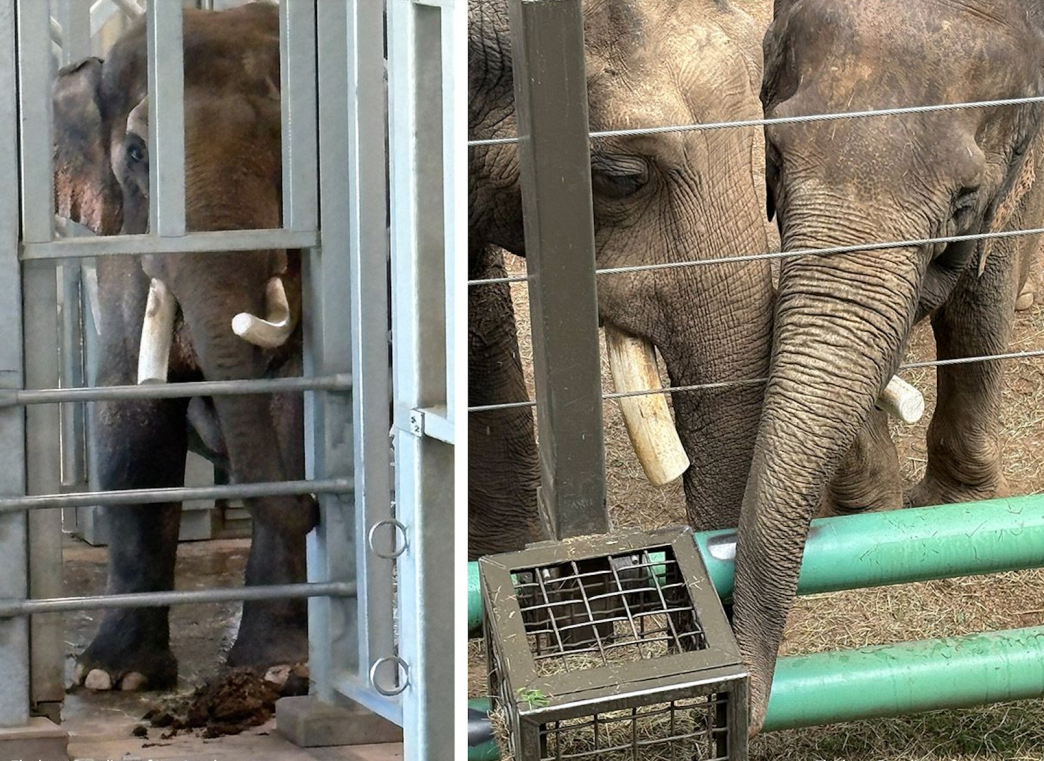
An investigator for the group was told Tulsa’s three male elephants cannot share space safely, so the three bulls are rotated between the publicly visible exhibit and “cramped holding yards.” In the holding areas, the elephants have been observed “pacing, bobbing, and swaying in despair,” according to In Defense of Animals. “Despite the overcrowding, Tulsa Zoo could further crowd the facility by adding more elephants to create a ‘multi-generational herd.’”
The group Elephant Guardians of Los Angeles provided video showing Billy and Tina exhibiting what activists said was “zoochotic stress behavior at the Tulsa Zoo.”
Sneezy, the zoo’s long-time male, is documented attempting an escape.
Animal advocates said Sneezy has been repeatedly used to supply semen to other zoos, but all four of his calves have died, pointing to a national “mortality crisis” where 1 in 4 zoo-born elephants dies before age 5.
The two former LA Zoo elephants join Hank, who activists said was shuttled between four facilities prior to residing in Tulsa and is now slated as a donor for “invasive” artificial insemination. Billy has been subjected to more than 50 sperm extractions and could face more.
Zoos loaning elephants for breeding is common, but a recent study shows frequent relocations cause transfer trauma significant trauma that increases the risk of premature death.
Activists also drew attention to the Tulsa Zoo’s unsuccessful breeding efforts.
Tooma was an elephant taken from her familial herd in the wild and died at only 21 years old, five months after giving birth to Maverick. He survived only seven years before the elephant virus EEHV killed him. Asha came to Tulsa to breed with Sneezy and returned to the Oklahoma City Zoo pregnant. Her calf Malee died from EEHV at age 4 in 2015.
“Zoo-bred elephants are fated to suffer from the moment they are conceived, and die at double the rate of wild babies,” In Defense of Animals President Marilyn Kroplick said in a statement. “This industry is manufacturing babies in a bid to keep exhibits full — not to save elephants. True conservation happens in the wild, not behind bars. The only ethical path forward for Tulsa Zoo is to end captive breeding and move its elephants to a spacious, true sanctuary.”
In Defense of Animals’ full 2025 List of the 10 Worst Zoos for Elephants is:
- Houston Zoo in Houston, Texas
- Sedgwick County Zoo in Wichita, Kansas
- Omaha’s Henry Doorly Zoo & Aquarium in Omaha, Nebraska
- African Lion Safari in Hamilton, Ontario, Canada
- Denver Zoo in Denver, Colorado
- Columbus Zoo and Aquarium in Powell, Ohio
- ABQ BioPark in Albuquerque, New Mexico
- Oklahoma City Zoo
- Fresno Chaffee Zoo in Fresno, California
- Tulsa Zoo
The Oregon Zoo in Portland made the groups “Hall of Shame” and the Path to Progress Award went to the Louisville Zoo in Louisville, Kentucky.