

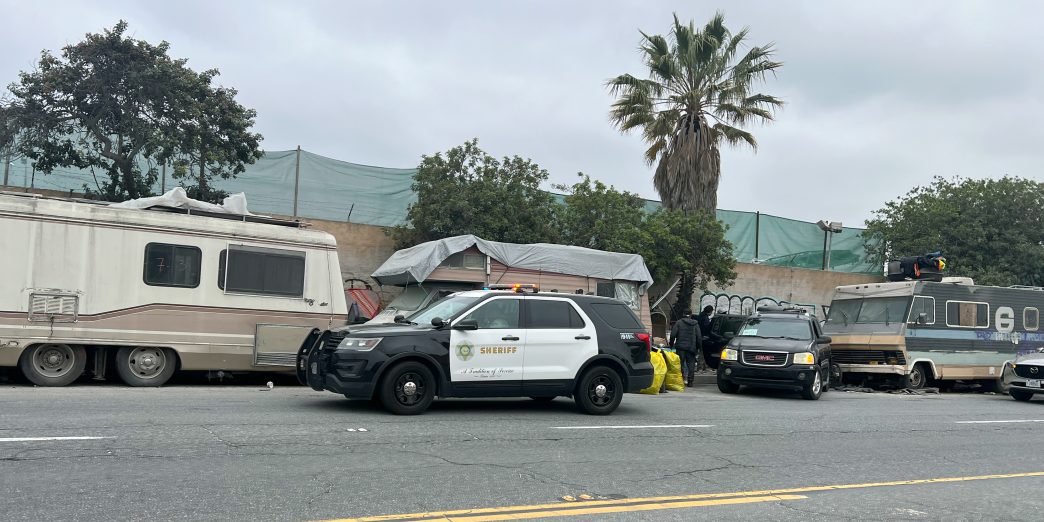
As interaction between law enforcement officers and unhoused Los Angeles County residents, the sheriff’s Homeless Outreach Services Team is a frontline presence in the county’s response to the ongoing crisis.
HOST is guided by the county’s approach to addressing homelessness “with urgency, dignity, and compassion,” according to a sheriff’s department statement Wednesday.
“Being homeless is not a crime — it’s a crisis, this is a humanitarian mission, not a law enforcement campaign,” Sheriff Robert Luna said in a statement. “No one improves their circumstances while living in an RV or on the street without access to housing, health care or services. Our goal is to be the bridge to stability.”
At the heart of these efforts is Pathway Home, a program for individuals living in recreational-vehicle encampments, according to the sheriff’s department, which noted these accomplishments since Pathway Home’s August 2023 start:
- 1,300 individuals have been moved into interim housing;
- 265 individuals have transitioned into permanent housing;
- 47 full encampment resolutions completed; and
- Over 775 dilapidated RVs removed and recycled from the streets of unincorporated Los Angeles County and its Contract Cities
The HOST team works with the County CEO’s Homeless Initiative Office and the departments of Mental Health, Health Services, Public Health, Public Works and Animal Control.
“This integrated approach ensures that every participant receives not only shelter, but a full suite of wraparound services tailored to their needs — from mental health support to addiction treatment, case management, benefits assistance, and life skills development,” according to the LASD statement.
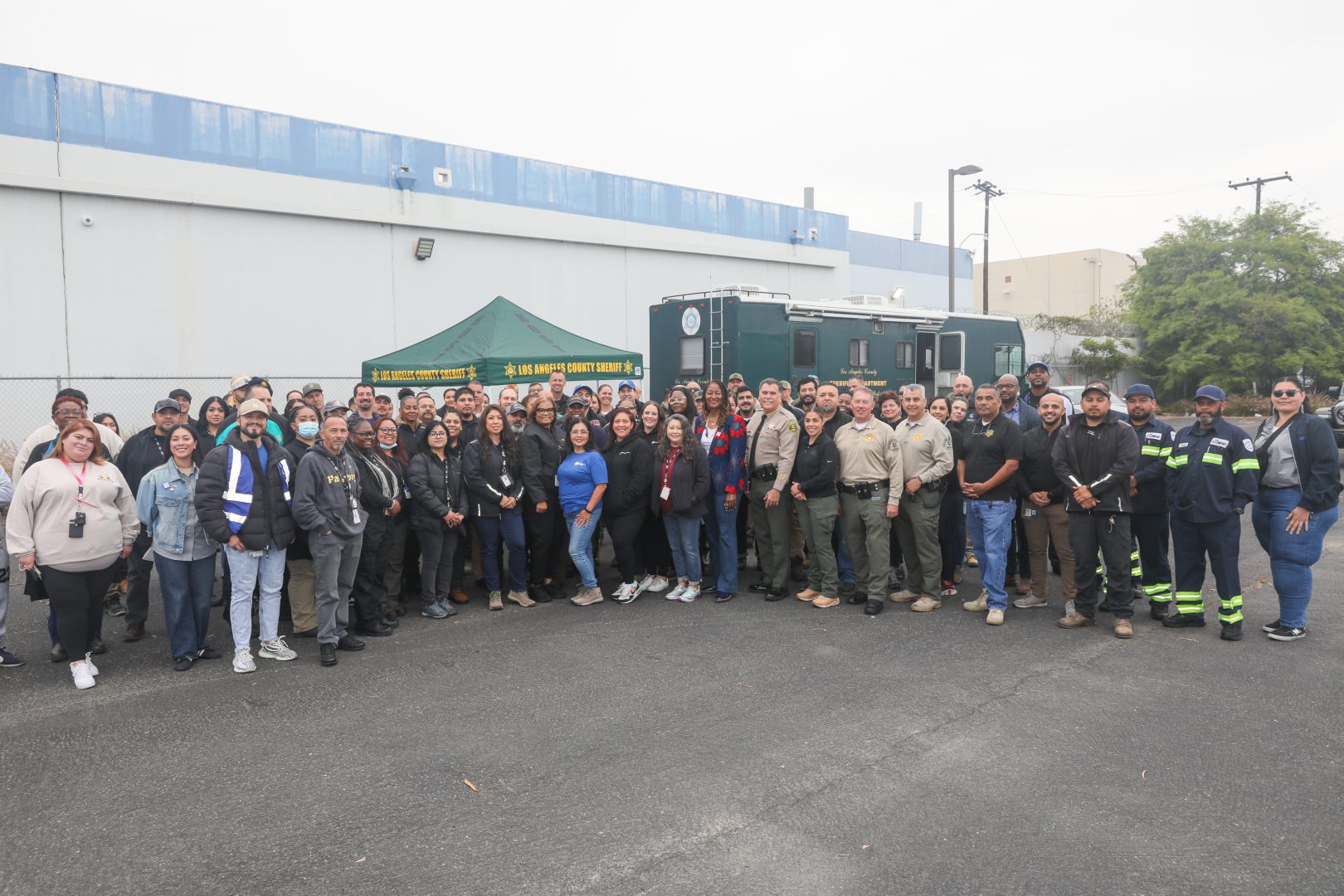
HOST uses a new decision-making model for law enforcement known as Respond, Observe, Assess, React, or ROAR. The model enables deputies to make real-time, informed decisions during field interactions, sheriff’s officials said. The ROAR model aims to bolster HOST’s efforts to engage RV residents with compassion and more effectively determine when people are ready to accept help and transition into temporary housing.
“Trust-building is critical, as many RV residents need time, repeated engagement, and assurance that real solutions — not just enforcement — are being offered,” according to the LASD. “Even when an RV is in disrepair, it often represents the last vestige of independence for someone who has lost everything.”
When HOST transports former encampment residents to interim housing facilities, they “receive a room, three meals daily and direct access to onsite medical and mental healthcare, substance use treatment and other essential supports designed to help them stabilize and transition into permanent housing,” officials said.
The legal and operational logistics of vehicle removal are major logistical barriers that impede the county’s efforts to remove RV encampments, according to the sheriff’s statement. Before abandoned or inoperable RVs can be towed, county workers must locate and notify the legal owner. That’s often time-consuming and complicated because many RV occupants are not the registered vehicle owners.
County officials also must secure large, vacant lots to temporarily store the RVs, many of which are structurally unsound and expensive to tow and dispose of. All that requires careful coordination and spending a significant amount of public funds, officials said.
“HOST’s work represents a shift in how public safety agencies respond to homelessness,” according to the sheriff’s department. “Rather than wait for complaints or emergency calls, the team focuses on proactive, consistent outreach — an approach proven to yield better outcomes for everyone involved,” including residents and businesses in neighborhoods surrounding RV encampments.
“The long-term goal is clear: to transition individuals from homelessness into safe, permanent housing, while simultaneously restoring public spaces and upholding community safety,” the sheriff’s department statement concluded.
More information on HOST is available from the Sheriff’s Information Bureau, 213-229-1850.