


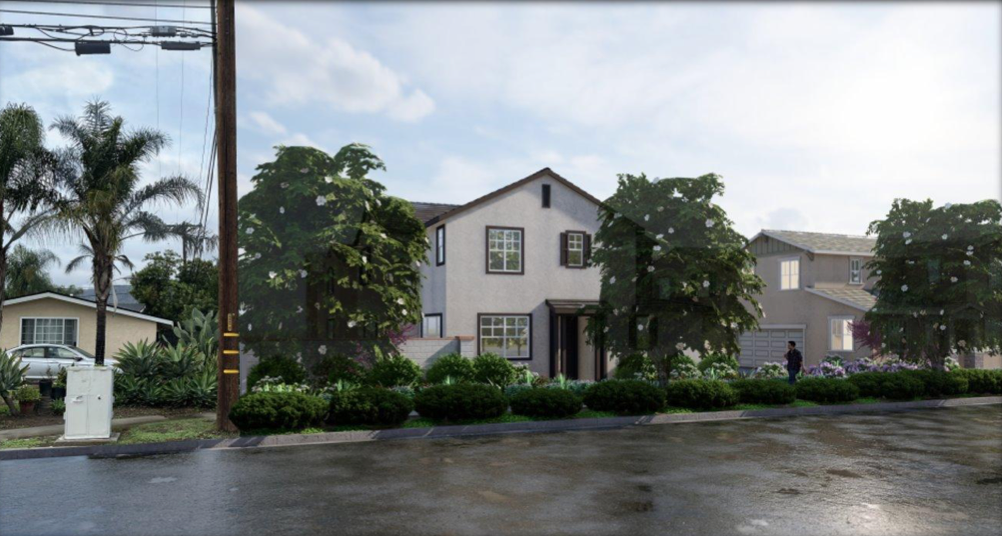
The Azusa City Council approved a 128-unit residential development on the former Powell Elementary School site Monday night, clearing the way for the largest single-family housing project the city has considered in years.
The Delaney Square project at 1035 E. Mauna Loa Ave. would replace the shuttered school with 65 single-family homes and 63 townhomes, a plan developer Taylor Morrison Home Corp. reduced from an earlier 153-unit proposal after community pushback.
“We have reduced the Delaney Square project to what you see today, as well as we have reduced the height of the project,” Chris Enscheff, a Taylor Morrison vice president, told the council.
The vote followed more than an hour of public comment, with more than a dozen in-person speakers raising concerns about traffic, parking, density and the absence of a public park on the 9.77-acre site.
Residents described Mauna Loa Avenue as a cut-through route and questioned whether the project’s 326 parking spaces, which include 70 guest stalls, would be enough for a neighborhood where many households own three or more vehicles.
Councilwoman Sabrina Bow said she could not support the two variances sought by the developer, which would reduce building separation from 10 feet to 7 feet and the rear yard setback from 25 feet to 15 feet.
“My deal points on this are the variance and the setback,” Bow said.
The council ultimately approved the project in four separate votes, adding two conditions: full-width repaving of Mauna Loa and Calera avenues, and a post-occupancy traffic study once the development reaches 80% occupancy.
Mayor Edward Alvarez and Councilman Robert Gonzales argued that rejecting the project could invite a denser alternative under state housing mandates.
“With the push from California to increase density, we may not have this opportunity. At least we can cap it and keep it reasonable,” Gonzales said. “We say no, we can come back to three or four stories at twice the density.”
The project would count toward the city’s regional housing needs allocation at the above-moderate income level, a state-mandated target Azusa is far from meeting — the city has entitled roughly 300 units against a target of 2,651, staff reported.
Earlier in the meeting, the council approved two Community Development Block Grant items. It adopted a substantial amendment reallocating $197,685 in unallocated funds toward code enforcement and a new commercial rehabilitation program, and it approved the 2027-2028 program with an estimated $360,385 in funding for housing rehabilitation, code enforcement, and YWCA senior services.
The AI platform Civilio assisted this report.