


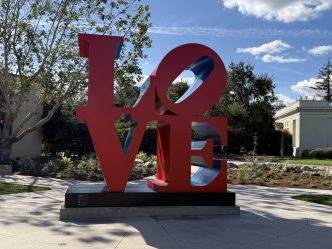
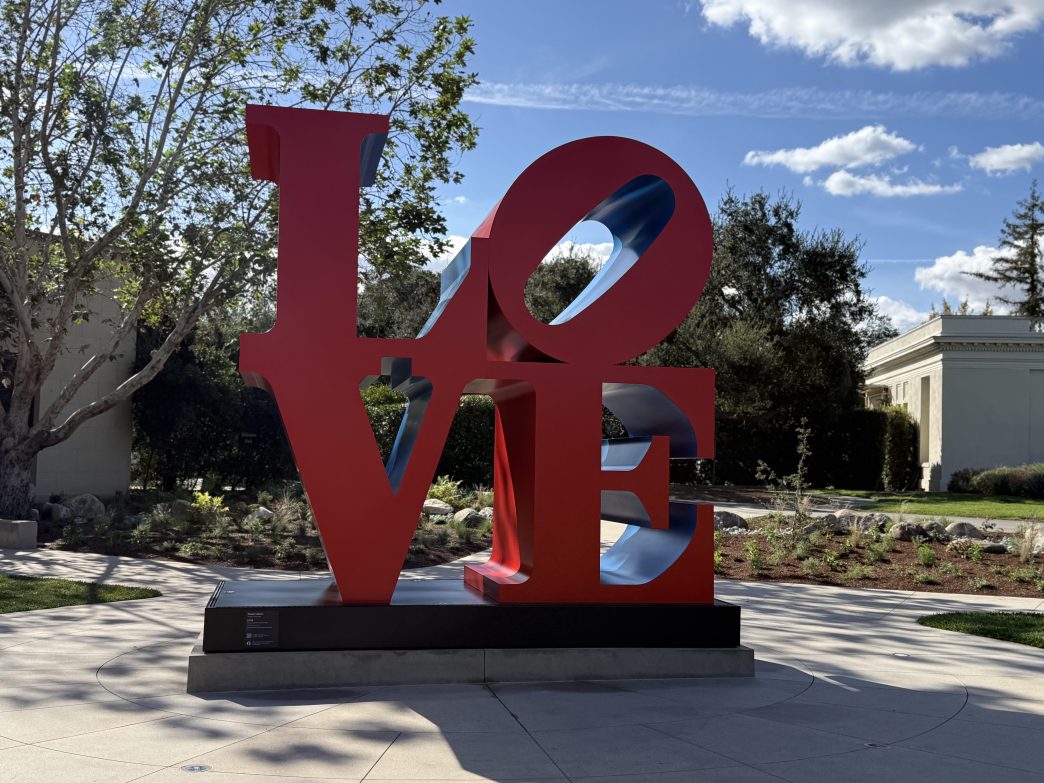
Robert Indiana’s LOVE sculpture is unarguably one of the most recognizable works of postwar American Art. It is displayed in over two dozen plazas, museums, and university campuses in the US. On Saturday, Nov. 21, the iconic artwork will make its debut at The Huntington’s Oak Meadow near the entrance to the Virginia Steele Scott Galleries of American Art.
LOVE will join major outdoor sculptures in Oak Meadow and surrounding gardens by Enrique Martínez Celaya – including The Gambler and The Landmark – as well as works by Sam Francis, Tony Smith, and Harry Bertoia.
The acquisition reflects The Huntington’s long-standing vision of a museum without walls, where indoor and outdoor experiences are conceived as part of a single encounter.
“This sculpture exemplifies how art can operate beyond the gallery while remaining in dialogue with it,” states Christina Nielsen, Hannah and Russel Kully Director of the Art Museum. “Its placement underscores our commitment to presenting art within a broader cultural and environmental context.”
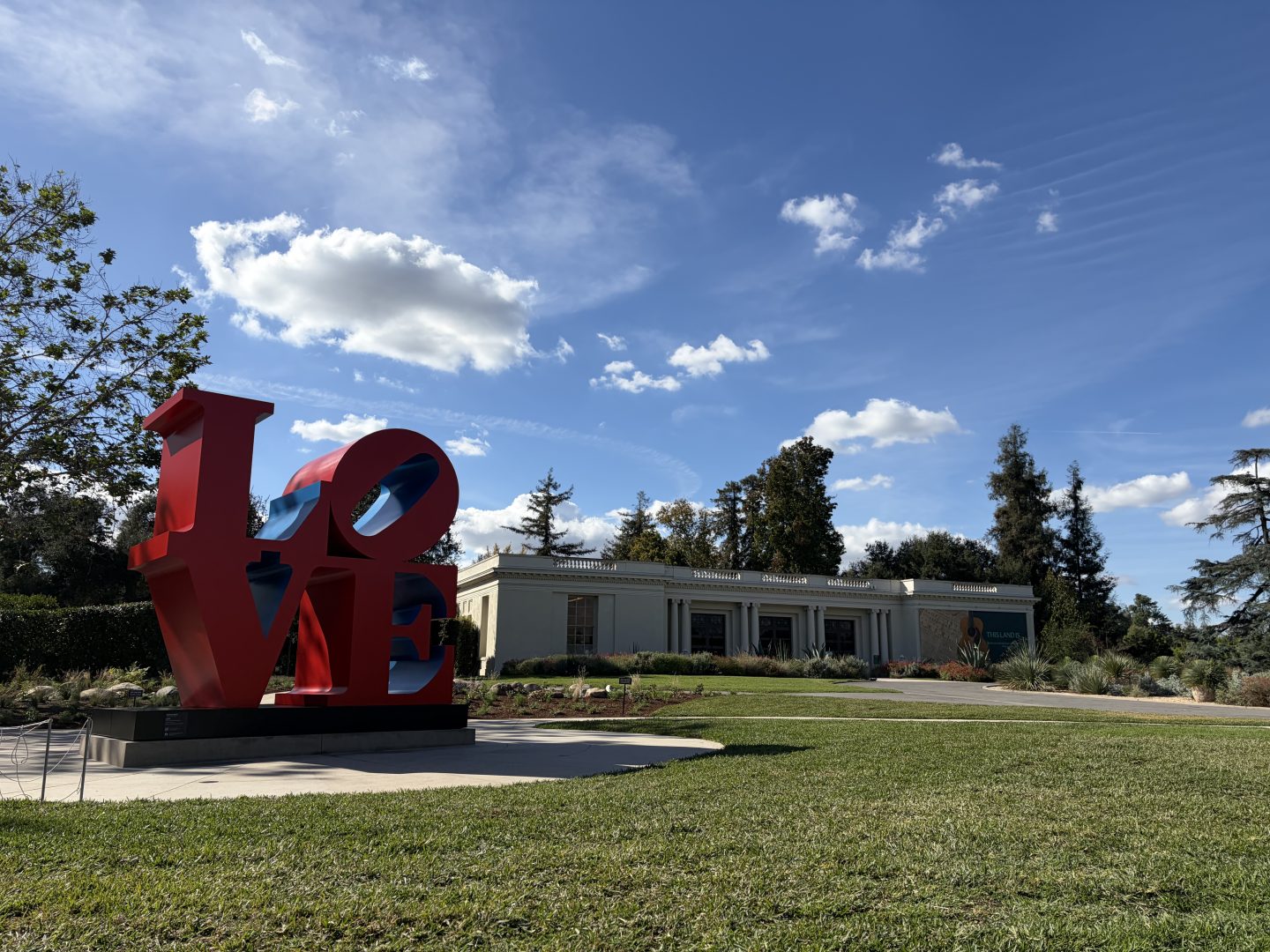
Gifted to The Huntington by Terri and Jerry Kohl, LOVE comes with additional funding provided for installation and long-term care. The sculpture – executed in polychromed aluminum – is number three in an edition of five, with two artist’s proofs. Upon installation, it will be the only publicly accessible museum-owned LOVE sculpture in Southern California.
Fortuitously, the acquisition coincided with the 60th anniversary of the inauguration of Indiana’s first LOVE sculpture – which unveiled in May 1966 at the artist’s solo exhibition LOVE at Stable Gallery in New York – just days before Mother’s Day that year. Measuring only 12 inches high, that early version has since evolved into one of the most famous sculptures in the world. The Huntington’s acquired edition stands 12 feet high and 12 feet wide.
First conceived in the mid-1960s, Indiana’s stacked letters – with the distinctive tilted “O” – have become a defining image of Pop Art. Originally created as a drawing in 1964, the image was selected for the Museum of Modern Art’s annual holiday card in 1965. Over time, LOVE has accrued layered meanings: first as an emblem of the optimism and contradictions of postwar America, and later as a symbol embraced by LGBTQ+ communities, particularly during the AIDS crisis, when it came to signify care, loss, and solidarity. Those associations continue to inform the work’s cultural resonance today.
“Indiana’s LOVE occupies a central place in the history of American art after 1960,” says Dennis Carr, Virginia Steele Scott Chief Curator of American Art. “Its acquisition deepens our representation of American modernism while extending conversations already present in the collection, from Andy Warhol’s engagement with language and image to large-scale sculpture by artists such as Sam Francis and Tony Smith.”
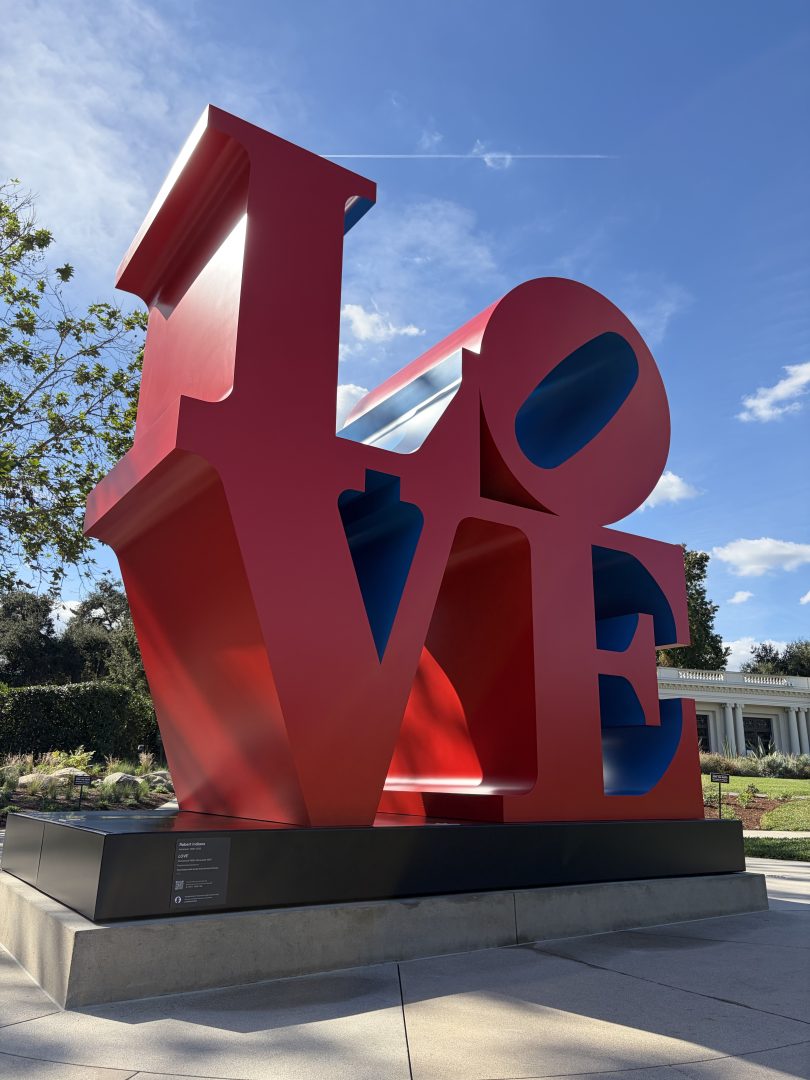
The Huntington’s acquisition of LOVE wasn’t the result of a boardroom decision but an idea that came from the Kohls. They had frequently encountered the sculpture during their travels and it always captivated them enough to stop and take a picture.
“LOVE has always been like a magnet to us,” Jerry Kohl explains. “There’s something about those four simple letters that draws you in. It almost calls you over to take a picture. And when you think about it, what could be a more perfect background for a family photograph than LOVE?”
Over the years, that fascination grew into a resolve to bring one of these striking sculptures to Southern California, where thousands of other families could experience that same feeling. But it was important that LOVE is installed in just as magnificent a setting as the sculpture itself. The Kohls wanted a beautiful setting that would welcome visitors while protecting it for generations.
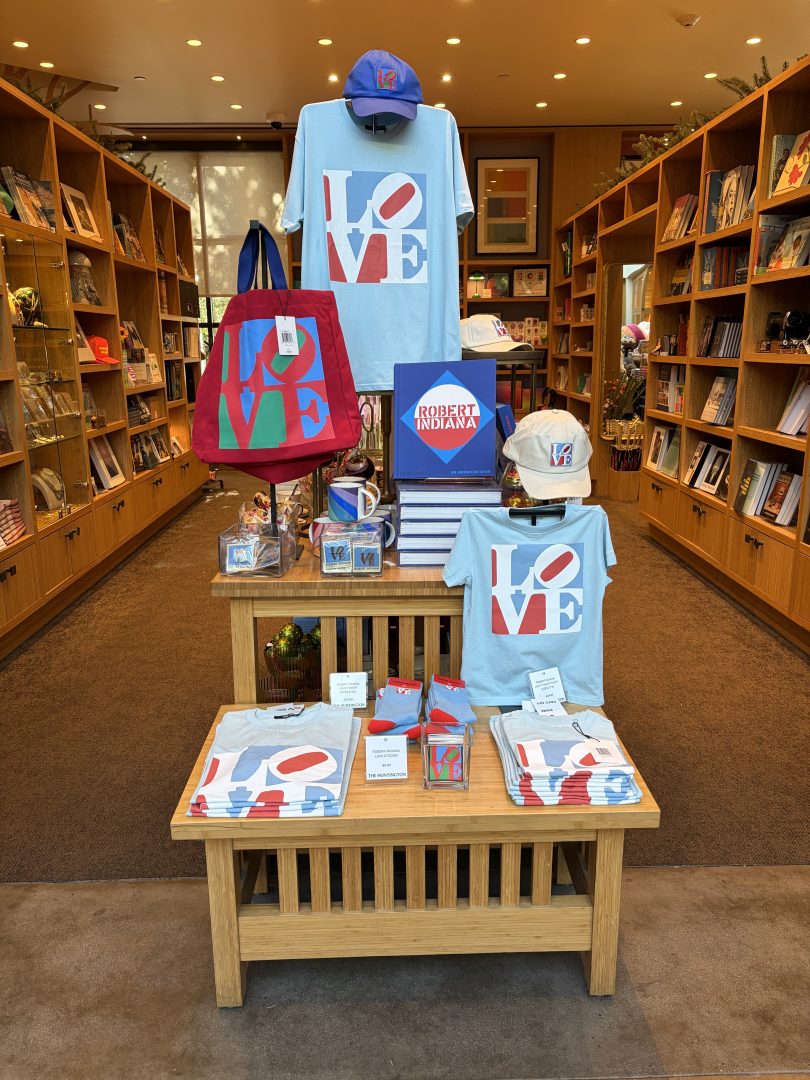
Longtime benefactors of The Huntington – they supported the Steven S. Koblick Education and Visitor Center, the institution’s Centennial celebration, and the restoration of the Rose Garden Tea Room – the Kohls naturally felt that LOVE belongs at The Huntington.
Discussions between them and The Huntington commenced in September 2025. In consultation with the Kohls, it was decided that Oak Meadow is the perfect site for the LOVE sculpture. Sitting between the Virginia Steele Scott Galleries of American Art and the Mary Lou and George Boone Gallery, it is an area where visitors can experience significant works of outdoor sculpture in conversation with the gardens, architecture, and American art collections.
Inside the American Art galleries, visitors can view Pop art by Andy Warhol. Nearby, Betye Saar’s Drifting Toward Twilight – a site-specific installation incorporating natural materials gathered from The Huntington’s grounds – brings the landscape into the gallery.
The location also creates opportunities for visitors to engage with LOVE in a welcoming outdoor environment, fulfilling the Kohls’ hope that it will become a place where families, friends, and loved ones gather and create lasting memories.
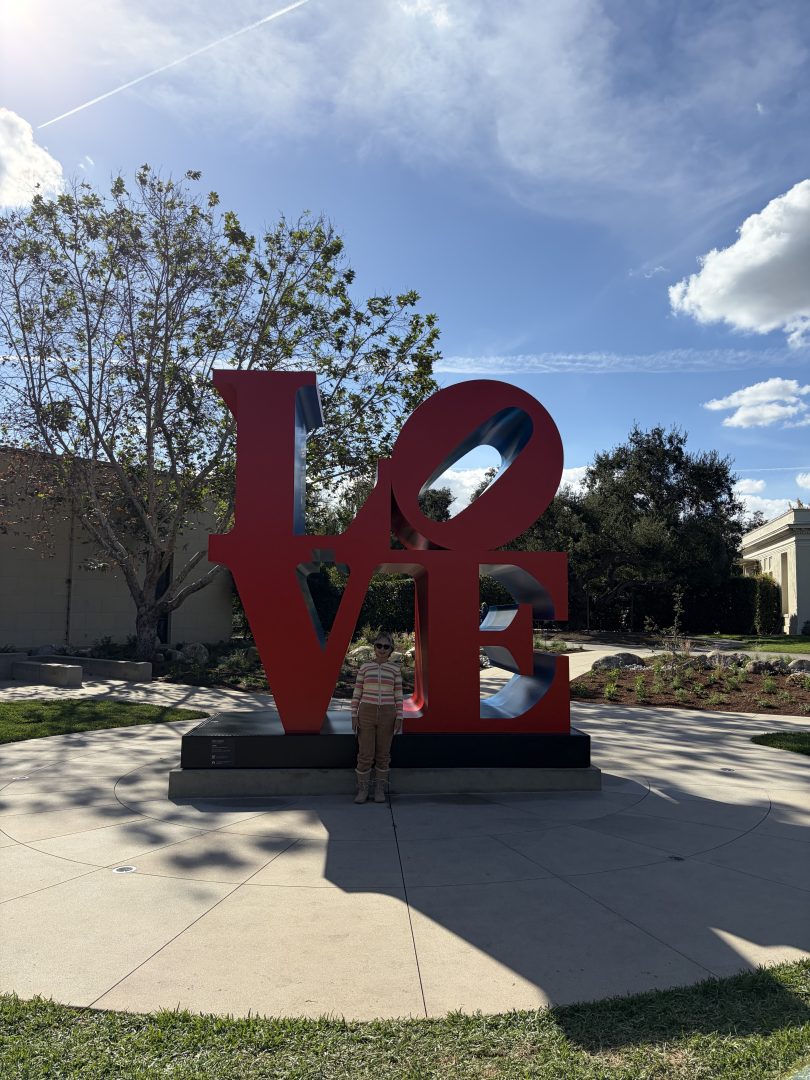
Fittingly, The Huntington is offering a special holiday opportunity on November 21 and 22 from 11 am to 4 pm. With their admission tickets and advance reservations, visitors and their loved ones can enjoy a photo experience to celebrate LOVE’s arrival in its permanent home. Each reservation includes a digital photo and a commemorative print.
In an interview that appeared in The Huntington newsletter, Jerry Kohl says, “The sculpture will stay right here in San Marino but the message of LOVE can travel everywhere.” They envision families, newlyweds, grandparents, and children gathering around the sculpture, making memories and sharing photographs with friends and loved ones around the world.
“I often think about that wonderful song Dionne Warwick sang, ‘What the world needs now is love, sweet love,’” remarks Kohl. “Look at the world we’re living in – with wars, hatred, and so much division. Those words seem more meaningful today than ever. Terri and I certainly can’t solve the world’s problems. But perhaps we can help bring a little more love into people’s lives. Maybe this sculpture will make someone smile, bring a family closer together, or remind us of what really matters.”
“We hope visitors feel a sense of joy and connection when they encounter LOVE, whether they recognize its distinctive form or are discovering it for the first time,” Nielson states. “Seeing it at a monumental scale in Oak Meadow offers an opportunity to look closely and consider what love means in their own lives. Some may want to share the moment with family or friends; others may find it an occasion for quiet reflection. We hope the sculpture becomes a work visitors return to, finding new meaning in it over time.”