

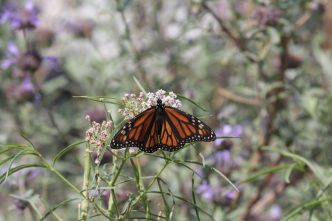
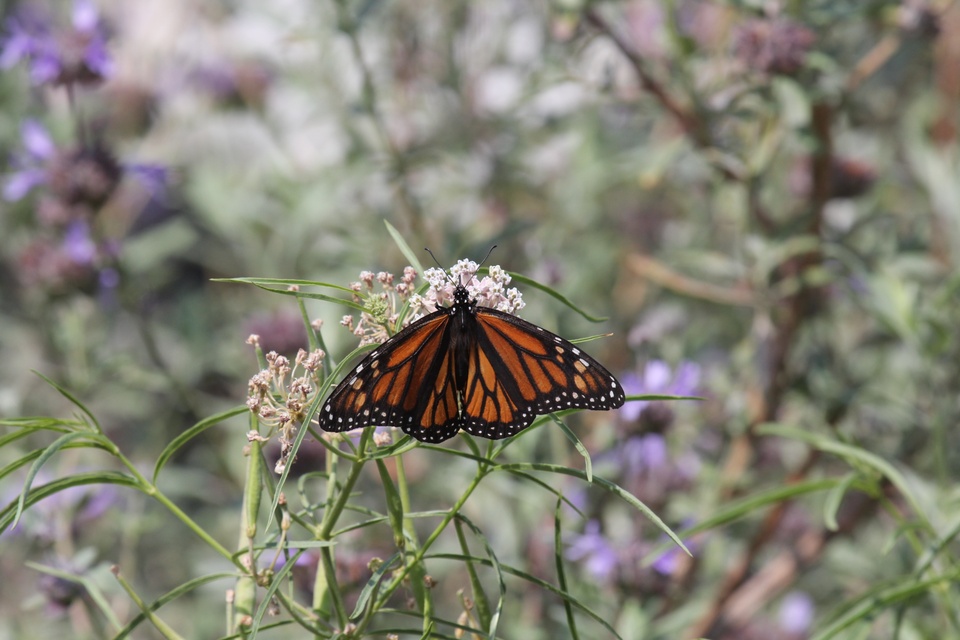
Outdoor areas surrounding houses and housing complexes that have California native plants support four times more pollinators than conventionally landscaped yards, according to a recent study led by a Cal State Los Angeles graduate.
The researchers’ findings suggest homeowners can play a prominent role in supporting biodiversity by creating healthier ecosystems in urban areas, including populous lower-income communities.
Esmeralda Reyes — a Cal State LA alumna and current doctoral student at the University of California, Davis — conducted the research along with Cal State LA biology professor Eric Wood and Temecula-based wildlife ecologist Noriko Smallwood. Wood is also co-director of the university’s Urban Ecology Center.
The study titled “Native-plant landscaping enhances floral visitation by insects and birds in residential yards” was published April 24 in the peer-reviewed journal Urban Ecosystems.
“There has been a surge in interest in planting native plants in yards in cities across the country and here in LA — yet we really haven’t had a strong sense of how landscaping with native plants affects our local pollinators, which is what we sought out to understand through this study,” Wood said in a statement Wednesday.
According to the study, yards with native plant species attracted many more flower-visiting insects and birds, while supporting 1.5 times more pollinators than yards with lawns and ornamental plants. Native-plant landscaping also led to “more connected and resilient ecological networks” that are better-suited for supporting pollinator species and other types of wildlife that live in urban areas.
The researchers surveyed 31 residential yards throughout the Los Angeles area, comparing properties with native plants and others with conventional landscaping. During field visits, researchers recorded insect and bird visits to flowers while measuring plant diversity, flowering characteristics, temperature, air quality and neighborhood conditions, according to the study.
In addition to quadruple the total amount of pollinators in native-plant yards, other key findings include:
- Pollinator diversity — yards with a majority of native plants hosted 1.5 times more species of flower-visiting insects and birds, driven largely by increases in native bees and hoverflies.
- Native landscapes had nearly three times more plant-pollinator interactions, leading to stronger, more resilient ecological networks.
- Native plants received 88% of all flower visits, despite making up about 80% of available flowering plants.
- The benefits to biodiversity also were evident in low-income neighborhoods, showing that native plants can help address disparities in access to healthy green spaces in urban areas.
Several native plants — including California buckwheat, or Eriogonum fasciculatum, and white sage, Salvia apiana — served as important hubs for pollinators that were part of the ecological networks observed during the study.
The report highlights the growing importance of native landscaping as cities seek practical ways to improve biodiversity, support pollinating insects and birds while also boosting the resilience of local ecosystems. Additionally, the study underscores how property owners can contribute to conservation by choosing native plants.
“Converting just 1% of residential yards to native landscaping would add 100 additional plant–floral-visitor interactions per 1,000 yards. … Scaled across a large city such as Los Angeles, this represents tens of thousands of additional ecological interactions distributed across the urban landscape,” the study reported.
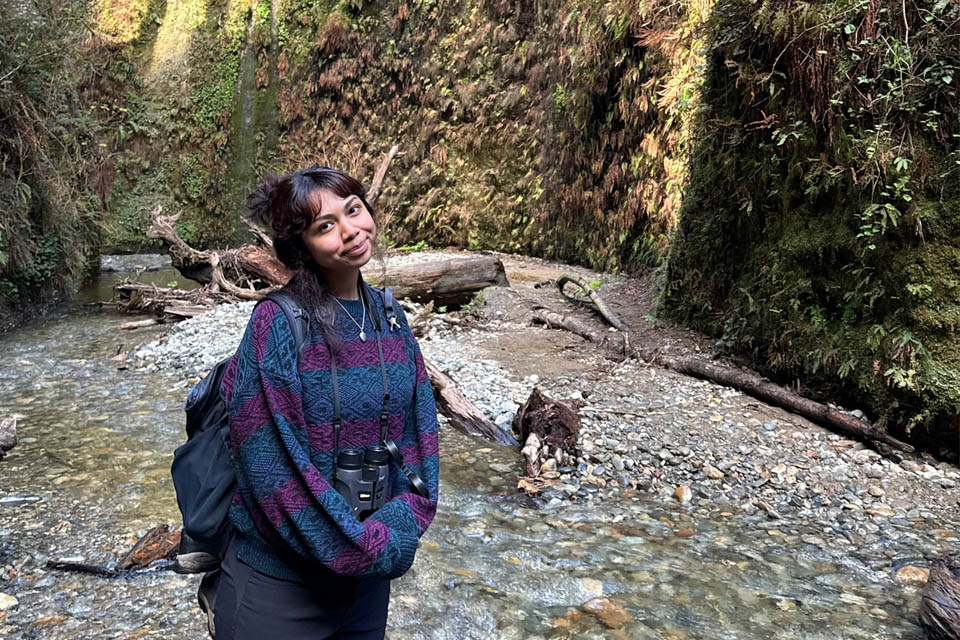
“We expected native yards to harbor more insects and diversity than conventional yards, but the network resiliency and abundance of native insects found in native landscaped yards were amazing findings,” said Reyes, who earned a master’s degree in environmental science from Cal State LA. “These results were especially important in lower-income neighborhoods and will hopefully encourage the city to landscape with native plants in these areas.”
Reyes and her research partners recommended that “cities should incentivize native conversions through rebates and landscape design programs, with priority given to low-income neighborhoods where baseline native cover is lowest and ecological return on investment is highest,” they wrote in the journal article.
Another recommendation was for local governments to “prioritize native landscaping incentives in low-income areas that historically lack green amenities, demonstrating that accessible, affordable interventions can achieve substantial ecological outcomes.”
The article detailing the study is on the journal’s website.