

The Ontario City Council voted 4-0 Friday to place a half-cent general sales tax measure on the November ballot, asking voters to approve an estimated $32.5 million in new annual revenue for general municipal services above the city’s current 8.75% rate.
City Manager Scott Ochoa told the council the proposed tax would apply only to taxable durable goods — not groceries, medications, services, rent, utilities or education costs — and emphasized that under the California Constitution, only voters can raise taxes.
The special meeting, held on a weekday morning with 24-hour notice, drew 17 in-person speakers and one remote caller, with auto dealer representatives forming the largest opposition bloc and labor unions lining up in support.
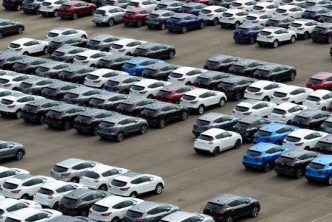
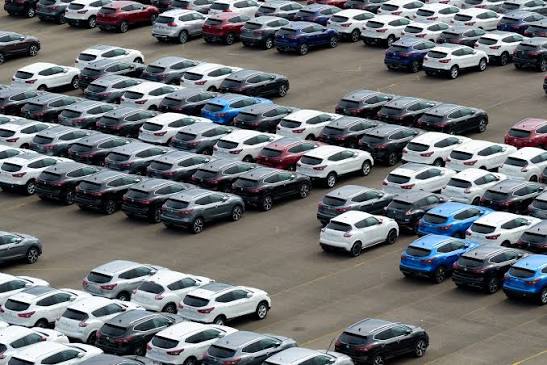
John Sackrison, executive director of the Inland Empire Auto Dealers Association, presented a commissioned study finding that 69.7% of consumers avoid vehicle purchases in higher-tax cities and that only 33% understand vehicle sales tax is based on residence rather than purchase location. He said the last tax increase caused resident purchase declines of 40%, with projected losses of $360 million to $500 million.
Several individual dealers echoed those concerns. Ontario Auto Center Dealers Association President Earl Reed said eight years of sales records showed a roughly 30% decline from peak July sales.
“We have an affordability issue here in this nation, right?” Reed told the council. “And it’s evident here in the City Of Ontario as well. So we have to address the affordability issue. By raising sales tax, it’s just a very, very bad timing. And so we oppose it greatly.”
A representative of Citrus Motors, which recently made a $40 million investment in Ontario, told the council that a sales tax increase “does not show how well it’s run — and it’s going to show to investors and it’s going to show to the people that are showing our success right now.”.
Ochoa pushed back, pointing out that cities to the west — Pomona at 10.5% and Glendora at 10.75%, Montclair at 9% and Claremont 9.75% — have higher tax rates yet still maintain auto centers. “If that were the case, then there would not be any auto dealers in the County of Los Angeles,” he said, referring to the county’s 9.75% sales tax and higher rates in LA-area cities.
Labor representatives urged the council to let voters decide. Shaun Martinez, a business agent for Teamsters Local 1932 representing 380 city employees, said the measure would allow continued momentum from Measure Q, the 1% sales tax increase voters approved in November 2022 that generates roughly $60 million annually.
Several residents questioned whether Measure Q funds had been properly accounted for before seeking another increase. One speaker demanded a complete accounting of Measure Q — exactly how much has been collected since it took effect, how much has been spent, and where did every dollar go. Another pointed to the Ontario Sports Empire, calling it a $500 million “unnecessary” project with Measure Q funds that “no residents asked for.”.
Mayor Paul Leon addressed transparency concerns by framing the vote as an expansion of public participation.
“This item is not imposing a tax,” Leon said, adding that he wants “the people to have a choice”.
Leon also provided historical context for why Council District 4 has lagged in infrastructure investment, recounting that in 2013 the city had designated millions for streets, sidewalks, gutters, painting, roofing and landscaping for every house in the district that wanted improvements. But in 2014, he said, the state seized those redevelopment funds to balance its own budget, “with no explanations on why they needed it and no apologies”.
Councilmember Debra Porada noted that 60% to 65% of the city’s budget, which is around $1 billion annually, covers employee salaries and benefits across all departments, and framed the decision to move the tax hike forward creating the fiscal stability to determine what kind of community Ontario wants to be over the next 20 to 30 years.
“The reality is, our city has continued to grow, construction costs have continued to climb and many of the priorities that our residents still care about are still ahead of us,” Porada said. “This measure would provide future city councils with the financial flexibility to address important community priorities.”
She cited needs including homeless outreach center expansion, a permanent animal resource center, water filtration facilities and community centers for District 4.
The council adopted two resolutions: one placing the measure on the ballot and a companion resolution setting deadlines of Aug. 17 for direct arguments and August 21 for rebuttal arguments in the voter information guide. If approved by voters, collection would begin April 1, 2027.
Mayor Pro Tem Alan Wapner was absent and did not vote Friday.
Wapner was among multiple Southern California officials whose homes were raided by the FBI in late July.
The election is Nov. 3.
The AI platform Civilio assisted this report.