

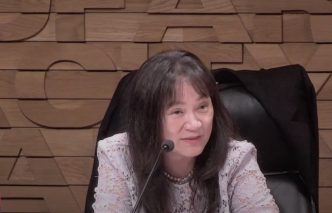
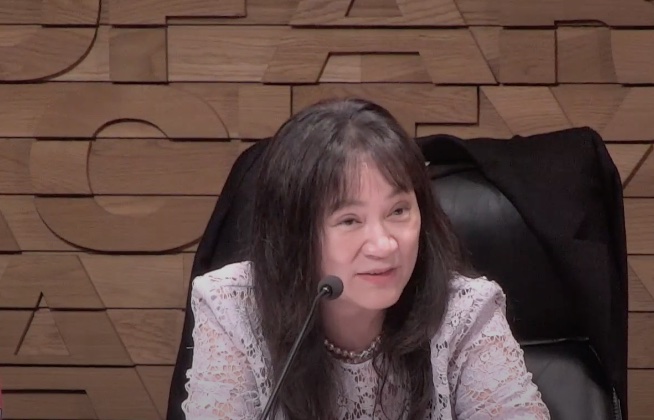
Arcadia Councilwoman Sharon Kwan voted against the recently approved nearly $97 million budget, questioning whether spending is actually under control or if delayed purchases, vacant staff positions and pushing projects into the future is balancing the city’s books.
City officials and the council majority, however, don’t agree with her fiscal analysis.
City Manager Dominic Lazzaretto proposed a fiscal year 2026-27 General Fund Operating Budget with revenues of $96.6 million and expenditures of $100.1 million that include new programs requiring one-time funding transferred from dedicated savings accounts, according to his report to the council prior to the 4-1 vote June 16. The General Fund is expected to end FY 2025-26 with a net balance of $276,000, with a “projected Fund Balance of the General Fund Operating Budget” of $21.7 million.”
Lazzaretto told council members when all savings accounts transfer in, actual revenue for FY ’26-27 will total close to $105 million.
In a statement to HeySoCal.com, Kwan said she understands officials’ and her council colleagues’ assertions that focus “on accounting explanations, transfers and fund categories. I understand those explanations. But the real issue is much simpler: Is Arcadia truly controlling spending, or is the city making the budget look balanced by delaying purchases, leaving positions vacant and pushing important projects into the future? That is why I voted no.”
According to Kwan, “A budget can look balanced on paper while services are quietly reduced in real life. If police positions are left vacant, equipment purchases are delayed, capital projects are carried forward, and public safety programs are still ‘being studied,’ the numbers may look better, but residents are the ones who lose.”
At the June 16 meeting, Kwan noted the Arcadia Police Department’s seven vacant police officer positions, which she called “a very serious public safety concern.” The APD currently has 53 police officers, 73 total sworn personnel, and 99 total department employees, Kwan said, adding that Lazzaretto confirmed seven fewer police officers on the payroll creates more than $2 million in savings annually.
“That is exactly my concern,” Kwan told HeySoCal.com. “If the city is saving more than $2 million by not filling police officer positions, then residents deserve to know that. Those savings are not magic. They come from positions that are not filled. They come from public safety capacity that is not being provided. To me, public safety should not be used as a hidden balancing tool.”
Kwan said the same issue resurfaces in spending for infrastructure and equipment upgrades.
“The city’s own equipment carryover report shows millions of dollars in approved equipment and vehicle purchases that were not completed in the same budget year,” Kwan said. “I understand some projects take longer because of bidding, manufacturing, supply chain delays or installation. But the result is still the same: when spending is delayed, the budget looks better in the short term.”
According to the District 2 councilwoman, “That does not mean the city’s long-term financial picture is healthier. It only means the bill has been pushed into the future.”
Referring to the city’s “Equipment Replacement Budget Carryover Status Report,” Kwan pointed to “numerous projects that were approved in prior years but had not yet been completed, including police vehicles, fire vehicles, communications equipment, technology upgrades, and other capital purchases,” she said. “Many projects were delayed due to supply chain issues, manufacturing delays, vendor issues, project dependencies, staffing changes or other factors.
“I am not suggesting that every delay was avoidable or improper. However, I believe residents deserve to understand that a budget can appear stronger in the short term when major expenditures are deferred or carried forward into future years,” Kwan continued.
“My concern has always been whether Arcadia’s financial position is being strengthened through long-term structural improvements or whether some of the improvement is the result of delayed spending obligations that will eventually need to be paid,” she said.
The Carryover report “was one of the factors that contributed to my concerns regarding the city’s long-term financial sustainability and why I ultimately voted against the budget,” Kwan added.
“The question is not whether staff can explain the accounting. The question is whether residents are being shown the full picture,” Kwan said.
“For example, if a family says, ‘We balanced our household budget this year,’ but they did it by delaying car repairs, not fixing the roof, not hiring needed help and pushing bills into next year, that family did not truly solve its financial problem. It only delayed it,” Kwan observed. “That is what concerns me about Arcadia’s budget.”
Employee compensation was another issue Kwan raised.
“The city approved significant employee compensation increases in 2024, including raises of more than 18% for employee groups,” she said. “Those decisions create long-term costs. Once salaries and benefits increase, those costs continue year after year. They also affect pension costs and future budgets.
“At the same time, we are seeing vacant police positions, delayed equipment purchases, delayed capital projects, and important public safety improvements that have not been completed,” Kwan said. “I have repeatedly asked about a police drone program. I keep hearing that the city is studying it or working on it. I have also raised concerns about Wilderness Park and other long-delayed priorities. Residents hear promises, but year after year, progress is slow.”
Going beyond the numbers and spreadsheets, Kwan added that curtailing spending “is not just a budget issue. That is a service issue,” she said. “A budget is not just a spreadsheet. A budget reflects priorities.
“If the city has money for large compensation increases but still has seven vacant police officer positions, no completed drone program, delayed equipment purchases and long-delayed capital projects (to improve infrastructure), then residents have every right to ask whether the city’s priorities are in the right place,” Kwan continued. “I am not saying every delay is improper. I am saying residents deserve honesty about the tradeoffs.”
She acknowledged the city does not use reserve funds to balance the budget during times of reduced revenue.
“I agree that reserves should not be used for ongoing expenses, but that statement does not solve the larger issue,” Kwan said. “If spending obligations continue to grow faster than recurring revenue, then eventually the city will face difficult choices: cut services, delay more projects, raise taxes, leave positions vacant, or use reserves. That is exactly what I am trying to prevent.”
Kwan observed that many cities in financial trouble do not get to that point “overnight,” fiscal decline usually starts “with small warning signs” — “spending grows faster than revenue, vacancies become normal, projects get delayed, equipment replacement gets pushed back. Leaders say everything is fine because the budget still technically balances.
“Then, a few years later, the city has fewer options and residents pay the price,” Kwan said. “Arcadia is still financially strong today. That is exactly why we should be careful now. Fiscal discipline is easiest before a crisis, not after.”
Kwan, who faced a council censure action last year, said her budget dissent “was a vote for honesty, transparency, public safety and long-term financial responsibility. I voted no because I believe residents deserve a budget that is not only balanced on paper, but sustainable in real life.”
Officials dispute Kwan’s budget analysis
Deputy City Manager Justine Bruno challenged Kwan’s previous assertion that the city’s General Fund revenues are projected to rise from $94 million to $96.6 million, about a 2.6% increase, while during the same period expenditures rose from $92.3 million to $99.6 million, approximately 8%.
“In other words, spending is growing more than three times faster than revenue,” according to Kwan.
Bruno countered that the $92.3 million and $99.6 million in spending includes one-time capital and equipment purchases of approximately $7 million in each year.
“Capital and equipment spending is supported by annual transfers into the Capital and Equipment funds, based on the average 10-year spend,” Bruno said in an email to HeySoCal.com. “The purpose of these funds and making annual transfers to them is to ensure large one-time expenses don’t compromise the ability to fund ongoing city operations.”
The $94 million and $96.6 million in General Fund revenue “do not include those annual transfers to support capital and equipment purchases, which, when excluded, make it appear that expenses are outpacing revenues. In short, the summary that was provided shows the full General Fund expenses but does not show the full General Fund revenues,” Bruno said, citing Slide 23 of the budget presentation provided to the City Council on June 16.
If the revenue that supports infrastructure spending and equipment purchases had been included in the numbers presented, the amounts would have been, respectively, $100.1 million — up from $94 million — and $106 million — up from $96.6 million, the deputy city manager said.
“It’s also important to clarify that the city does not use its reserves to balance its budget,” Bruno added. “Using reserves to pay for ongoing expenses is unsustainable and would not be in alignment with the purpose and intent of those funds.”
Mayor Pro Tem David Fu said, “You can’t just look at General Fund expenditures. The Equipment and Capital Improvement funds transfer funds to the General Fund for disbursement to address long and medium term improvements earmarked for payment under those additional reserve funds.
“Thus, looking at the General Fund solely tends to inflate what appear to be expenses because revenues are not budgeted to address those costs,” Fu said. “Long and medium term Capital Improvements and Equipment purchases are budgeted under their respective accounts. Simply transferring those amounts to the General Fund when earmarked for disbursement does not indicate deficit spending.”
The entire proposed 2026-27 budget and staff report is available on the city’s website.