

On Oct. 5, 1978, President Jimmy Carter signed a joint resolution for a weeklong celebration of Asian American and Pacific Islanders’ contributions to the United States. The month of May was chosen for two historic events — on May 7, 1843, the first Japanese immigrant, Nakahama Manjirō, arrived in the United States. More than two decades later, on May 10, 1869, the golden spike was driven into the first transcontinental railroad, which was completed using Chinese labor.
In 1990, President George H.W. Bush signed a bill passed by Congress to extend Asian American Heritage Week to a month; May was officially designated as Asian American and Pacific American Heritage Month two years later.
President Barack Obama signed a proclamation on May 1, 2009, recognizing the month of May as Asian American and Pacific Islander Heritage Month. Under President Joe Biden it became Asian American, Native Hawaiian and Pacific Islander Heritage Month.
According to the U.S. Census Bureau, the AANHPI population in the U.S. is the fastest-growing racial group with over 25 million people, nearly 8% of the total population as of 2023. This diverse group includes around 25.8 million Asian Americans, alone or in combination, and roughly 1.6 million Native Hawaiian and other Pacific Islander individuals.
There are 7 million to 7.2 million Asian Americans living in California as of 2023-25, according to Pew Research Center. They make up approximately 18%-18.4% of the state’s total population, representing the largest Asian population in the continental United States.

Los Angeles County has the highest concentration of Filipinos in any U.S. county, often cited as the largest population outside of the Philippines. Based on Neilsberg Census estimates, LA County is home to approximately 416,221 Filipino residents, representing about 4.23% of the county’s population as of 2025.
Filipinos were the earliest recorded Asian immigrants to the United States who landed on Oct. 18, 1587 on what is now Morro Bay — a significant event that is commemorated as Filipino American History Month.
There is no official statistic on the Filipino population in the San Gabriel Valley and Pasadena, in particular. However, Asian Americans make up approximately 15.5% to 17.4% of the total city population according to the U.S. Census Bureau. While representing a smaller percentage of the overall city population than neighboring LA, the Filipino community in the San Gabriel Valley is a visible and significant presence, with heavy representation in health care, nursing and service industries.
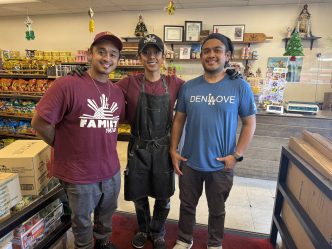
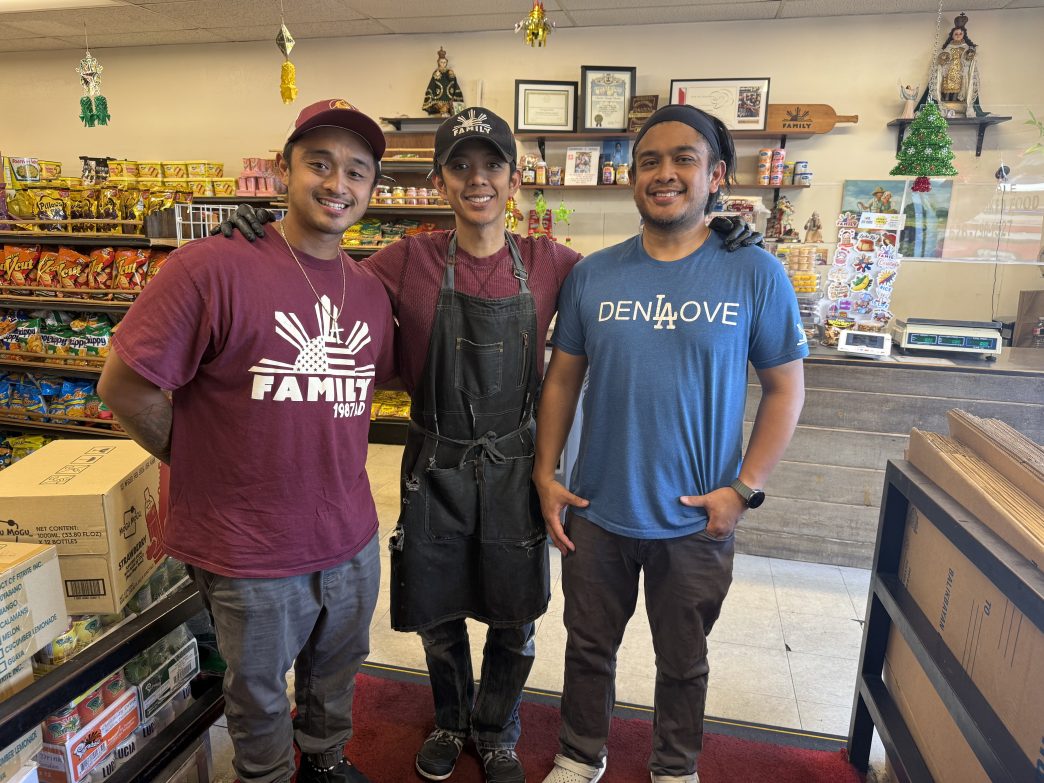
Chaaste Family Market in Pasadena has been serving the Filipino community since 1987 when it was founded by Susan Esteban. Beginning in 2015, her three children — Christian, Abraham and Gabriel — have been carrying on her legacy.
The Esteban family has deep roots in Pasadena, as Christian relates: “My grandfather was a POW in WWII when he arrived in Pasadena in 1949. He was one of the ‘manongs’ in Pasadena and was the first Asian to own a house in Loma Vista.”
A “manong” is a term of respect for an older brother or older male relative in the Philippine province of Ilocos.
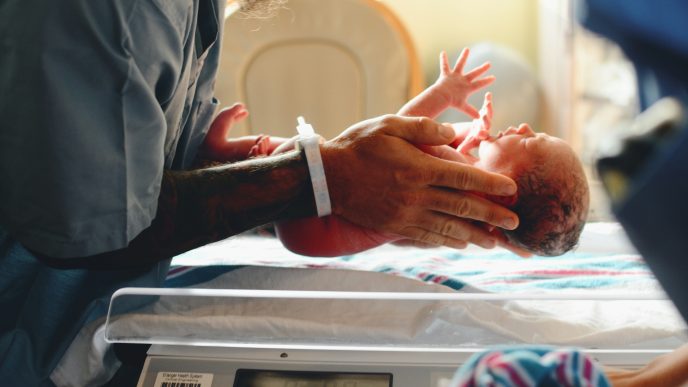
“Several of our relatives were workers in Delano but they weren’t just farm pickers,” continues Christian. “They knew agriculture and planting seasons, were educated and conversant in both English and Spanish. They moved to Pasadena in the 1950s and formed one of the earliest Filipino working class communities here. They were able to acclimatize to the new place and do other jobs — they were jacks-of-all-trades and reliable employees. My uncle ‘Apo’ Ordinario, who was one of the first Filipinos born at The Huntington Hospital, worked for the Ballard family.
“While my grandfather was given American citizenship by the U.S. government, his family was not,” Christian goes on to say. “He had to petition them separately and my dad, Arturo, arrived here when he was nine years old. My dad served in the Air Force and fought in Vietnam; he graduated from Cal State LA. He worked as an auditor at mostly aerospace companies — first at Lockheed, which moved to Phoenix, but he didn’t want to relocate; so he went to work for Northrop; then he was recruited by JPL, where he worked for about 25 years as senior auditor until he retired.”
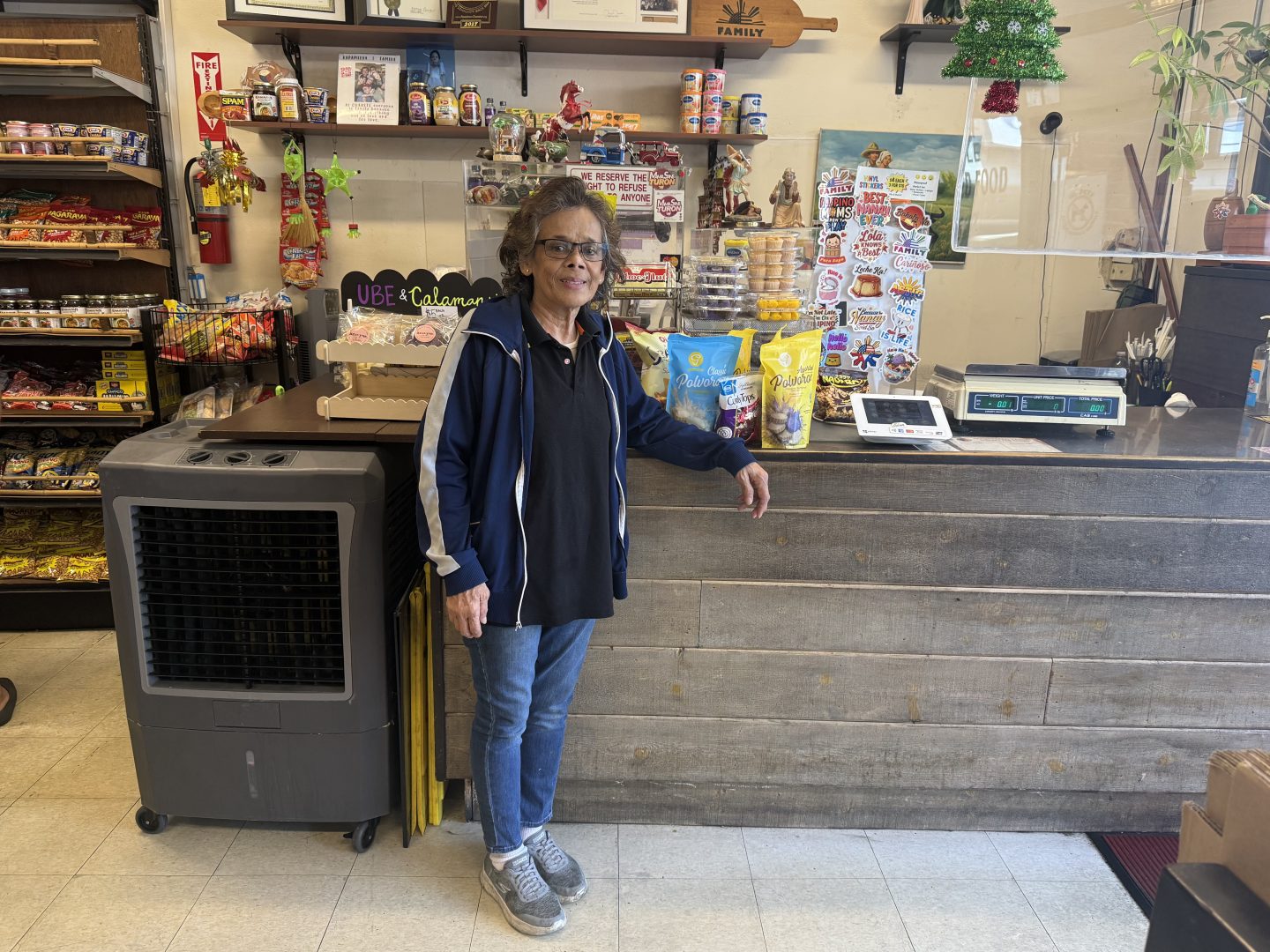
Susan Torres, later Esteban, was able to immigrate to the U.S. through her uncle, who was an engineer. He was one of the Filipinos who took advantage of the 1965 Immigration and Nationality Act. She and Arturo met through mutual friends.
“My mom was a pioneering woman,” Christian claims proudly. “She was one of the first three Asians to work at Warner Brother Records. She was still employed there when she had me and when my brother was born three years later. After ten years, it became hard for her to raise two difficult boys – we were a handful. She had been entrepreneurial even at a young age, so she decided to open a store. Because Pasadena didn’t have a large Filipino population, she thought Eagle Rock would have been the ideal spot for it. But my dad insisted that it be located in Pasadena, and he prevailed.”
Chaaste Family Market opened its doors in 1987 in a nondescript corner on Allen Avenue and Corson Street, right next to the 210 Freeway. The name is derived from their names — C for Christian, A for Abraham, the other A for Arturo, S for Susan, T for her maiden name Torres and E for Esteban — and is pronounced “chaste.” Susan could have simply named it Esteban Family Market, but Filipinos have a penchant for combining their first and second names like Marivic for Maria Victoria, for instance.
She is also a devout Catholic so it was vital for her to practice Christian virtues and integrate them into all her endeavors.
Always someone to take things into her own hands, Susan did the marketing herself in the early days.
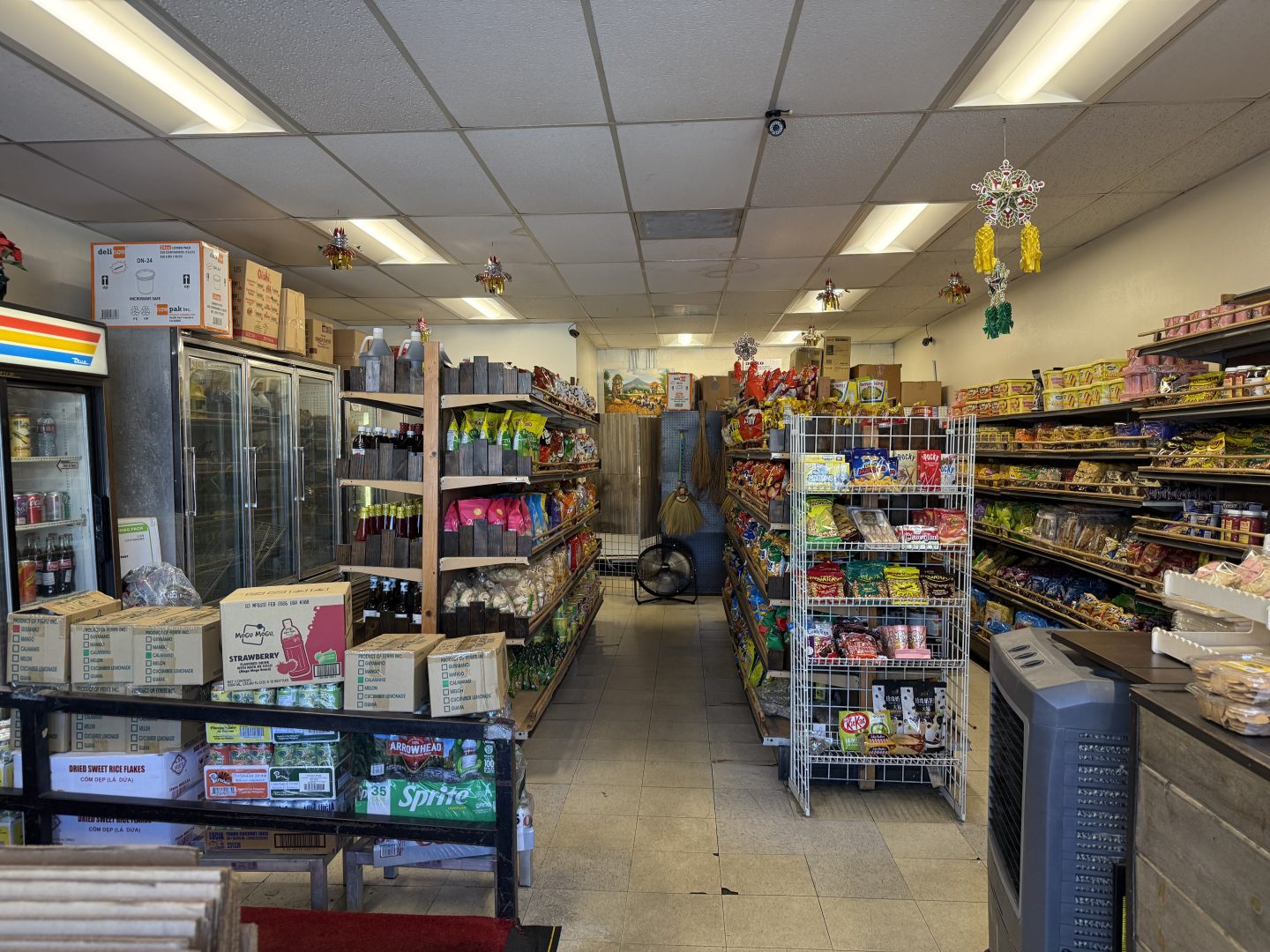
Christian recalls, “Filipinos and Hispanics are mostly Catholic so my mom would go to the churches with flyers promoting the store. The Hispanic community kept us afloat; they came for our fresh produce — we didn’t have the hot food till 1995. This strip mall was a mini business hub for the Filipino community. My cousin owned the first video store two doors away; my uncle George had the small restaurant next door. The tax preparing business, the doctor’s office and insurance company were Filipino-owned.”
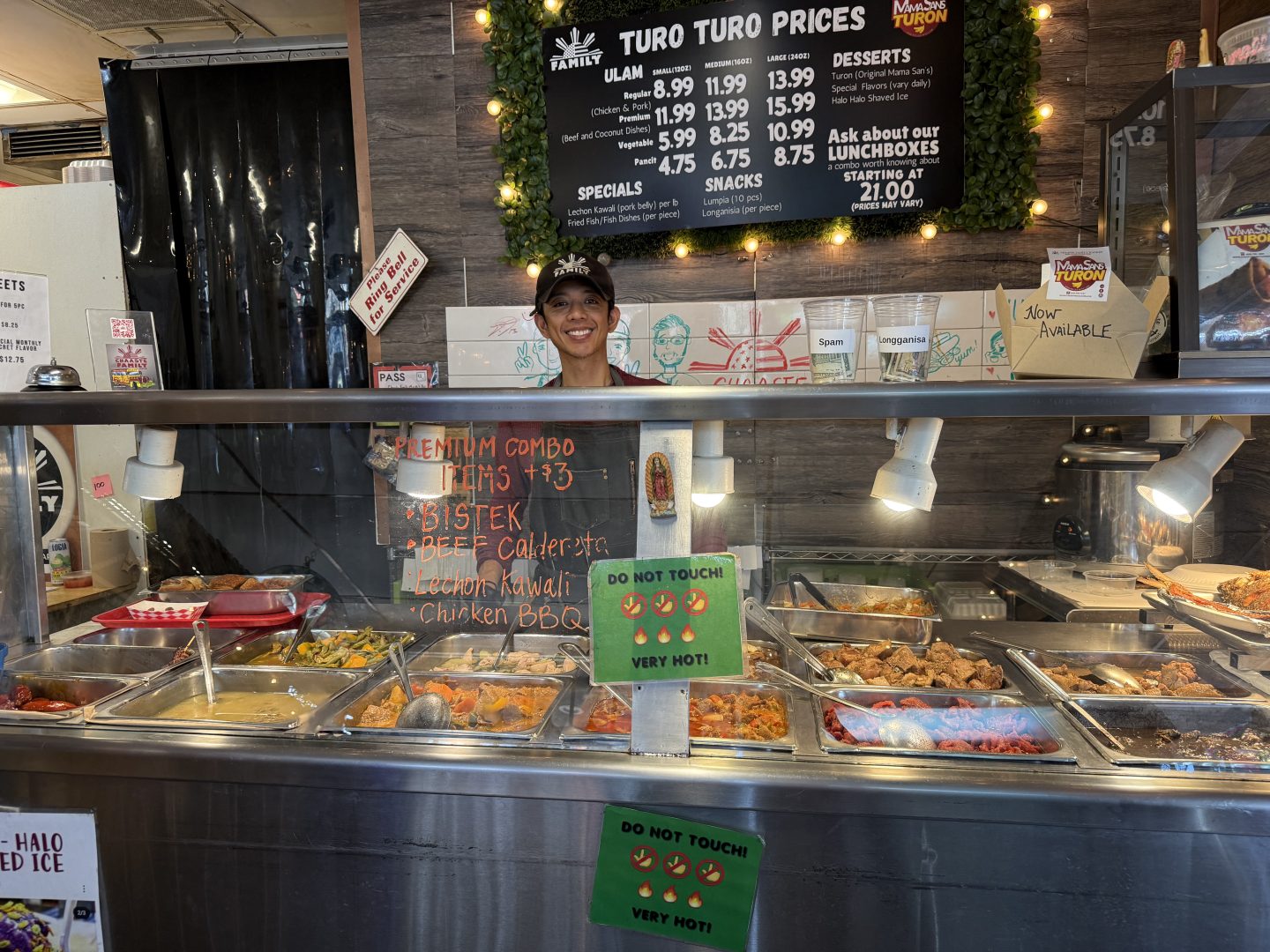
Christian explains how Chaaste Market started offering hot food, known as “turo-turo,” literally “point-point” because customers point to the food they want:
“People who were employed at the hospitals and in the healthcare field, the post office, and other private companies would get out from work too tired to cook after a long day. They would stop at my Uncle George’s restaurant to pick up food on their way home. But he closed early and those who had to leave work a bit later had no place to get hot food, so they asked my mom to offer turo-turo in the store. While she could cook, she wasn’t a professional chef and didn’t know how to prepare food for a hundred people. But she learned through hard work and trial and error.”
Gabriel, the youngest Esteban, was born a few years after the market opened. Being a close-knit family, the entire family was involved in the business. Their relatives — uncles, aunt, cousins — helped out and Chaaste Market flourished. In the intervening years, the Filipino restaurant and video store closed. There are now only two remaining Filipino-owned businesses but Chaaste still acts as the glue the binds the Filipino American community in the western San Gabriel Valley.
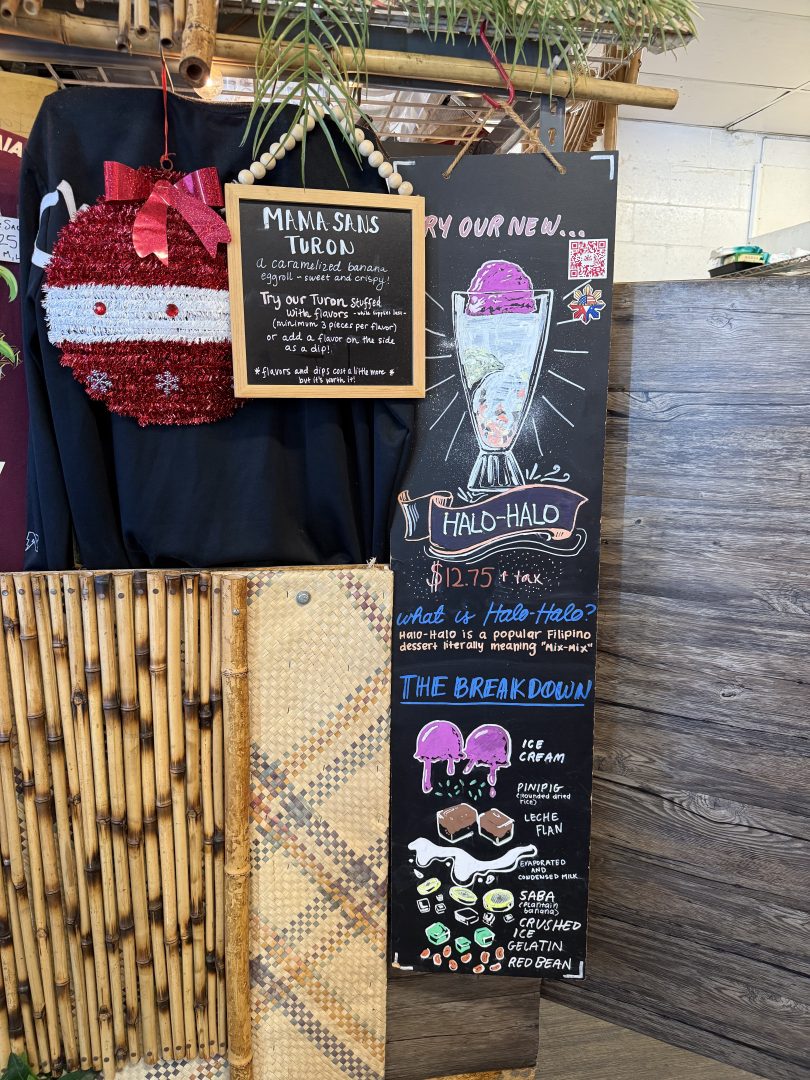
Christian recalls about his upbringing, “My brothers and I have always been proud of being Filipino. But we were raised in Pasadena where the majority of the population is White, with some Blacks, Hispanics, and Asians. We went to private Catholic schools and grew up around non-Filipinos and we wanted to be like them, to fit in, to belong. So we had to adapt to our surroundings and to the way the kids we spent most of the day with ate, moved, and talked.”
Susan felt the only way for her children to really know what it meant to be Filipino was for them to live in the Philippines. “My mom sent us back to the Philippines in 2007 to attend university there and to learn about our culture,” Christian discloses. “I studied Film in Baguio where it’s cool and then worked in News and Public Affairs for GMA-7, traveling all over the country. The experience opened my eyes to a whole different world, the beauty of the Philippines, and the talent of Filipinos.
“Being Filipino American and being Filipino are two distinct things,” clarifies Christian. “I thought I knew what it was to be Filipino, but it was only when I lived there that I recognized that it was a very different culture. I’m conversational in Tagalog and then I heard what the real Tagalog language is. I saw first-hand that Filipinos value education and have exceptional work ethic. Looking back now, it was that realization that gave me the passion to carry on my mom’s legacy through her store. I’m very proud of my heritage.”
When Arturo, who has since passed away, showed early signs of dementia, Susan asked her children to come back to California. The store had been struggling to stay financially viable and she planned to close it. However, her children insisted they would take over and she could focus on their dad’s care.
“I really just wanted them to be here for emotional support,” Susan says. “With their excellent education, they were able to get wonderful jobs in the Philippines. They had enough work experience so it would have been easy for them to find professional employment here and earn good salaries.”
Admits Christian: “It took a bit of convincing for my brothers, especially Abe, to go back to California. He attended Ateneo de Manila, and after graduation he was employed as systems operations manager at Hewlett Packard in the Philippines working with international companies.
“But in the end, we love the store my mom built and we grew up thinking of it as our second home,” Christian emphasizes. “As kids my mom brought us back here from school and the parking lot was where we skateboarded. We’re connected to the store emotionally and spiritually; we grew up here with our cousins.”
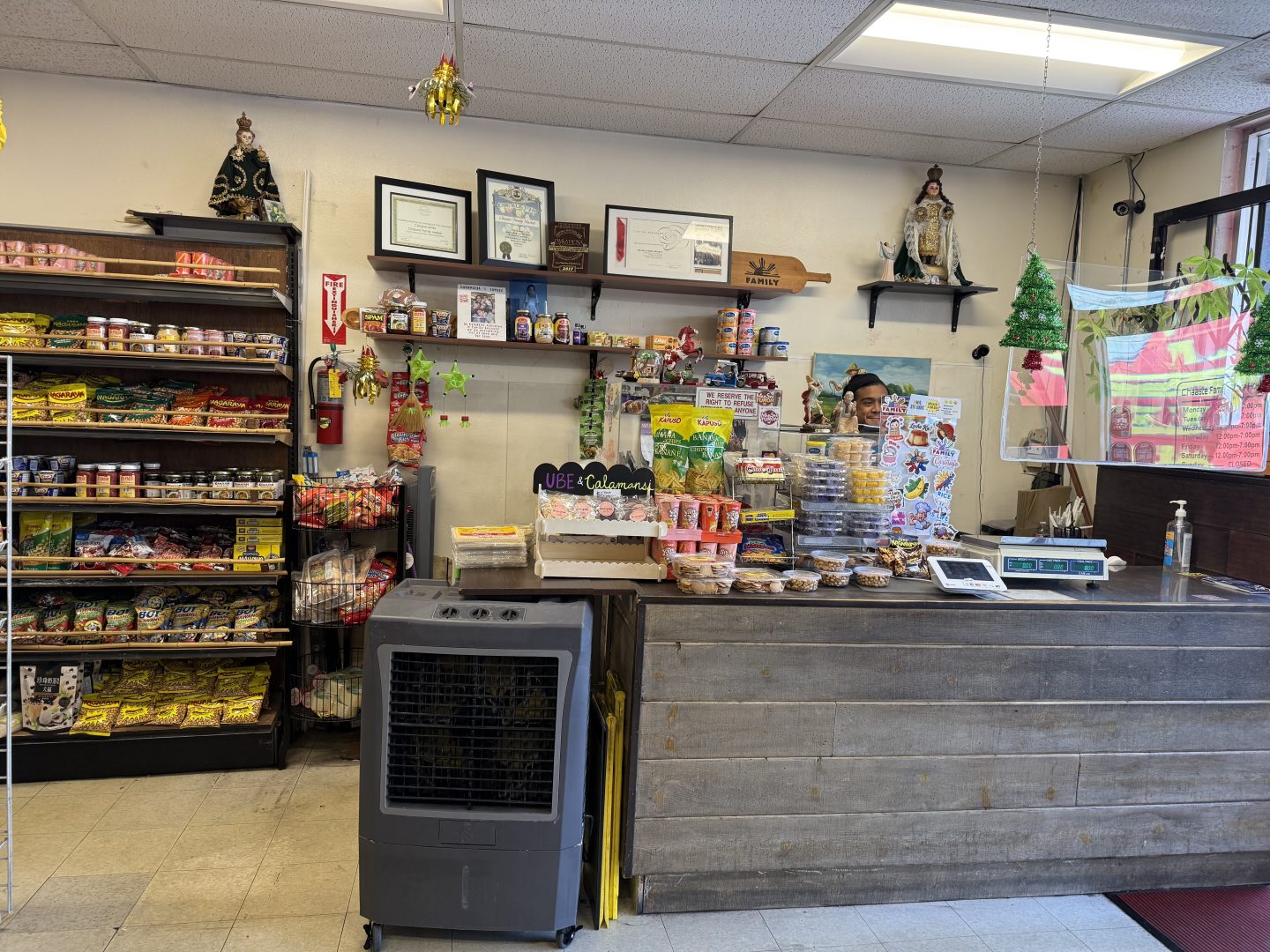
Abraham echoes Christian’s words: “HP offered to have me work remotely so I could stay on the job, which was very kind. But I declined because I also wanted to continue what Mom started 39 years ago. We’ve had a couple of proposals from people to buy the store and that would have been an opportunity for me and my brothers to find regular jobs, have weekends off, take a two-week vacation annually. However, the buyers weren’t Filipinos and they were going to convert it into something else altogether. And that outcome wasn’t something we wanted to see. It’s important for us to ensure that Filipino Americans in Pasadena and beyond have a place to come together as a community.”
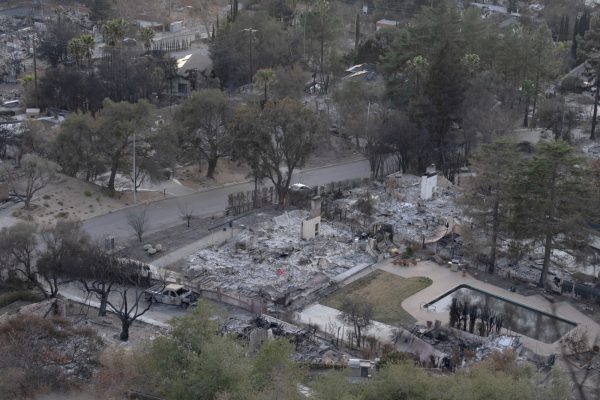
That coming together as a community was on display last year after the Eaton Fire broke out. Chaaste Market organized a donation drive and filled half of the store with clothes and toiletries from Filipino Americans who wanted to help. The brothers posted it on Instagram and very quickly fire survivors came to avail themselves of the much-needed items.
Filipinos are, by nature, big-hearted and generous to a fault. But they are also very low-key; they don’t want to call attention to themselves and they avoid public accolades. They want to give quietly, even anonymously.
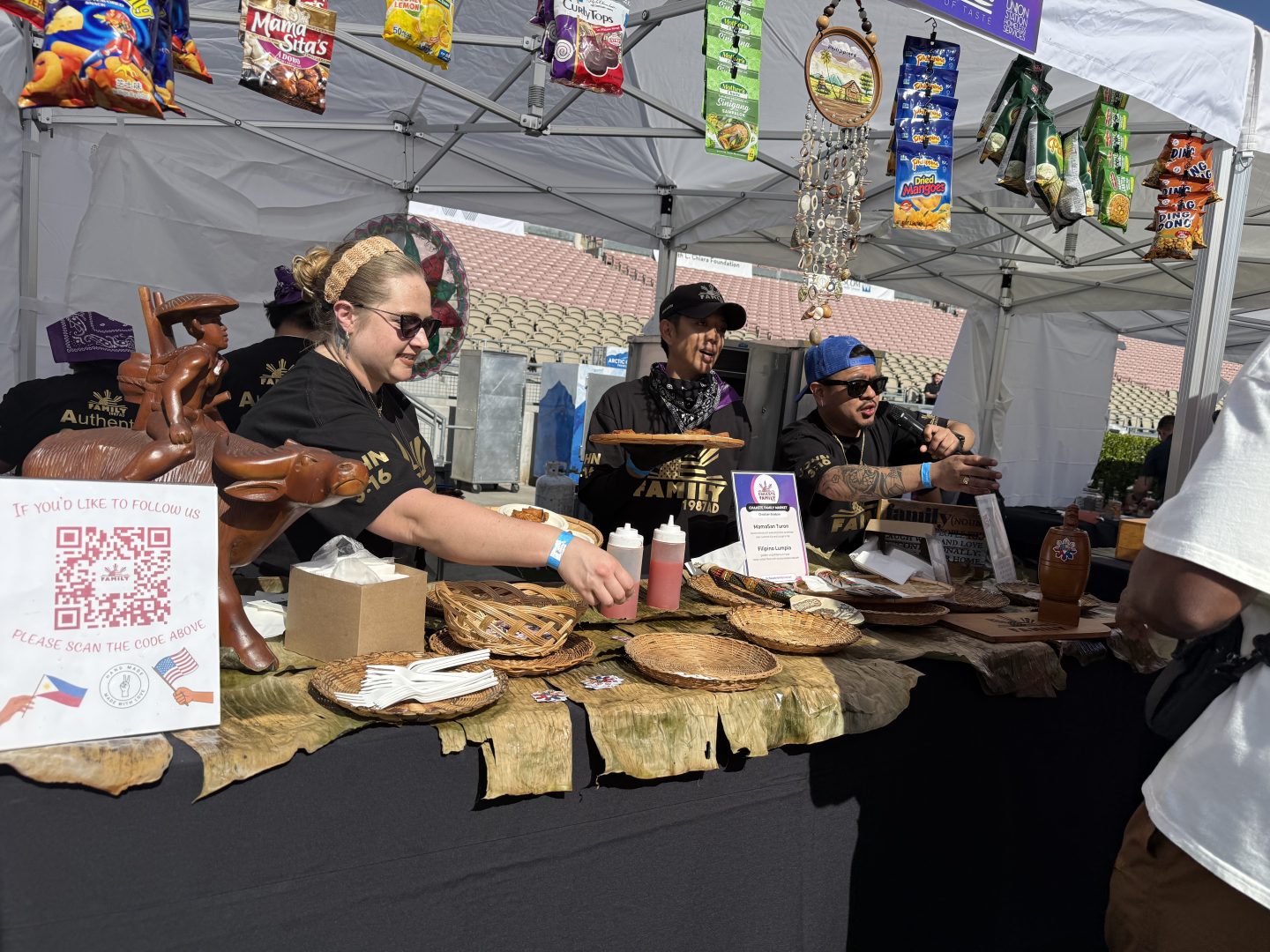
But the Esteban brothers broke the mold this past spring when Chaaste Market participated in Masters of Taste 2026, an annual event that attracts thousands of foodies from all over Southern California and gets much media coverage. They brought their own sound system to play Filipino music and Abraham talked about their store, to the delight of those who were in the long queue to sample their “lumpiá” and signature Mama San’s “turón.”
The pride in their heritage is the philosophy behind the store. Christian describes, “Chaaste Market is all about the Filipinos’ way of life, our attitudes, generosity, and openness. We always invite people to eat with us — ‘kain na,’ or ‘let’s eat’ is an everyday phrase we use. And my mom wanted to share that with our customers.”
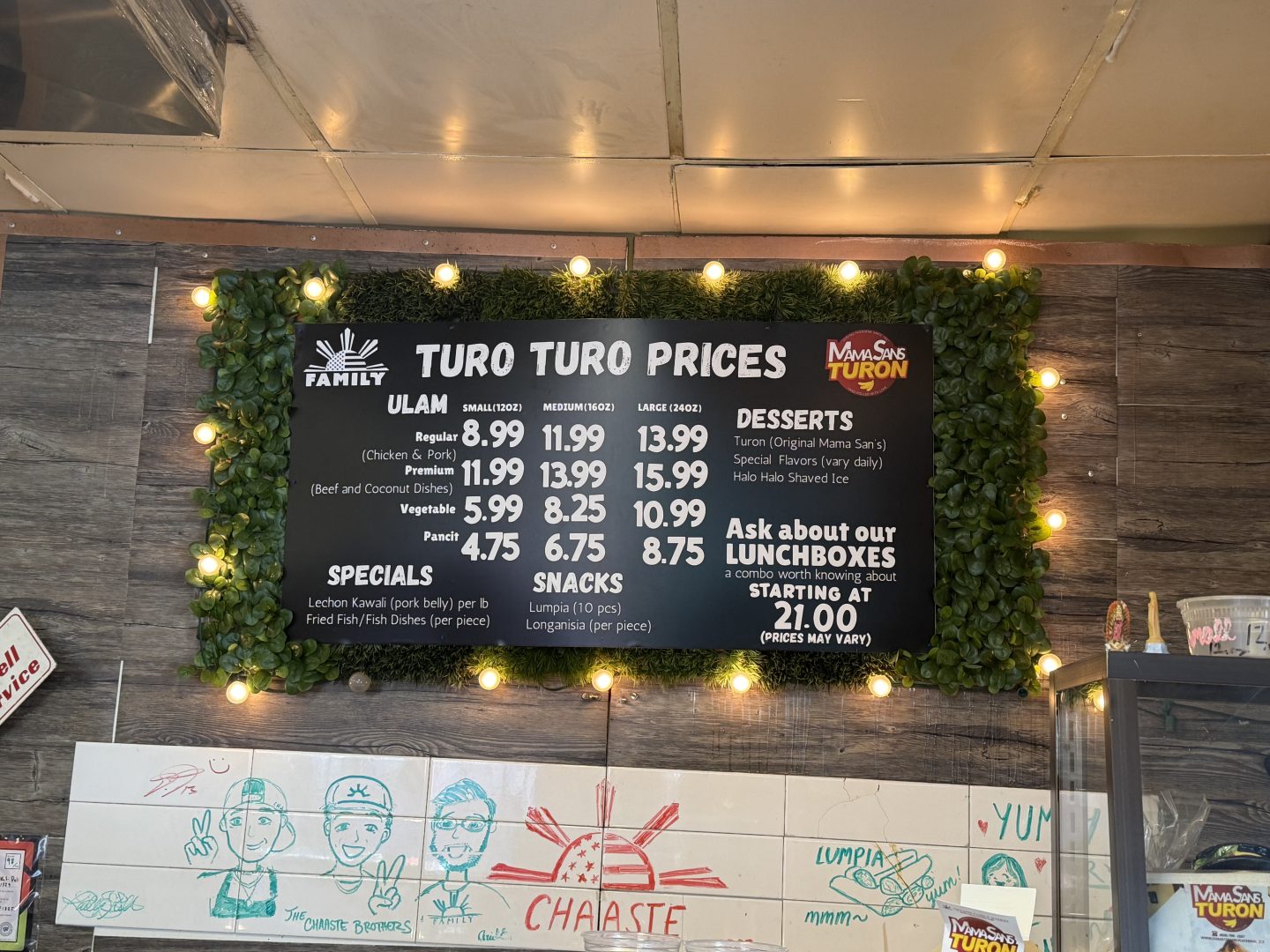
Chaaste Market is open from Monday to Saturday. During the pandemic, they stopped carrying produce, removed the lunch/dinner tables, and shortened the hours to noon to 7 p.m. from the previous 11 a.m. to 8 p.m. Customers come primarily for the hot food and the store sells between 70 to 100 “to-go” boxes daily.
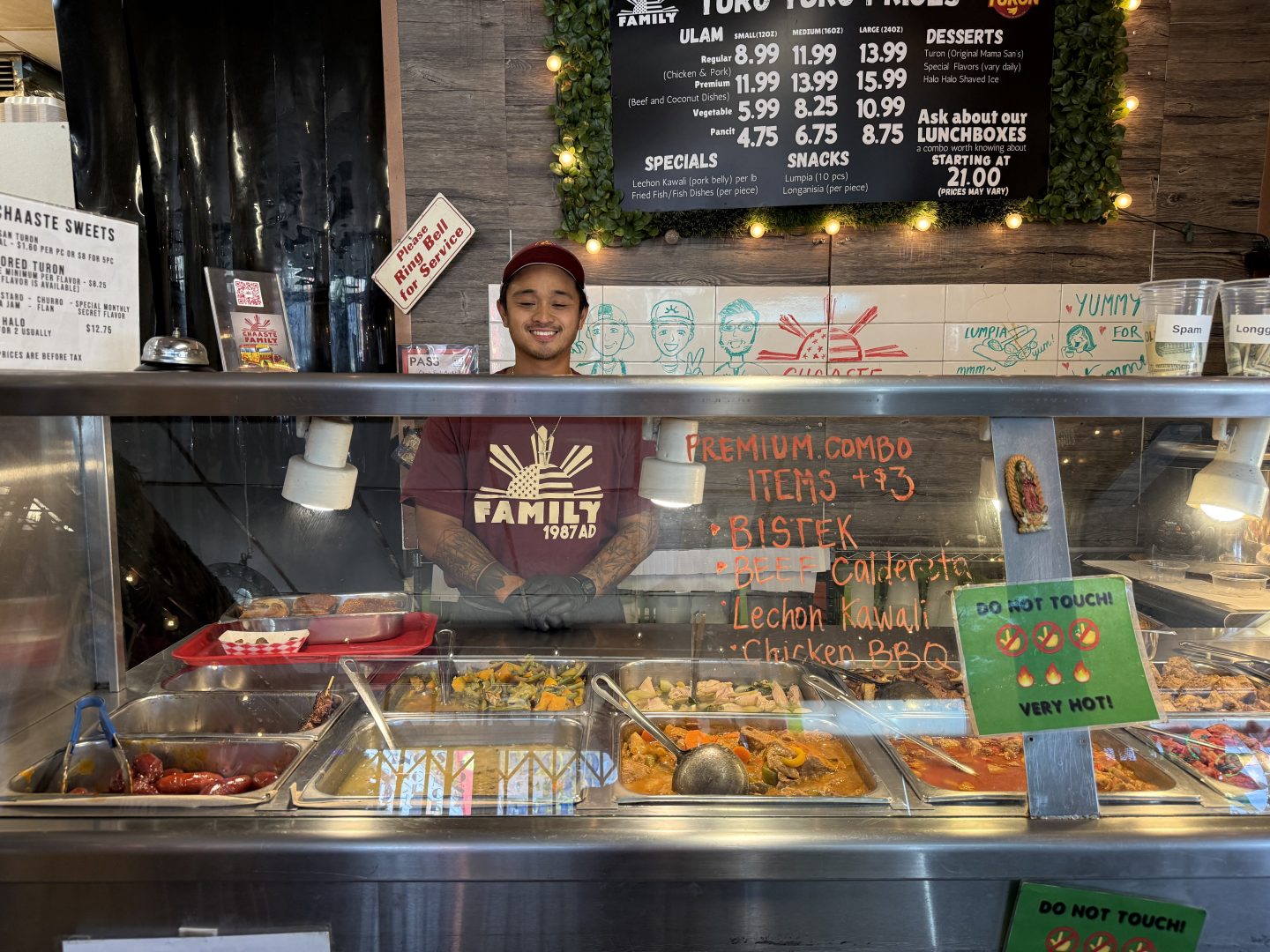
Susan is still actively involved and, to this day, Chaaste Market uses her recipes.
Gabriel explains, “Initially, I wanted to do fusion so I could incorporate what I learned in culinary school but my mom was adamant about keeping it traditional. My mom didn’t teach me how to cook Filipino food; I picked it up from observing and watching her. But my two brothers and I spent several years in the Philippines so I was able to try all kinds of Filipino food. Now that I’ve been cooking over ten years, I’m inclined to keep it as it is, but working the kitchen more efficiently.
“While some Filipino chefs put their own spin on Filipino food, I focus on different techniques in keeping the food hot,” Gabriel says further. “It took me about two to three years to learn that some dishes have to be prepared a certain way so they don’t spoil. Pasadena has very strict health inspection requirements. Health inspectors want food to be at a specific temperature and they don’t understand that a lot of our food are cooked with vinegar. For example, chicken adobo keeps cooking after it leaves the fire so there’s a potential for the chicken to get too dry and tough. That’s one of the reasons we stopped making pork barbecue, which was a very popular item.”
According to Gabriel, beef steak is a favorite among customers and is one of Chaaste Market’s mainstays. He thinks the dish is popular because beef is expensive so it isn’t something being offered in most turo-turo places; it’s usually available only for catering. Other mainstay dishes are pork adobo and chicken adobo.
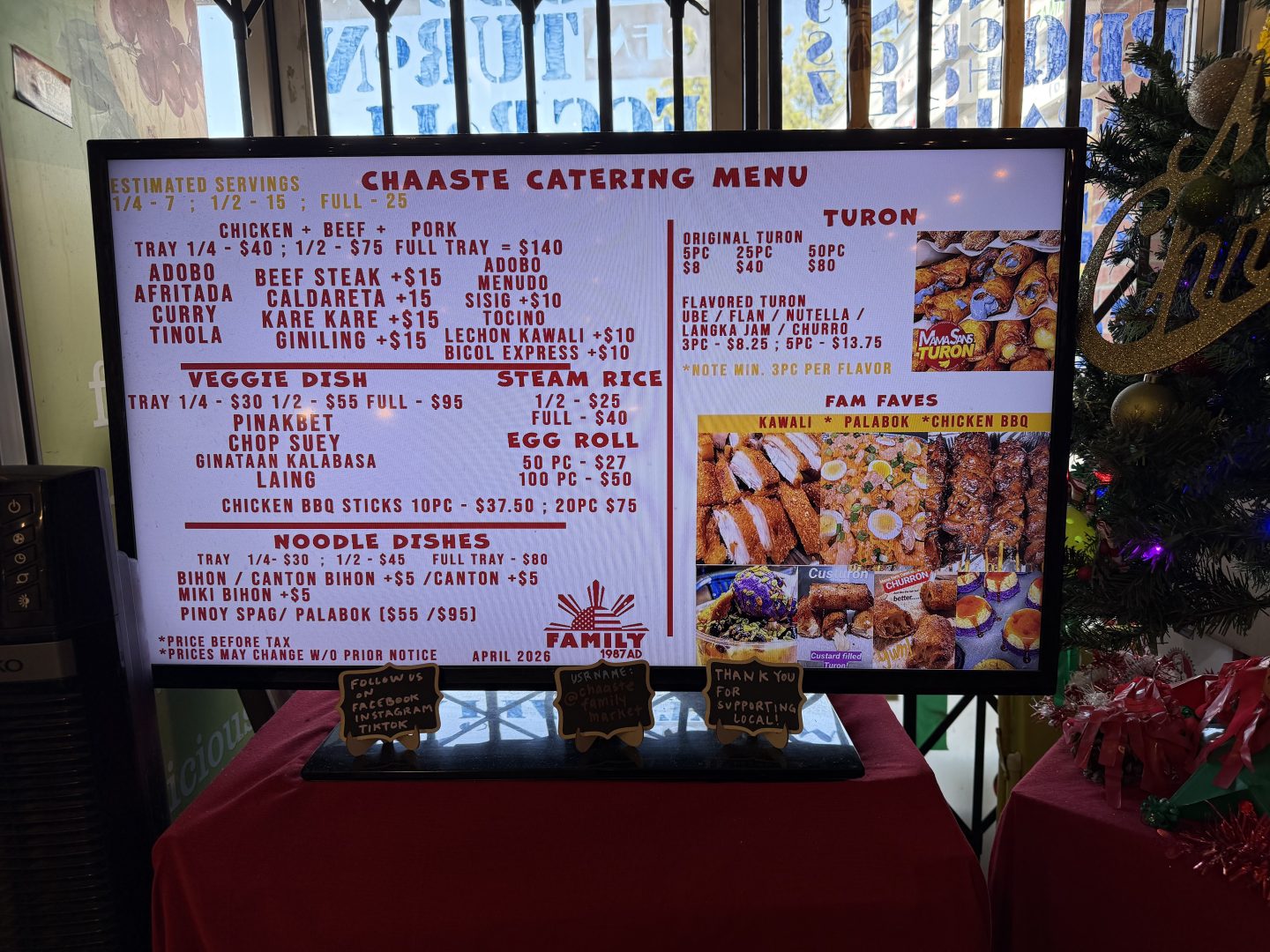
“We have many vegetarian customers now so we have adjusted our menu to offer what the community wants,” adds Gabriel. “Most Filipino vegetable dishes are cooked with meat to give them more flavor. It took us a while to transition and offer a variety of dishes that vegetarians can eat. They’ve been surprisingly popular and we’re getting more customers in.”
The store has been getting media attention in recent years which has really boosted business. Gabriel recounts, “About ten years ago, a Filipino actress living here had a show in Echo Park and she asked us to cater ‘turón.’ That’s how people first heard about us and customers started coming to Chaaste Market from the exposure. It’s such a blessing and a grace of God — we don’t advertise or promote the store. We don’t really know how to use social media and we’re busy working in the store that we have no time to post regularly.
“It’s quite miraculous when bloggers and influencers come over,” says Gabriel in amazement. “A few months ago, Richard Antablian, who has a blog called ‘1 Hour Lunch Break‘ on Instagram, Tik Tok and YouTube, showed up and just got food — which he ate in his car — and posted videos. About three days after he posted his blog, we got an influx of customers and we sold out in a couple of hours. A food blog called ‘The Infatuation’ has also been one of our supporters — we’re consisently on the top 10 on the list of food places in Pasadena. The LA Times has run a few articles about our food, and some local publications have featured us.
“Fridays and Saturdays are our busiest days because we have both the catering and the turo-turo business,” Gabriel states further. “The media coverage has been bringing us catering customers from almost everywhere, who initially request our chicken barbecue, lumpiá and turón. And when they come to pick up their order, they decide to get other dishes from our turo-turo.”
For all the popularity Chaaste Market has gained and the success their business has reaped, the Esteban brothers never take anything or anyone for granted — they are humble and grateful, always. They greet all their patrons with a warm welcome. They happily chat with shoppers, many of whom they know by name. And they thank people for coming when they pay for their purchase.
The store is never empty of customers — Filipinos and non-Filipinos. There’s a constant stream of people from Pasadena and neighboring cities and from as far away as Santa Clarita, coming for the turo-turo and other Filipino items. For the majority of its customers, Chaaste Market is a regular stop from work on their drive home to buy hot food for their family.
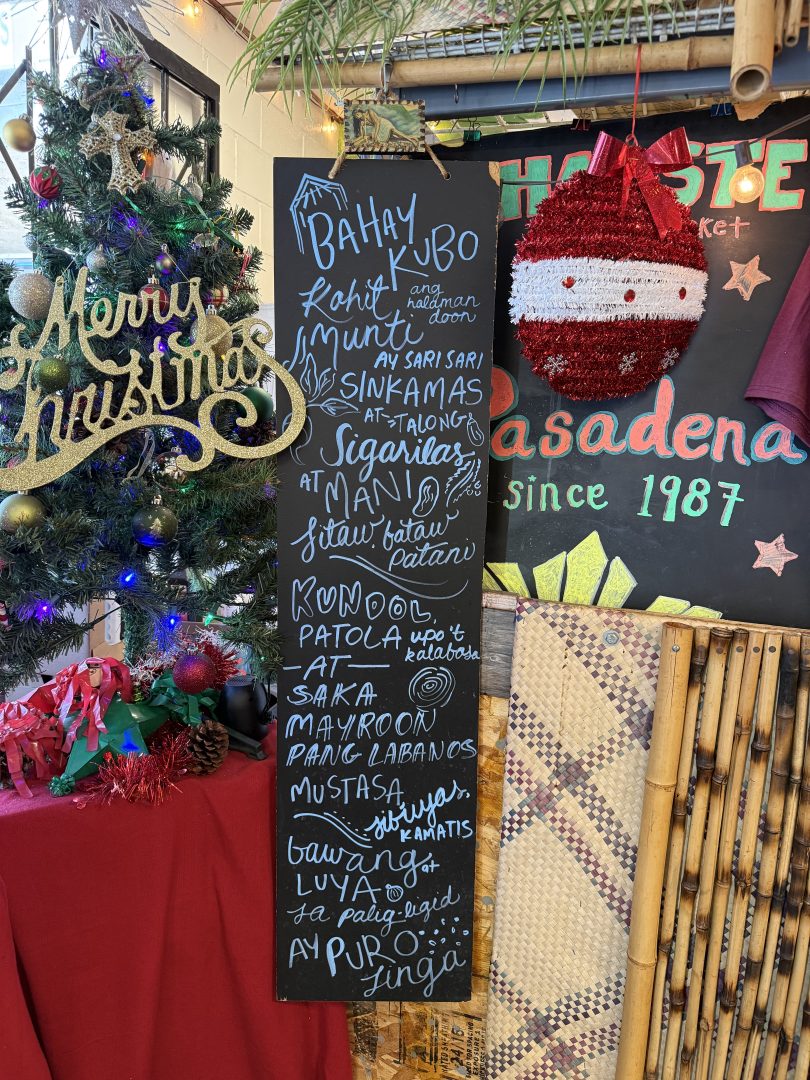
But for some Filipinos, Chaaste Market is the place that brings back fond memories of their homeland — with the familiar objects and aromas. The lyrics of the long-forgotten first song they learned as toddlers, written on a blackboard in one corner, bring a smile. On the walls, drawings and references to-all-things-Filipino are nostalgic reminders of their youth all those years ago. Chaaste Family Market keeps the Filipino culture and traditions alive.