

No misconduct or delay in evacuation decision-making by the Los Angeles County Fire Department occurred in response to the Eaton Fire for areas west of Lake Avenue, according to a report released Monday.
Los Angeles County Fire Chief Anthony Marrone initiated the independent investigation because Altadena residents deserve transparency.
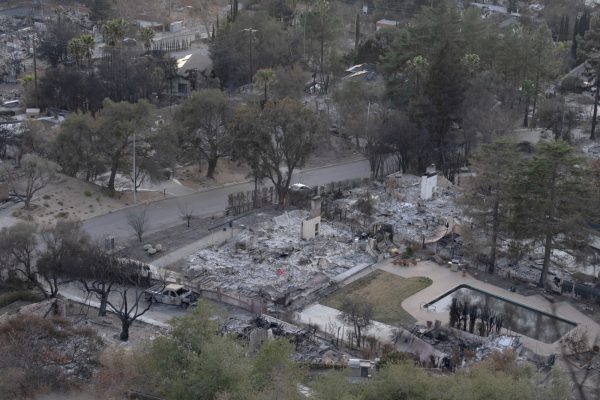
The Eaton Fire erupted on Jan. 7, 2025, scorched over 14,000 acres while destroying more than 9,400 structures, leaving thousands displaced and killing 19 people — many of whom were in West Altadena.
“While the report provides an honest account of our operations, we recognize that no investigation can truly capture the horror and tragedy residents endured,” Marrone said in a statement. “My focus is to ensure that the lessons learned from the Eaton and Palisades fires are turned into lasting changes that will better protect our residents and neighborhoods into the future.”
Citygate Associates conducted the investigation that reviewed evacuation decisions, incident communications and fire behavior during the critical overnight hours between 9 p.m. on Jan. 7, 2025 and 6 a.m. the next morning.
After examining interviews, operational records, dispatch information and incident communications, investigators concluded that fire command staff “acted appropriately amidst unprecedented fire and weather conditions that grounded aircraft, leaving them without aerial surveillance to track the spread of the Eaton Fire in real-time,” according to the department.
Advocates for fire survivors were skeptical of the investigation’s findings.
“My evacuation alert didn’t come until 5:45 in the morning, I don’t know what reality they’re living in,” said Joy Chen, executive director of the Every Fire Survivor’s Network. “They’re saying evacuation orders were issued at 3:25, that must have been the first evacuation orders west of Lake Avenue. Different parts of west of Lake got it at different times. I was in the last group, which was 5:45. It’s very misleading for them to say evacuation orders for west of Lake had already been issued at 3:25 — maybe some evacuation orders, but not all.”
Chen added she thought the data in the report seemed “highly massaged.”
The group Altadena for Accountability released this statement:
“For fire survivors, this report amounts to pages of deflection without accountability,” according to the group. The report “declines to acknowledge any meaningful failures and offers little assurances that substantive changes will be made to better protect Altadena residents in the future.”
Fire survivors also said “the review is not objective” because the county’s “consultant … relied heavily on the recollections and records of (Fire Department) insiders. Experiences of residents who were there on the scene, many throughout the evening and following day of the fire, were minimized and sidelined,” according to Altadena for Accountability.
“Fires and emergencies rarely come without chaos,” the statement continued. “First responders and tax funded agencies have a duty to treat communities equitably and to prevent harm that is preventable. The complexity of the fire is not an excuse, where there were over 9,000 structures burned, 19 deaths, and only 1 fire truck sent to West Altadena.
“Fire survivors deserve answers that only a truly independent investigation by the California Attorney General’s office can provide. In particular, the question of whether Altadena residents’ civil rights were violated due to age, race, disability, or socioeconomic status, and whether the policies, practices, and systems in place served all communities fairly, remains open.
“The civil rights investigation is underway and we remain focused on following the Attorney General’s work to use subpoena power and the authority of his office to ensure that accountability is reached,” the group’s statement concluded.
Citygate Associates’ 51-page report details its review and findings and provided these highlights:
- Evacuation orders were not delayed because “absent real-time aerial fire spread intelligence, (Fire Department commanders) employed strategies and tactics that had been successful in the past,” officials said. “Evacuation orders and warnings were issued ahead of the fire front and remained effective until 2:18 a.m. At which point, (commanders) immediately initiated action to issue subsequent evacuation orders and warnings. The evacuation orders for west of Lake Avenue were not delayed.”
- No evidence was discovered showing bias in evacuation decisions. Fire officials had prioritized seniors and people with disabilities for evacuations and rescues.
- Evacuation orders were issued before the fire crossed west of Lake Avenue. The analysis found that evacuation orders were given for areas west of Lake Avenue at 3:25 a.m. before the main fire reached the area between Concha Street and East Las Flores Drive at around 5:13 a.m.
- “Clarifying communications” — investigators could not verify reports that described late-night communications about the expansion of evacuation orders in Altadena up to the area’s western border with La Cañada Flintridge. Citygate, however, did identify new texts confirming that communications about that issue focused on conditions in Sierra Madre, not Altadena. The communications addressed two Sierra Madre Genasys Zones already under evacuation orders.
- Extreme fire behavior made it difficult to stop the blaze as it erupted on two fronts. On the western side, steep slopes, historically intense winds and streets and canyons enabled the fire “to spread dangerously into older, densely built neighborhoods where stopping the fire spread was impossible,” according to the Fire Department officials, who have accepted the report’s findings and recommendations.
A previous review urged fire officials to develop other processes when aircraft cannot fly to provide information to ground crews.
Officials recognize “the significant impact the Eaton Fire had on residents and understand that some community members may still have questions about evacuation timing and emergency communications. The Department remains committed to transparency and supports ongoing after‑action reviews and independent investigations of the overall emergency response.”
Among other changes, the Department has integrated new technology, and new units and teams, is seeking a new 911 Computer Aided Dispatch system, and is piloting OroraTech for satellite imagery.
Los Angeles County Supervisor Kathryn Barger, who represents Altadena, said the investigation “reflects the importance of thoroughly examining the decisions, communications and emergency conditions surrounding the Eaton Fire response.”
She added that “residents of Altadena and surrounding communities experienced immense fear and loss during this devastating event. Many continue to have difficult and deeply personal questions about evacuation timing and emergency notifications. Those concerns deserve to be taken seriously and carefully reviewed.”
Barger supported the investigation’s findings, observing that the probe “provided new information about evolving field communications” during the first night of the fire, which burned for 24 days.
“At the same time, this investigation should not be interpreted as dismissing the experiences of residents,” Barger said. “Public trust requires both accountability and a willingness to learn from every aspect of a disaster response.”
The full Eaton Fire report is available on the county’s website via tinyurl.com/bdh2y5c8.
Updated May 20, 2026, 8:51 a.m.