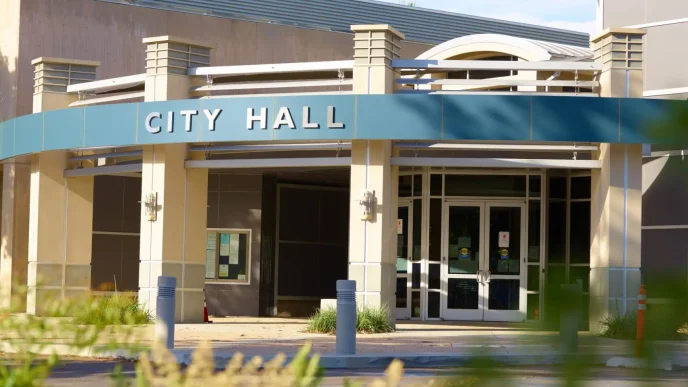


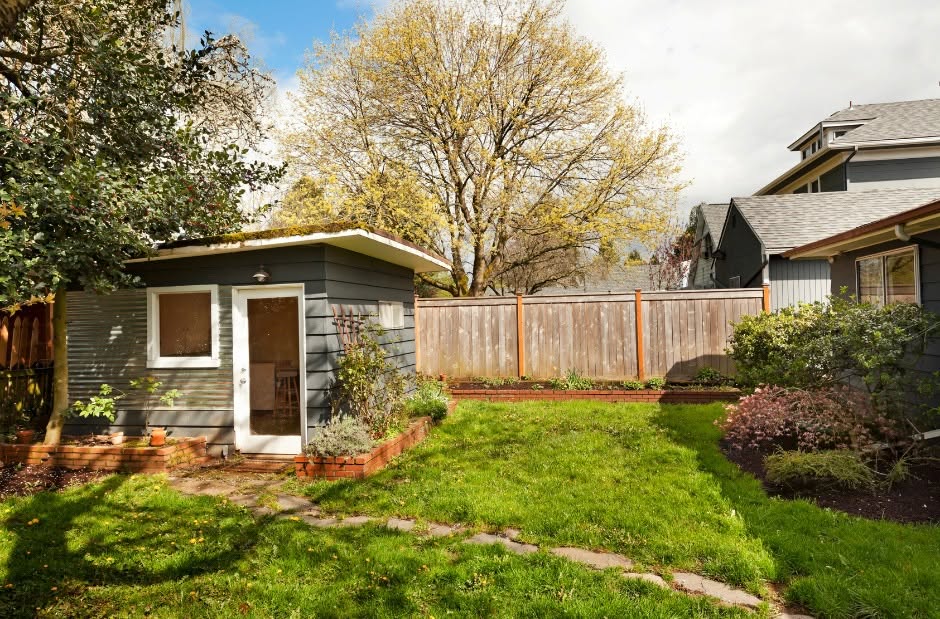
Burbank will keep its local accessory dwelling unit program going while accepting guidance from state housing law to allow up to five residential units on a single-family lot, a reluctant concession the City Council approved after staff warned that noncompliance risked enforcement action from Sacramento.
The council’s 5-0 vote July 28 directed staff to prepare an ordinance which keeps the city’s local program for encouraging the addition of accessory dwelling units, including protections for residential horsekeeping zones and very high fire hazard severity areas.
However, the forthcoming ordinance will acknowledge the California Department of Housing and Community Development’s position that locally permitted ADUs must be allowed in addition to three state-mandated units.
“We’re fairly certain HCD will push back on that attempt and that it won’t prevail ultimately,” Amanda Landry, the city’s Principal Planner, told the council. She referred to the urban planning staff’s preferred ordinance language, which would have eliminated the local program while trying to preserve single-family residential zoning and fire zone safeguards.
The decision marks the latest chapter in a years-long struggle between Burbank and state housing authorities over how many accessory units property owners may build.
Associate Planner Fatima Benitez presented four options for updating the ordinance, explaining that HCD’s March 2026 handbook for accessory-unit policy clarified that local ADUs must be allowed concurrently with state-mandated units. Under that interpretation, R-1, or residential lots could accommodate the primary dwelling plus up to four ADUs — five total residential units — while properties with five or more units could utilize additional waivers under the State Density Bonus Law.
Council members voiced frustration that Sacramento had shifted the rules after encouraging cities to adopt local ordinances.
“For years, they’ve been telling us, get your own local ordinance, get your own local ordinance,” Councilman Konstantine Anthony said.
Landry confirmed that HCD’s interpretation would override local protections for horsekeeping and fire zones.
Councilman Christopher Rizzotti called the state requirements “garbage legislation” and questioned its affordability impact.
“This doesn’t do anything for affordability,” Rizzotti said. “If they really cared about affordability, they would cap some of the prices and then run it with the deeds.”
The financial viability of building multiple ADUs also surfaced during debate.
Rizzotti noted that constructing one ADU costs approximately $360,000, and renting it for $2,500 to $4,000 per month yields a poor return on investment for three, four or five units. That concern fueled council interest in exploring for-sale ADU condominiums as a separate track.
The council also directed staff to bring back a future study session on ADU condominium conveyance, a concept Vice Mayor Zizette Mullins has supported as a homeownership opportunity.
City staff will submit the draft ordinance to state housing officials for review before presenting it to the Planning Commission and the City Council for adoption. The council must approve a compliant ADU law by late fall to meet the state’s deadline.
The city’s website has more information on accessory dwelling units.
The AI platform Civilio assisted this report.