

Gov. Gavin Newsom on Wednesday announced the availability of up to $30 million statewide through the new Regional Wildfire and Landscape Resilience Grant Program, including roughly $3 million for Inland Empire counties and organizations.
Last week Newsom announced $70 million for wildfire prevention and resilience projects.
State officials emphasized research that shows that every dollar spent on wildfire prevention saves the state $3.75, underscoring the importance of proactive spending on wildfire mitigation efforts.
The Legislature-backed grants aim to help communities prevent wildfires before they ignite, restore the health of forests and wildlands, enhance public health and lower the risk of wildfires spreading into human-populated areas, according to the governor’s office.
“Trump has cut U.S. Forest Service wildfire landscape treatments by 1.5 million acres heading into fire season,” Newsom said in a statement. “As climate change makes fire seasons longer and more destructive, California is investing to protect our communities—improving the health of our forests, reducing wildlife risk, and arming our communities with the tools they need to prepare.”
The White House did not respond to a request for comment.
Cal Fire, the state’s firefighting agency, launched the new Regional Wildfire and Landscape Resilience Grant Program with funding from the 2024 California Climate Bond, also known as Proposition 4. Since 2019, Cal Fire has awarded more than $1 billion in grants to municipalities throughout the state.
Last year alone, following the devastating January 2025 fires in Los Angeles County, Newsom and the Legislature deployed $170 million in voter-approved Proposition 4 funding for wildfire resilience projects, officials reported.
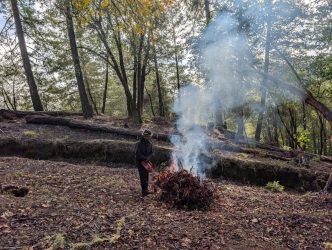
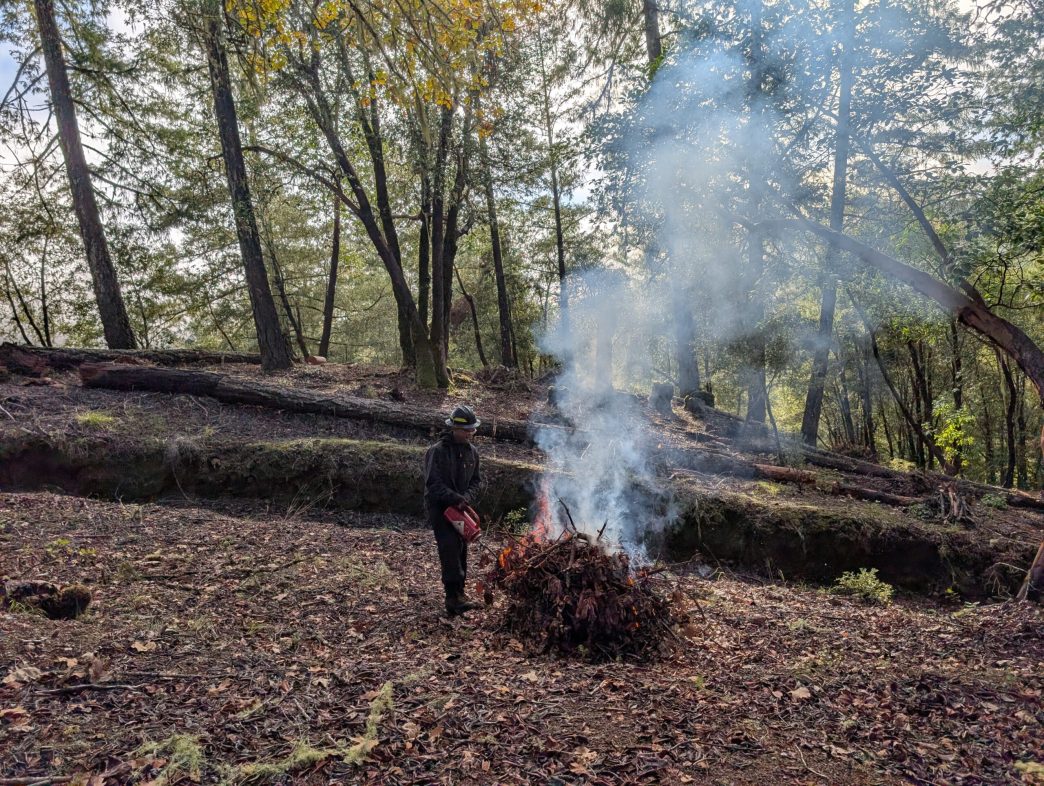
The program’s intention is to speed up large-scale forest and wildland “treatments,” or work to clear brush and other efforts to reduce fire risk. The program also aims to build local capacity to do the work while improving landscape health and resilience.
Officials said projects can include landscape resilience treatments in forested and nonforested areas, removing hazardous vegetation near homes, roads and infrastructure, prescribed and “cultural” fire, which refers to Indigenous cultures’ traditional use of prescribed burns to manage landscapes, pest management, reforestation and revegetation efforts, biomass utilization, which converts organic materials into renewable energy and bioproducts, and maintenance of previous fire-prevention work.
According to new satellite data, more than 579,00 square miles of land have burned worldwide over the last four months — fueling the world’s worst-ever start to wildfire season.
“These collaboratives are uniquely positioned to identify the wildfire and landscape resilience needs within their regions,” Cal Fire Deputy Director for Natural Resource Management Eric Huff said in a statement. “Regional Grants empower these partnerships to implement projects at scale.”
Patrick Wright, director of the Governor’s Wildfire and Forest Resilience Task Force, added, “These CAL FIRE grants will support investments where they matter most. They deliver on the Task Force’s commitment to address California’s highest risk areas at a regional scale.”
Funding from the Cal Fire California Investments Program for San Bernardino County includes nearly $950 million for the Department of Public Works to coordinate removal of hazardous “fuel,” or dry brush within approximately 282 acres that could lead to fire damage to road infrastructure and critical evacuation routes in mountain and foothill areas.
“San Bernardino County has been adversely impacted by devastating fires including the Line Fire and Bridge Fire,” according to a state report. “Approximately 50% of fuel reduction efforts will occur in disadvantaged and low-income communities, with 37,471 structures affected.”
Nearly $400,000 from the program will fund a fuel abatement project by the Mountain Rim Fire Council to treat 350 acres in or adjacent to the San Bernardino Mountains, “creating a crucial buffer against wildfire for critical infrastructure valued at over $100 million,” state officials reported. “The primary justification is to preserve the operational backbone for the 100,000 people and 35,000 homes that depend on these assets. A wildfire-induced failure of this infrastructure would trigger a cascade of crises, disrupting essential services and hindering emergency response.”
In Riverside County, the Twenty-Nine Palms Band of Mission Indians will receive nearly $950,000 to reduce hazardous fuels — specifically salt cedar — on 223 acres of tribal lands within 611.69 acres on 7 parcels adjacent to the Jacqueline Cochran Regional Airport, Desert International Horse Park, Camper Land RV Park and local agricultural businesses including the Pacific Date Co. in Thermal.
The parcels are adjacent to areas of moderate wildfire risk with dense, 3.5-foot underbrush that poses a wildfire risk to residents, visitors, wildlife and habitable structures, officials reported. The project aims to reduce dust and wildfire fuel loads by removing salt cedar via root plowing and chipping.
The Idyllwild Arts Foundation will receive will aim to reduce wildfire risk on 120 acres of the organization’s 205-acre campus in the San Jacinto Mountains near Idyllwild, which has a population of 3,700.
“The campus is a critical facility and located in a Very High Fire Hazard Severity Zone,” according to the report. The project builds upon the 2016 Foundation plan and 2017 treatment that followed, which officials said was “an effort credited with slowing the 2018 Cranston Fire. Outside of defensible space, limited vegetation management has occurred since 2017, resulting in excess hazardous fuels. This project will reduce fuels and further protect the campus and nearby neighborhoods.”
The Jurupa Area Recreation and Parks District is receiving $255,000 for a hazardous fuel reduction project at the agency’s Jurupa Mountains Discovery Center, an 82.3-acre property with a cultural museum and other exhibits, according to the state report.
The Mountains Discovery Center borders a neighborhood with more than 200 homes, a water tank reservoir and a Superfund site containing hazardous waste. The project area is also about 1 mile away from Sunnyslope Elementary School.
The project will also fund a community workshop with information on how residents can prevent and protect themselves and their properties against wildfires.
Newsom also blasted President Donald Trump’s record on fire prevention.
The Trump administration has made dramatic cuts to wildfire readiness nationwide and especially in rural and high-fire-risk California communities, according to Newsom, whose office noted:
- In the last year of the Biden administration, the U.S. Forest Service treated more than 4 million acres of hazardous vegetation to lower the risk of wildfires. “Under Trump, that number plummeted to 2.6 million — a drop of nearly 1.5 million acres heading into what experts are warning could be an extreme fire season,” state officials reported.
- “Trump slashed prescribed burns by nearly half, dropping from over 1.6 million acres in 2024 to roughly 900,000 acres in 2025.
- “Trump has proposed eliminating annual block grants that support state, tribal, private landowner, and urban forestry programs, which is funding that directly supports wildfire prevention partners across California.
- “Trump is also turning his back on California communities trying to rebuild more resilient after wildfires,” Newsom’s office contended. “In April 2025, Trump cut a $35 million grant for Napa to reduce wildfire threats and build back more resilience after devastating fires. The Trump administration said the program was wasteful and ineffective. California is actively challenging the Trump administration to restore critical funds for the people of Napa, including 86 other California hazard mitigation projects.”
Information on Cal Fire’s prevention efforts is on the agency’s website.