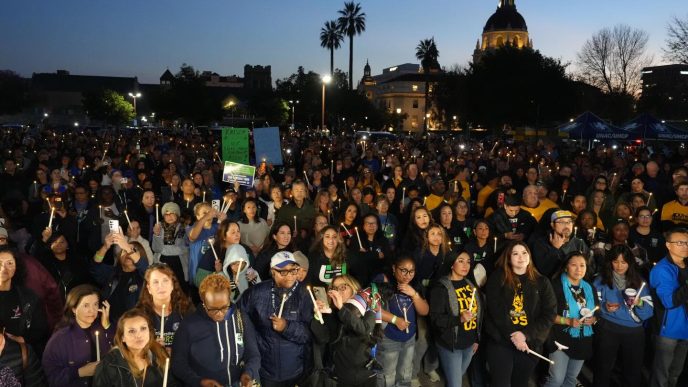


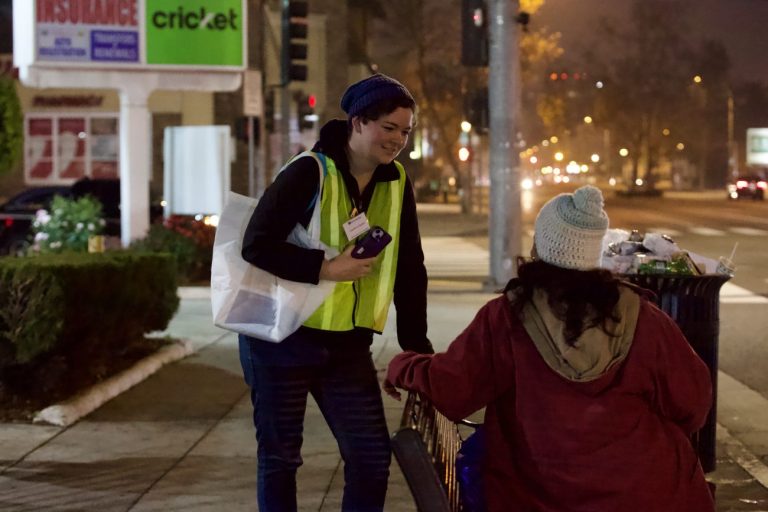
Pasadena officials noted a robust turnout of volunteers for this year’s Point-in-Time Homeless Count that took place earlier this week citywide.
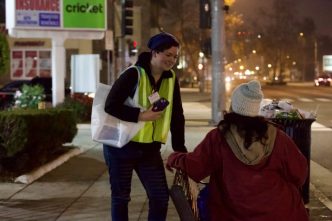
Approximately 200 volunteers, both first-time and returning, participated in the 2026 count, organized by the City’s Housing Department on Wednesday from 8 to 10 p.m. and Thursday from 6 to 8 a.m., officials said. A supplementary Youth Count took place Thursday afternoon. Volunteer teams also counted in the city’s 10 branch libraries and at locations where people receive services.
Teams of four to six members were deployed to 28 geographic zones covering the entirety of Pasadena. Count participants used a mobile app to conduct a survey developed by the city’s Department of Information Technology.
Volunteers also distributed cold-weather kits with warm clothing, snacks and resource flyers.
Pasadena police participated in the count by surveying in the city’s parks, freeway embankments and other difficult-to-access areas.
The city’s Public Health Department, in collaboration with Huntington Health, administered flu, COVID and hepatitis A vaccines and distributed Narcan overdose reversal kits throughout the count.
“The community response has been incredibly encouraging. We surpassed our volunteer recruitment goals ahead of schedule, demonstrating that Pasadena residents view homelessness as a critical problem that is deserving of time and attention,” Homeless Count Coordinator Christina Kasali said in a statement. “This year, 48% of volunteers participated in the Pasadena Homeless Count for the first time. We’re grateful to everyone who participated and made the count a success.”
The count provides a “snapshot” of what the homeless population looks like on any given night, officials said. Data collected during the annual effort is most useful as a tool to study the demographics of the unhoused population and to track trends over time.
In 1992 Pasadena became the first city in California and one of the first three cities in the United States to conduct a dedicated homelessness count.
Homeless Count data is used year-round to inform the planning and funding of homeless services in U.S. cities and is used by federal, state and county funders to determine the amount of grants for homeless services. The results of this year’s count will be available by June 2026, officials said.