


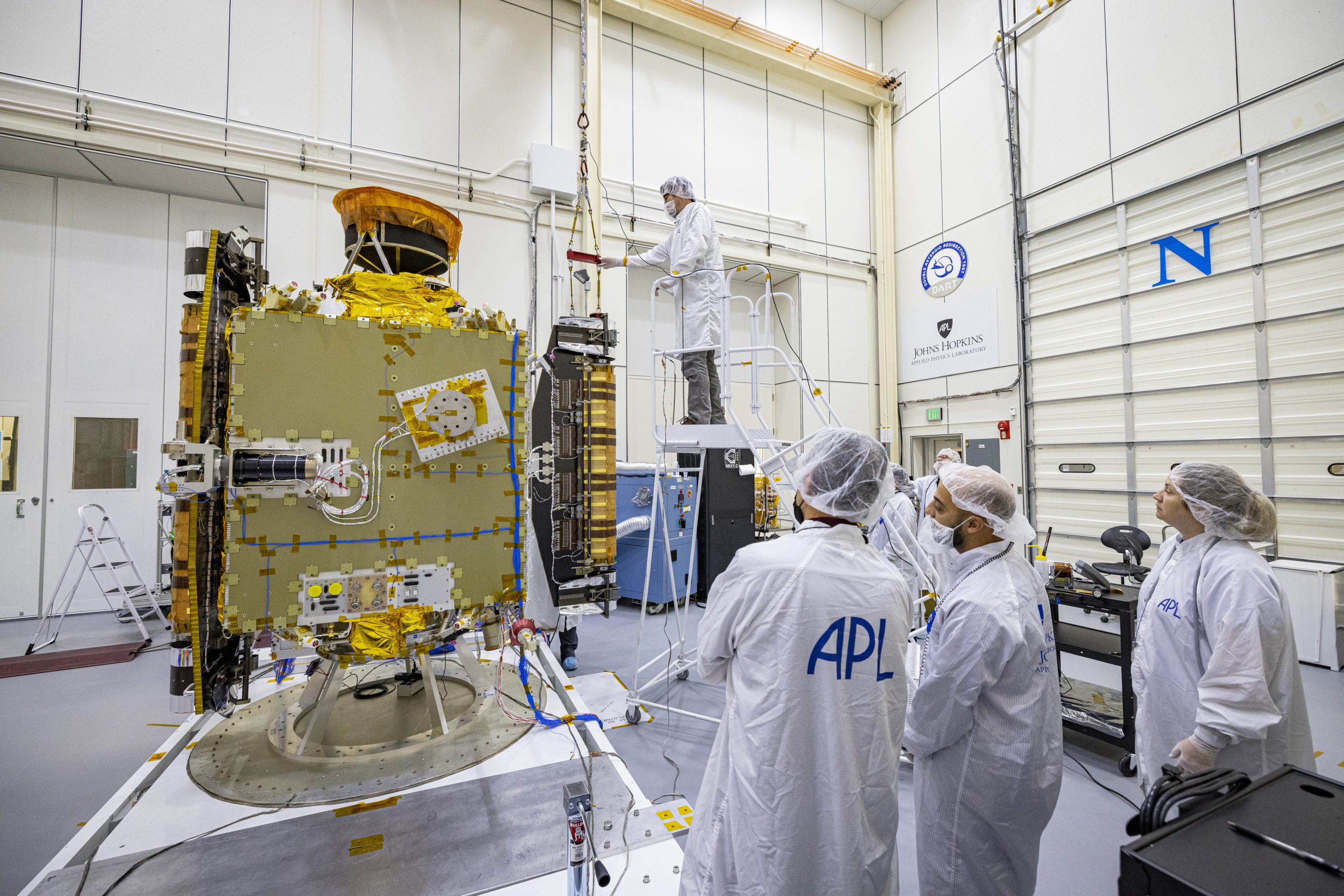
Southland residents could get an impressive pre-holiday aerial light show Tuesday night when Hawthorne-based SpaceX attempts to launch a NASA planetary-defense mission from Vandenberg Air Force Base near Lompoc along the California central coast.
Depending on visibility, night-time rocket launches from Vandenberg can often create dazzling light spectacles that can be seen across the Southland and much of Southern California. SpaceX launches can be particularly impressive, since the company pilots the first stage of its Falcon 9 rockets back to Earth following separation from the spacecraft being launched into space.
The SpaceX Falcon 9 rocket is scheduled to launch at 10:21 p.m. Tuesday, beginning NASA’s Double Asteroid Redirection Test, or DART, mission.
The mission, sounding like a Hollywood movie plot, will intentionally crash a spacecraft into an asteroid to determine if such as effort can successfully change the asteroid’s course. The idea is to test the technology to see if it could redirect a future asteroid that might be on a collision course with Earth.
“While no known asteroid larger than 140 meters in size has a significant chance to hit Earth for the next 100 years, only about 40% of those asteroids have been found as of October 2021,” according to NASA’s mission website.
The DART spacecraft will target an asteroid known as Didymos, which is orbiting a larger asteroid known as Dimorphos. According to NASA, Didymos — actually considered a “moonlet” — is about 160 meters in size.
If all goes according to plan, the DART spacecraft in September 2022 will slam into Didymos at a speed of about 14,700 mph.
“The collision will change the speed of the moonlet in its orbit around the main body by a fraction of one percent, but this will change the orbital period of the moonlet by several minutes — enough to be observed and measured using telescopes on Earth,” according to NASA.
Dimorphos and Didymos pose no threat to Earth, and are being targeted solely as a test mission of the redirection technology. The planned impact by the spacecraft will occur an estimated 11 million kilometers, or roughly 6.8 million miles, from Earth.