



By Ellyn Briggs for Redfin Real Estate
As global socioeconomic stress continues to rattle markets, American consumers are facing a difficult period. Inflation is rising, investors are uneasy, mortgage rates are elevated, and many people are uncertain about the future. But beyond spending concerns, fears around AI’s impact on jobs and the economy are further spooking workers.
That uncertainty is shaping financial decisions. According to a Redfin survey conducted by Ipsos between March 9-10, 2026, more than 1 in 3 (36%) American workers are delaying or canceling a major purchase like a home or car due to their feelings about job security. On the flip side, 31% have either already made a major purchase sooner than expected or plan to due to their feelings about job security.
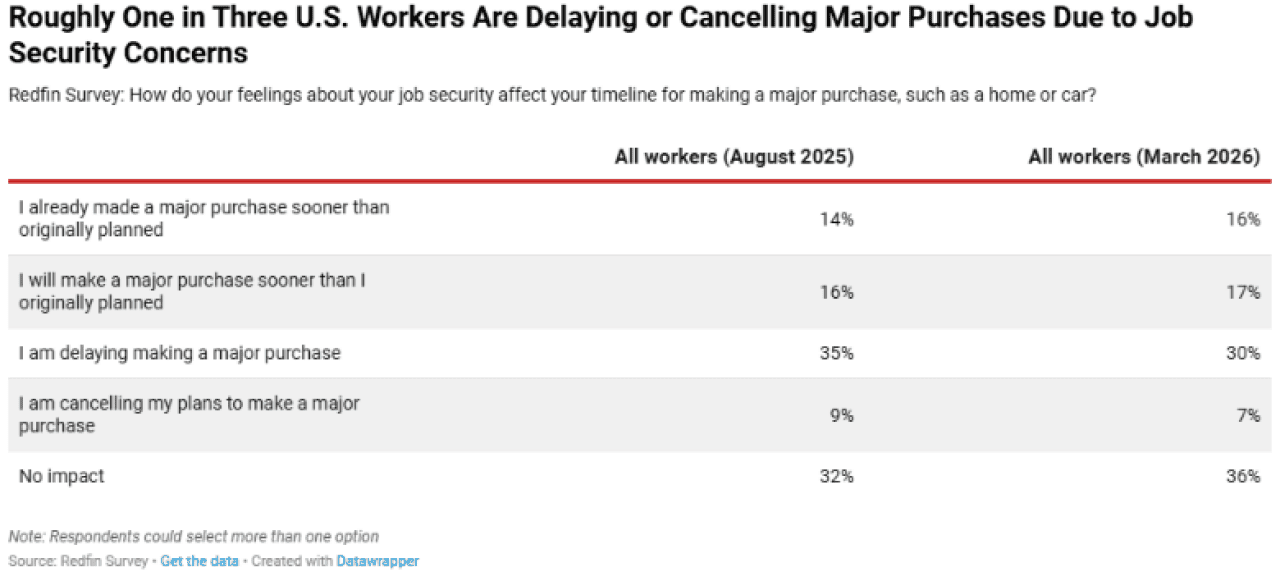
More than 1 in 3 (36%) of respondents say their feelings about job security have no impact on their timeline for any major purchase decisions.
When Redfin asked the same question in August 2025, 42% said they were delaying or canceling plans to make a major purchase due to feelings about job security, six percentage points higher than today. However, the shares who said in August that they had already made (or planned to make) a major purchase sooner than expected (29%) are largely unchanged from today, as is the share who said they had made no changes to their plans (32%).
Most American workers are confident about their job security
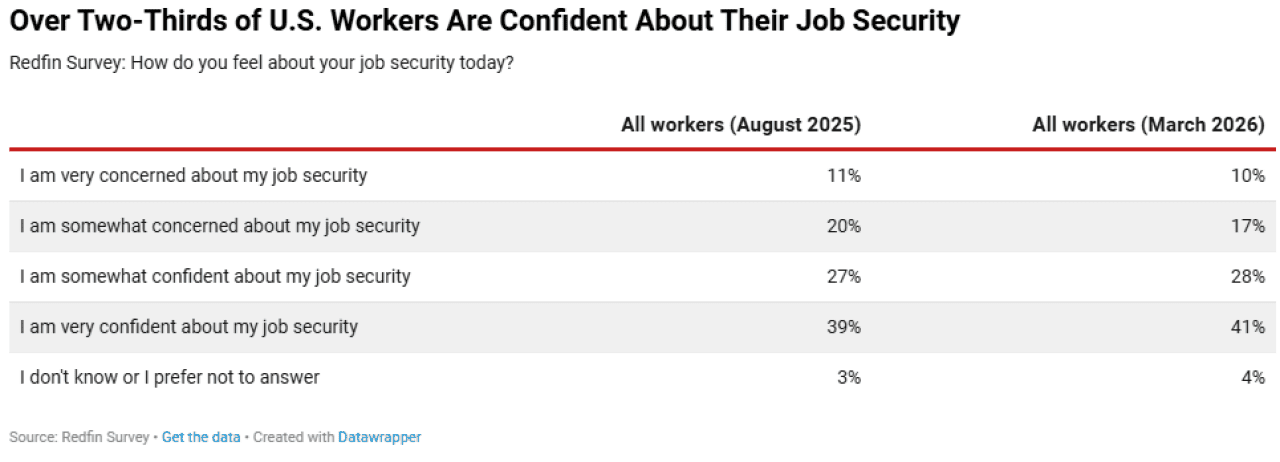
More than two-thirds (69%) of workers say they are either somewhat confident or very confident about their job security—a similar share (66%) said the same last August.
In comparison, 27% now say they are either somewhat concerned or very concerned about their job security.
Nearly 1 in 3 workers are more concerned about job security now than 6 months ago
Roughly one-third (32%) of workers are more concerned about their job security than six months ago. In comparison, 18% are more confident about their job security.
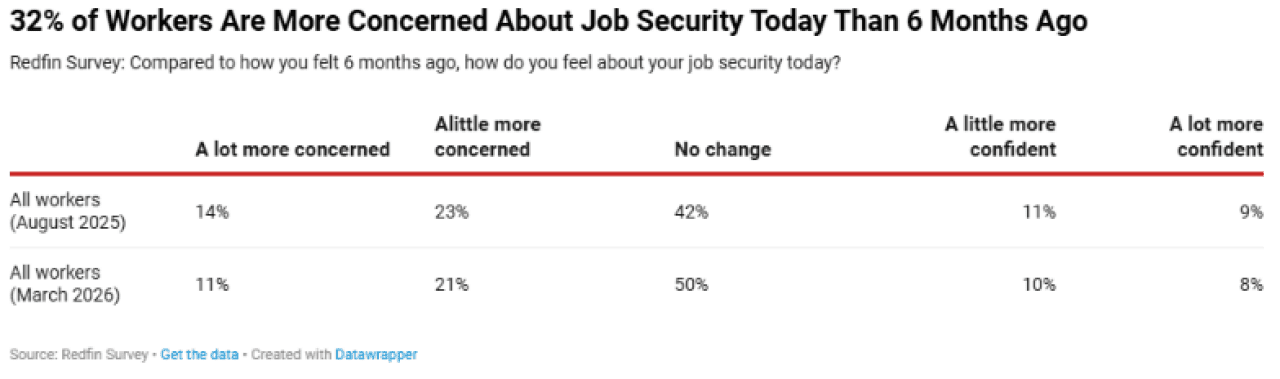
Of the workers who indicated they are concerned about their job security, 74% said they were more concerned now than they were six months ago, while only 7% felt more confident.
Company performance and AI are the top reasons for job insecurity
Roughly 3 in 10 (29%) workers who are concerned about their job security cited their company’s performance as the primary reason; a near-equal share (32%) said the same in August 2025.
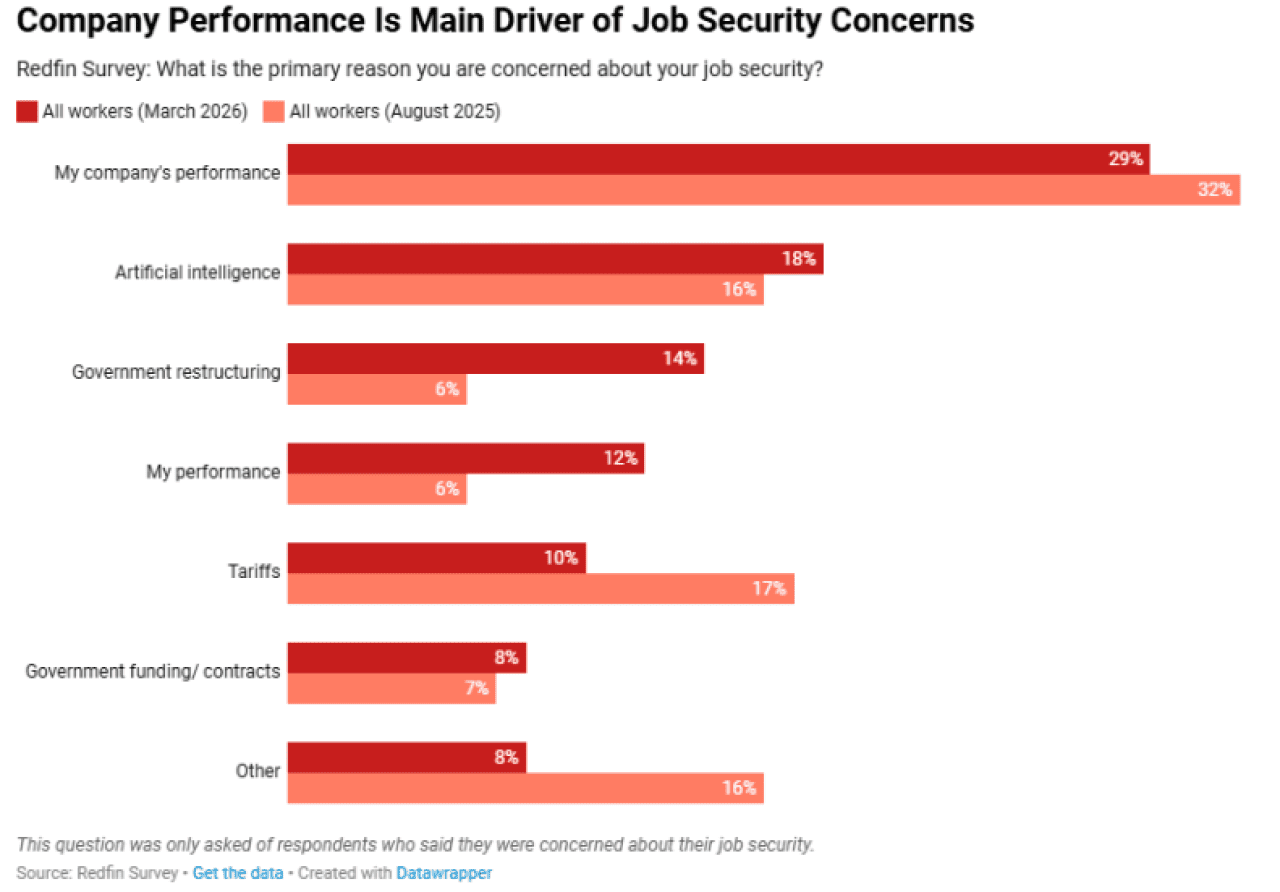
The next most-cited reason for job security concerns was the impact of artificial intelligence (18%), followed by government restructuring efforts (14%) and personal performance (12%).
Nearly 20% of workers have recently missed rent or mortgage payments, or paid late
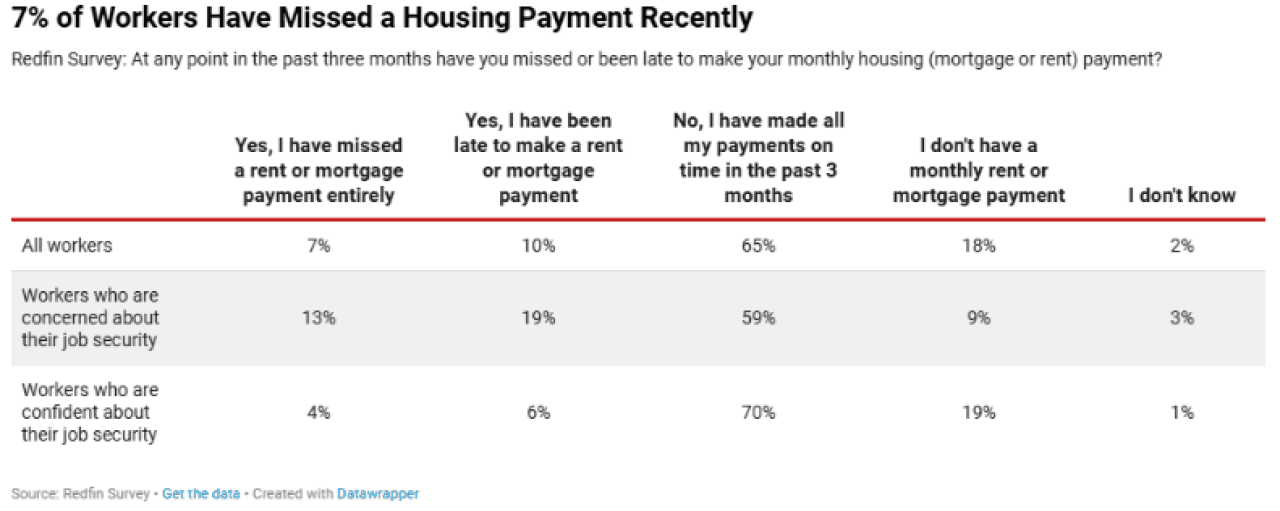
Seven percent of workers say they have missed a rent or mortgage payment entirely in the last three months, and another 10% say they have been late on a housing payment.
These shares were notably higher among those who are concerned about their job security. Nearly 3 in 10 members of this group (28%) have missed or been late on a recent housing payment. An overwhelming majority (70%) of workers who are confident in their job security have made all recent housing payments on time.
Fifteen percent of full-time workers said they are “very” or “somewhat” likely to be late on their mortgage or rent in the next three months. Thirteen percent said they are “very” or “somewhat” likely to miss a housing payment entirely in the next three months.
A slim majority of American workers have an emergency fund for housing payments
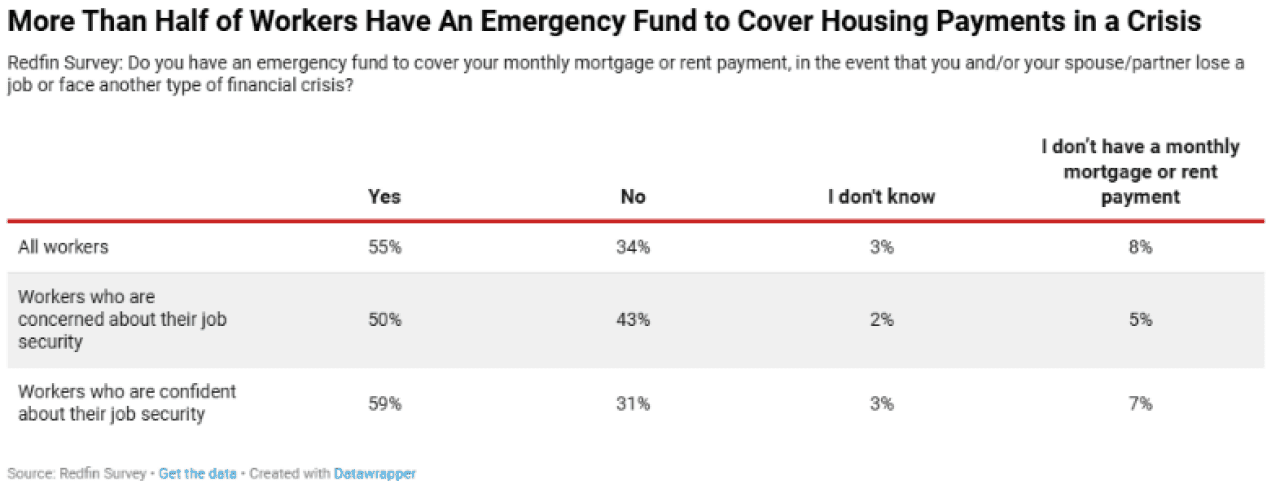
Most (55%) workers say they have an emergency fund to cover their monthly rent or mortgage payments if they face a financial crisis, while approximately one-third (34%) do not have such a fund.
These figures vary slightly among workers who expressed concern about their job security and those who are confident; the former are slightly less likely to have a housing emergency fund (50%), while the latter are slightly more (59%).
When asked how many months of housing payments their emergency funds cover, 1 in 5 workers with one say six months. Three months (16%) was the next most-selected time frame.
Methodology
This is according to a Redfin survey conducted in partnership with Ipsos between March 9-10, 2026. The nationally representative survey was fielded to 1,005 U.S. residents, including 452 who are employed full-time and 112 who are employed part-time. The results for the combined group of workers have a credibility interval of +/- 5.1 percentage points.
This story was produced by Redfin Real Estate and reviewed and distributed by Stacker.
Re-published with CC BY-NC 4.0 License.