

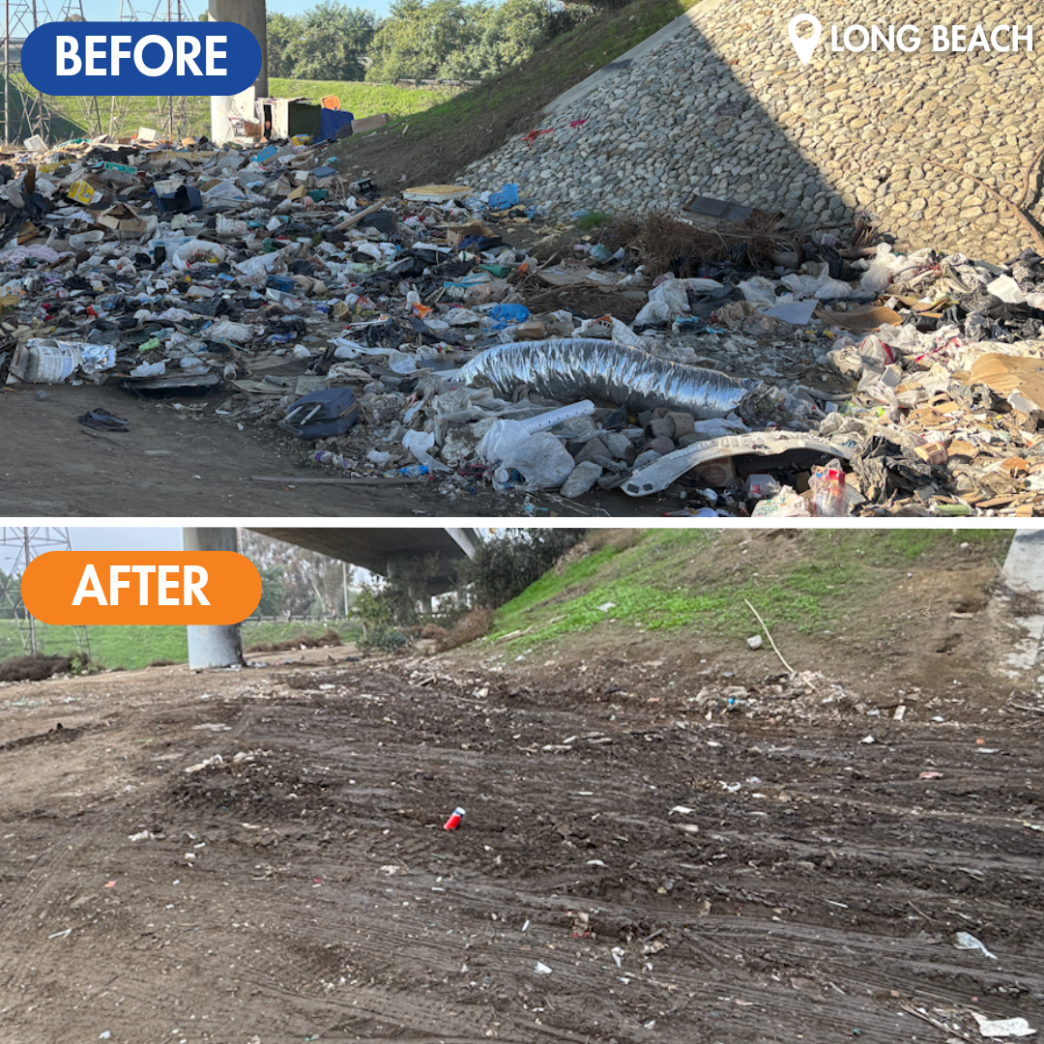
A state task force removed a freeway-adjacent encampment in Long Beach and connected 25 people and eight pets experiencing homelessness with temporary shelter, officials announced Monday.
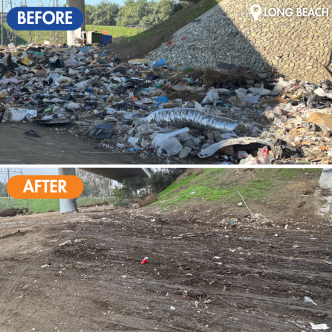
The operation was part of the State Action for Facilitation on Encampments, or SAFE initiative that addresses encampments on state property in California’s biggest cities. On Dec. 4, personnel from Caltrans, the California Highway Patrol and state housing and health agencies removed an encampment near State Route 91 and the Interstate 710 Interchange.
Officials said the task force worked with local service providers for weeks to offer shelter and health care to people living in the encampment.
“There’s nothing humane about letting people languish outdoors without shelter or support,” Gov. Gavin Newsom said in a statement. “We’ve been leaning in with unprecedented state help — real resources for our cities and counties — to turn this national homelessness crisis around and to get people the care they need. We’re standing with our local partners like Long Beach to move people out of encampments and into a safe, stable place.”
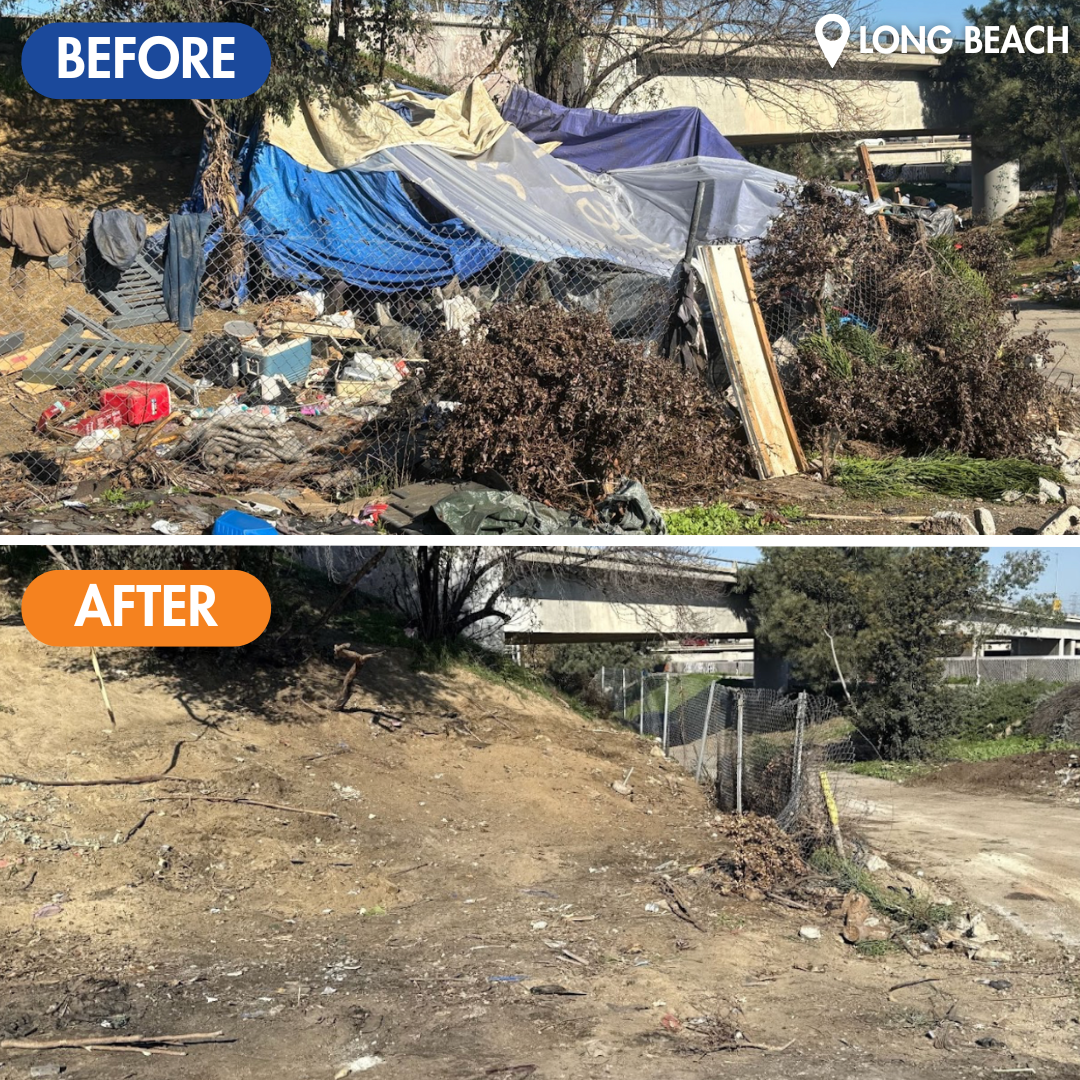
In addition to Long Beach, encampments have been removed in Los Angeles, Anaheim, San Francisco, Fresno and San Diego, with more removals and outreach efforts planned, according to Newsom’s office.
“Every person in Long Beach deserves safety, stability, and a real path forward. For too long, our neighbors living along the riverbed have faced dangerous conditions that have been difficult to address because they span multiple jurisdictions,” Mayor Rex Richardson said in a statement. “By strengthening our partnership with Governor Newsom’s SAFE Task Force and Caltrans, we’re finally able to take a coordinated, compassionate approach that connects people with housing, services, and long-term support.”
After encampment residents moved to a nearby state-funded Homekey site that opened Oct. 29, Caltrans workers removed about 150 tons of debris and hazardous materials from the area over three days.
“Housing stability is a critical first step to address and end homelessness,” Secretary Tomiquia Moss of the state Business, Consumer Services and Housing Agency said in a statement. “In California, we’re prioritizing meeting people where they are to help provide access to permanent housing and ongoing services.”
Since its launch in 2019, the Homekey program aims to quickly help people experiencing homelessness find housing. Three rounds of program funding have awarded over $3.6 billion for 261 housing projects statewide.
The SAFE task force’s work is similar to programs such as Inside Safe led by Los Angeles Mayor Karen Bass and LA County’s Pathway Home.
Critics of encampment sweeps argue that unhoused individuals often move from one site to another with no prospects for long-term housing, and that participants may spend a lot of time staying in temporary shelters before finding permanent homes. They also question the cost of temporary placements.
“Encampment sweeps do not end homelessness,” according to the National Health Care for the Homeless Council. “Instead, they only create more problems, such as damaging connections to care, compromising safety and civic trust, undermining paths to independence, and creating unnecessary costs for local communities.”
In 2024, homelessness increased nationally by more than 18%, Newsom’s office reported. California’s homeless population increased 3%, a lower rate of increase than 40 other states.
More information on the SAFE task force is available on the governor’s website.