

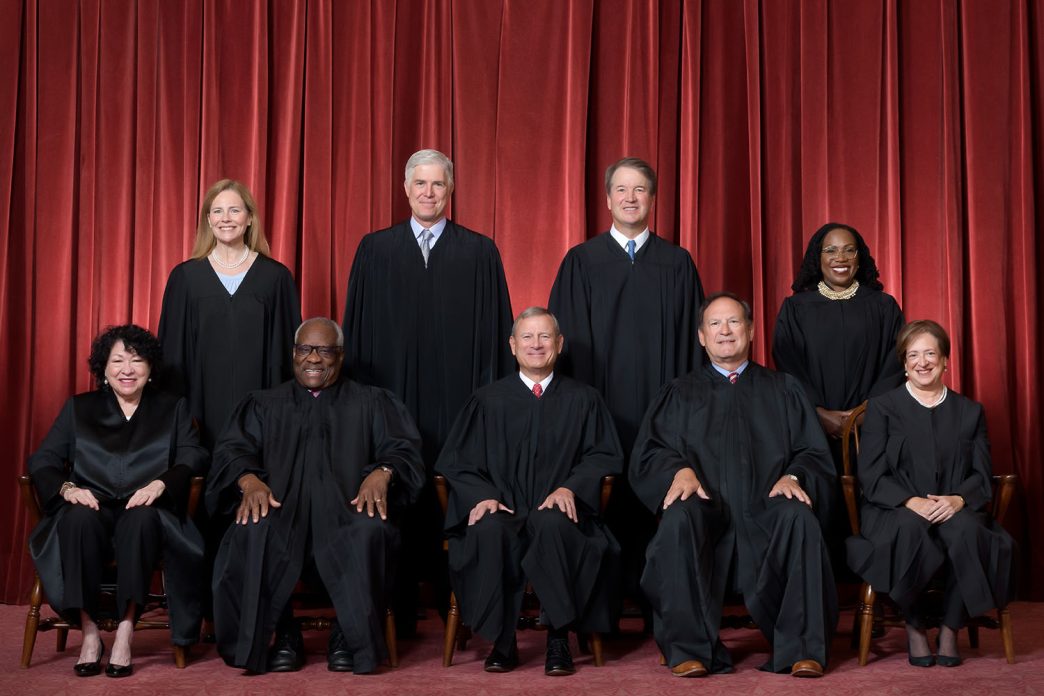
Federal, state and local officials along with immigrant rights advocates and other groups issued statements following the U.S. Supreme Court’s ruling Monday lifting restrictions on enforcement activity in the Los Angeles area.
Justices voted 6-3 to stay a district court judge’s order prohibiting agents’ “roving patrols” that lead to arrests of people suspected of immigration law violations. In July, Judge Maame E. Frimpong determined federal agents were illegally targeting people for deportation based on race or ethnicity, language, location or employment.
The U.S. 9th Circuit Court of Appeals later upheld Frimpong’s temporary restraining order on roving patrols targeting car washes, locations where day laborers gathered and garment factories spread fear throughout immigrant communities regionwide throughout June and July.
The Supreme Court’s six affirmative-voting justices were appointed by Republican presidents. The three Democrat appointees voted against the Trump administration’s request to stay the TRO.
White House spokeswoman Abigail Jackson said immigration enforcement operations would continue in Southern California.
“This stay reaffirms what we’ve always known: lower court activist judges are trying to impede the president from lawfully carrying out the American people’s agenda,” Jackson said. “We look forward to full vindication on this front in short order, but in the meantime, the Trump administration will continue fulfilling its mandate to arrest and deport criminal illegal aliens.”
Los Angeles Mayor Karen Bass said the ruling was “un-American,” and its danger to working families goes beyond the Southern California region.
“I want the entire nation to hear me when I say this isn’t just an attack on the people of Los Angeles, this is an attack on every person in every city in this country,” Bass said. “Today’s ruling is not only dangerous — it’s un-American and threatens the fabric of personal freedom in the United States of America.
“Today, the highest court in the country ruled that the White House and masked federal agents can racially profile Angelenos with no due process, snatch them off the street with no evidence or warrant, and take them away with no explanation. This decision will lead to more working families being torn apart and fear of the very institutions meant to protect — not persecute — our people.”
Gov. Gavin Newsom called noted the racial elements of Trump’s mass-deportation campaign and also warned of the legal precedent that the Supreme Court has set.
“Trump’s hand-picked Supreme Court majority just became the grand marshal for a parade of racial terror in Los Angeles,” Newsom said. “This isn’t about enforcing immigration laws — it’s about targeting Latinos and anyone who doesn’t look or sound like Stephen Miller’s idea of an American, including U.S. citizens and children, to deliberately harm California’s families and small businesses. Trump’s private police force now has a green light to come after your family — and every person is now a target.”
LA City Attorney Hydee Feldstein Soto on Monday evening said the “Supreme Court decision allowing ICE agents to resume racial profiling in Los Angeles undermines fundamental constitutional protections. The 6-3 ruling permits federal agents to stop individuals based on ‘apparent race or ethnicity,’ speaking Spanish or accented English, location, and occupation — factors that disproportionately impact Latino communities.”
Mark Rosenbaum, senior special counsel at the LA civil rights law firm Public Counsel, said in a statement that the ruling “allows the Trump administration to resume racially discriminatory raids across Los Angeles, giving federal agents license to detain people without evidence or due process simply because of the color of their skin, the language they speak, or the work they do. …
“These raids were never about public safety but about targeting immigrants and sowing fear,” Rosenbaum said. “This fight is not over. We will continue pressing our case in court until every person in our communities can live free from fear, with their rights and dignity fully protected.”
The Supreme Court’s ruling does not stop further proceedings in the lawsuit brought by LA-area workers, advocacy organizations, a union, the city of Los Angeles and a number of other local governments in Southern California. On Sept. 24, Frimpong has scheduled a hearing on whether to issue a preliminary injunction based on what is expected to be additional evidence presented by plaintiffs.
Assemblyman Mark González, D-Los Angeles, said the Supreme Court decision “unleashes” what he called “government-sanctioned oppression.”
“This wannabe king and his allies didn’t just overturn a judge’s common-sense order — they shredded the constitutional protections that are supposed to shield us from government overreach and racism,” González said in a statement. “This ruling gives ICE a green light to hunt people down based on the color of their skin, the language they speak, or where they work.”
The lawsuit’s lead plaintiff Pedro Vasquez Perdomo, 54, a day laborer from Pasadena, also issued a statement following the Supreme Court decision.
“When ICE grabbed me, they never showed a warrant or explained why,” Vasquez Perdomo said. “I was treated like I didn’t matter–locked up, cold, hungry, and without a lawyer. Now, the Supreme Court says that’s okay? That’s not justice. That’s racism with a badge.“
He said he became a plaintiff in the lawsuit “because what happened to me is happening to others everyday just for being brown, speaking Spanish, or standing on a corner looking for work. The system failed us today, but I’m not staying silent. We’ll keep fighting because our lives are important.”
Armando Gudino, executive director of the Los Angeles Worker Center Network, said in a statement, “The Supreme Court has ruled in favor of racial profiling. A dark shadow has been cast over this country’s Constitution and its future. This is a dangerous precedent for immigrant rights and civil liberties. … It turns back the clock on decades of legal progress and reinforces a system where some communities are seen as suspect by default.”
Frimpong’s temporary restraining order had applied in the federal court system’s Central District of California, which consists of Los Angeles, Orange, Riverside, San Bernardino, Ventura, Santa Barbara and San Luis Obispo counties.
Acting U.S. Attorney Bill Essayli of the Central District lauded Monday’s ruling.
“We argued the order was overly broad, aiming to hinder our ability to apprehend and remove illegal immigrants in Los Angeles,” Essayli posted on X. “We are a nation of laws.”
LA County District 1 Supervisor Hilda Solis said the Supreme Court ruling allowing roving patrols to resume will create additional fear in Southern California communities.
Allowing immigration stops “based solely on occupation, language, or appearance, is an unacceptable attack on the rights and safety of our residents,” she said in a statement.
“The timing of this ruling is especially outrageous, coming at the very start of Hispanic Heritage Month, a time meant to honor and uplift Latino communities and their contributions,” Solis said. “This decision will only intensify the fear, trauma, and disruption faced by Angeleno families and neighbors who contribute so much to the strength, workforce and cultural diversity of Los Angeles County.”
Janet Murguía, president and CEO of UnidosUS, a national Latino civil rights organization, said the ruling “undermines constitutional protections and opens the door to more indiscriminate stops and arrests. It authorizes targeting by authorities that makes all immigrants, Hispanics and other non-white Americans, suspects simply because of the color of their skin or the language they speak. In doing so, the Court has put the civil rights of every person in the United States at risk.
“These types of tactics have already traumatized families, violated fundamental rights and led to the wrongful detention of U.S. citizens and other lawful residents,” Murguía’s statement continued. “This decision gives a green light to discriminatory enforcement that erodes trust in public institutions.
“The Supreme Court, without proper review or explanation, has signaled that the administration can, with impunity, use profiling-based tactics nationwide. It also continues to undermine the Court’s own role as a check against unlawful actions. As Justice Sotomayor wrote in dissent, ‘We should not have to live in a country where the Government can seize anyone who looks Latino, speaks Spanish, and appears to work a low wage job.’”
Murguía called on Congress, state leaders and local officials to “mitigate the damage of these enforcement actions” with all legal and policy options available to make sure that immigration enforcement does not violate rights and public safety.