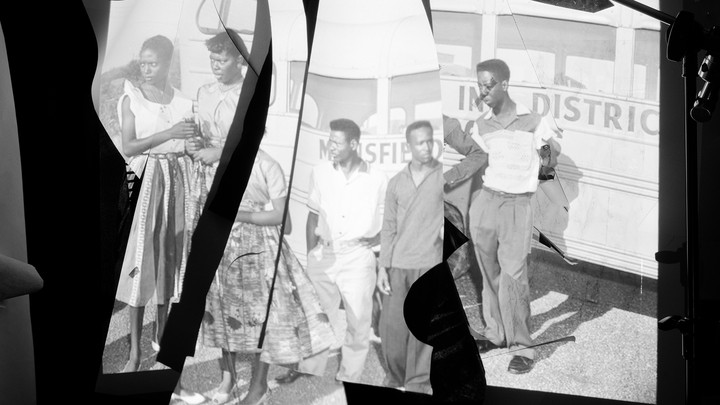


Fifteen years before Rosa Parks was arrested, Pauli Murray took a seat in the whites-only section of a bus. At age 29 in March 1940, Murray was jailed in Virginia after rejecting a bus driver’s order to move to the back. Years later, the legal scholar’s writings on racism served as Thurgood Marshall’s “bible” for the Brown v Board of Education decision banning school segregation – and helped shape Martin Luther King Jr’s beliefs in non-violent resistance. Murray’s profound civil rights legacy is often erased, as is a key part of her biography. She described herself as a mixture of genders with language that closely resembles contemporary definitions of non-binary and trans male identities: “maybe two got fused into one with parts of each sex” and “one of nature’s experiments; a girl who should have been a boy”. Murray’s extraordinary and forgotten role in influencing some of the biggest civil rights advancements of the 20th century is an early example of the way transgender and non-binary leaders have been at the forefront of so many historic struggles. Pauli Murray was jailed in Virginia in 1940 after rejecting a bus driver’s order to move to the back. Photograph: Carolina Digital […]
Add a comment