

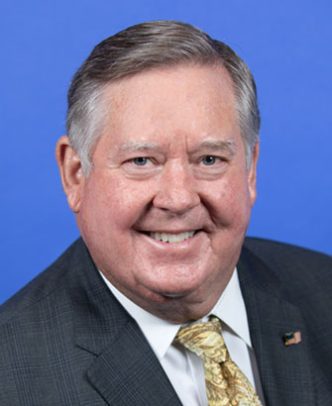
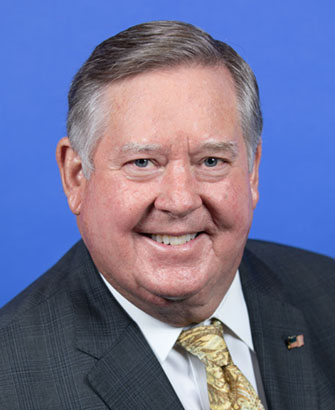
Rep. Ken Calvert, R-Corona, held onto a steady lead Friday over Rep. Young Kim, R-Anaheim, and declared victory in their contentious contest for the redrawn 40th Congressional District.
With 558 voting precincts in Riverside and Orange counties partially reporting Thursday morning, Calvert had roughly 54% of ballots cast, compared with Kim’s 46%, according to the California Secretary of State’s Office. Vote totals were over 81,000 for Calvert versus nearly 69,000 for Kim.
“Election officials are still counting ballots, but the outcome of this race is clear. We won, and I could not be more grateful,” Calvert posted on social media. “This is home. I’ve lived my entire life here, and there is no greater honor than serving my neighbors and our communities in Congress. I don’t take that responsibility lightly. …
“Now it’s time to get back to work on making life more affordable, keeping our communities safe and standing up to the madness of the new socialist majorities in Congress who are determined to raise taxes, open our borders and impose failed California policies on the nation,” Calvert added.
Kim had not released a statement about election results as of Friday morning.
On Wednesday Calvert thanked “voters in Riverside and Orange counties for their continued trust and support. Early results give us a significant lead that I believe will hold. These results show voters want a proven, consistent and effective leader representing them in Congress.”
The two Republicans battled it out in an eight-candidate field in the June primary, with Calvert leading the pack. Since then, the incumbent House members have slung blistering rhetoric replete with accusations and counter-attacks.
Most recently a Calvert television advertisement regaled Kim for taking campaign contributions from a person who the FBI later identified as a registered agent of China. The ad says Kim “fell into Beijing’s trap” by associating with James Su, a West Covina-based media mogul who was registered as an agent of a foreign government in 2022 when Kim accepted his $5,200 in campaign donations.
Su was the target of an FBI probe this year involving alleged foreign influence and broadcasts covertly backed by the People’s Republic of China. Kim ultimately returned the campaign funds.
“It is deeply concerning that Young Kim took thousands of dollars from a registered foreign agent for Chinese state media,” Calvert said in campaign literature. “She didn’t return the money because it was the right thing to do, but because she got caught and the media started asking questions about her ties.”
Kim responded by portraying Calvert as a “do-nothing” politician since the 1990s who himself had been snared in a “bribery scheme” that involved Chinese nationals, resulting in his campaign returning funds in 2015.
The congresswoman also questioned Calvert’s ethics, accusing him of “steering … taxpayer-funded projects to within miles of his own rental properties.”
In September, Calvert said his opponent’s campaign filings failed to report “$100,000 in income her husband received from a nonprofit organization, as required under federal law.”
According to Calvert “Young Kim has shown that she cannot be trusted to do the right thing.”
Kim countered with questions about her opponent’s business associations, noting an FBI investigation of Ontario City Councilman Alan Wapner. In August Wapner resigned from the presidency of the Ontario International Airport Authority amid allegations of improprieties in the management of taxpayer-funded grants.
Calvert and Wapner reportedly worked together to secure the federal funding.
The South Korea-born Kim touted her candidacy as pro-taxpayer, focused on working families struggling during tough economic times.
“I’m working to lower the cost of gas, groceries and utilities and make it easier for families to get ahead,” she said.
Calvert has highlighted his more than three decades in the nation’s capital and dedication to furthering the interests of small business owners, securing funds for major transportation projects throughout the Inland Empire and trying to limit illegal immigration.
Calvert lost his longtime post in the 41st District as a result of California Proposition 50, which a majority of voters approved in a November 2025 special election. The ballot measure amended the state constitution to permit the Legislature to redefine congressional districts’ boundaries, even though the independent California Citizens Redistricting Commission had already established boundaries following the 2020 Census.
Proposition 50 supporters claimed it was a necessary response to Texas’ similar district revamping with the intention of expanding Republican seats to aid President Donald Trump in the midterm elections.
Opponents said the measure was an obvious political scheme similar to “gerrymandering,” which is the practice of altering district boundaries to unfairly favor a particular party or candidate.
California’s 52 congressional districts were modified and in Riverside County, all of the districts changed.
CD 40 includes metropolitan areas in eastern Orange County, as well as the Temescal Valley, most of Lake Elsinore, Canyon Lake, Corona and Menifee in Riverside County.