

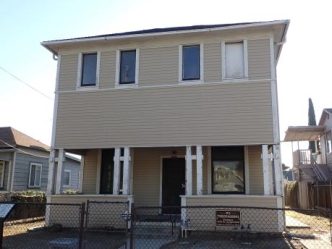
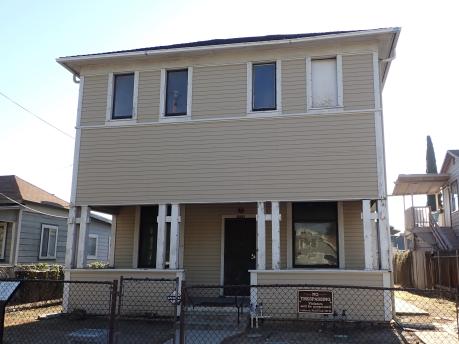
The Museum of Riverside has been awarded a $60,000 grant from Asian & Pacific Islander Americans in Historic Preservation (APIAHiP) to support the construction phase of the rehabilitation of Harada House, a National Historic Landmark. Work on the site is slated to begin next winter.
The grant is a result of the Placekeepers’ Fund, a program funded by the Mellon Foundation’s Humanities in Place program. The grant supporting Harada House is one of 14 grants awarded across the nation to historic sites in eight states and U.S. territories and representing historic sites linked to Chinese, Japanese, CHamoru, Native Hawai’ian, and pan-Asian American histories.
These 14 projects were selected from a competitive pool of over 60 qualified applicants, which totaled more than $4.2 million in grant funding requests and just under $20 million in total project costs. This illustrates the clear need for preservation funding dedicated to Asian and Pacific Islander American historic sites and reinforces APIAHiP’s commitment to providing resources for these places.
“Preservation funding at-large is already limited, and even harder to secure for historic sites related to underrepresented histories of under-resourced communities,” said Huy Pham, executive director of APIAHiP. “We are proud to provide meaningful funding for the growing demand to preserve places crucial to telling our nation’s Asian and Pacific Islander American history.”
The Museum of Riverside’s grant will support the initial phase of the rehabilitation of the Harada House on Lemon Street in downtown Riverside, which includes foundation work and structural stabilization. The work is expected to take at least two years due to the complex nature of the technical preservation challenges.
Harada House earned its National Historic Landmark status in 1990 because it was the subject of a civil rights court case in 1916-1918, the People of the State of California v. Jukichi Harada et al., in which the Superior Court of California upheld the 14th Amendment rights of the American-born children of Japanese immigrants Jukichi and Ken Harada against California’s 1913 Alien Land Law targeting Asians. The Harada case was the first test in the United States of the constitutionality of these exclusionary property and immigration laws.
“We are grateful for this award and the endorsement it represents for the Museum of Riverside’s plans to prepare Harada House for public access,” Museum of Riverside Director Robyn G. Peterson states. “This civil rights monument connects Riverside’s unique history with urgent contemporary social concerns relating to citizenship and cultural inclusivity. The grant could not be more timely.”
Once construction begins, progress will be reported on the Museum of Riverside’s website: www.museumofriverside.org.