

Pasadena City Council members on Monday preserved two clusters of historic homes and waived permit fees for still-standing, fire-damaged houses.
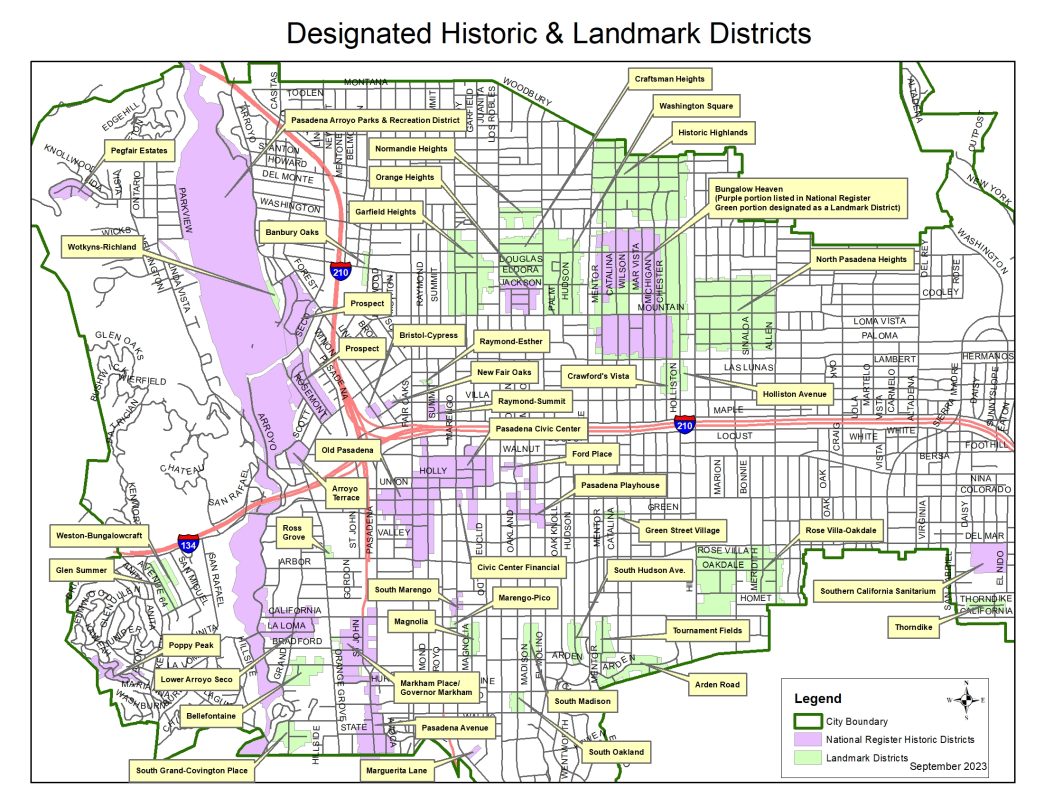
The council designated the Arboleda Drive and Mesita Road landmark districts and advanced ordinances that would formally place them on the zoning map.
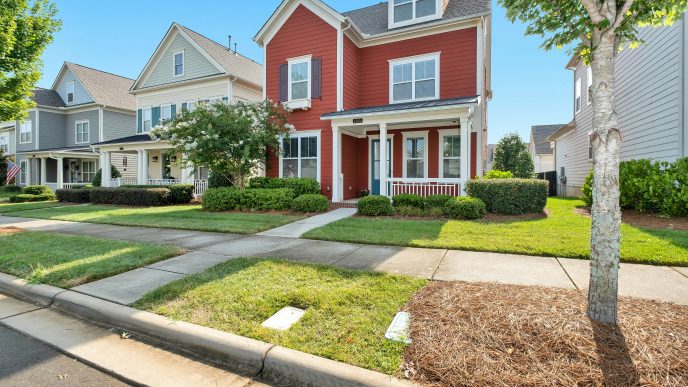
Rather Duong, senior planner from the city’s Planning and Community Development Department, described the Arboleda Drive district as 12 Spanish Colonial Revival homes in the 696-718 block of built in 1929. The Mesita Road district in East Pasadena comprises seven mid-century modern and modern ranch homes built between 1949 and 1958.
The Mesita Road homes occupy a slope separating them from adjacent areas on Sierra Madre Villa Avenue, New York Drive and Calvert Road.
The designations drew a pointed debate over how far historic preservation should extend. Councilman Rick Cole said he was not opposed to new landmark districts but wanted “clarity” and “certainty” about where the line is drawn, noting the cost to the city is “on the order of several hundred thousand dollars” and rising.
“I think it’s worth the cost, but I think we should have a a handle on this,” Cole said. “And when we’re approving a 12-house district and then a seven-house district, and we have a five-house district at some point.”
Cole said he was “also troubled by the fact that this is a private drive. So in theory, no one will get to actually see any of this distinguished architecture besides the residents themselves. I’m not going to oppose this, but I would like us to have some serious discussion about the future of landmark districts.”
Jason Mikaelian, the city’s deputy director of the Planning and Community Development Department, responded that roughly 10% of residential properties currently sit within landmark or national register districts in Pasadena. He said that a citywide historic resources survey now underway should reduce the number of individual evaluations the city must perform.
The ongoing survey “could result in additional properties being eligible, most likely, but the city’s practice has been really a neighborhood-driven effort to designate either individual landmarks or districts.”
City staff also emphasized that landmark designation does not block additions, accessory dwelling units, or full floor-area-ratio, though it does require a certificate of appropriateness.
A public commenter pushed back from the opposite direction, arguing that much of the support for landmark districts is “to preempt density” and reduces affordable housing.
Mayor Victor Gordo defended preservation as an economic development driver, saying it contributes to the city’s “authenticity”. Both districts were approved, and the corresponding ordinances were introduced on first reading.
“At least three of us and probably more than half the council lives in a historic district,” Gordon said. “As I drive around parts of LA County, one of those things that distinguishes Pasadena from many communities, and many communities have it in common with us as well, is authenticity, whether it’s in Old Pasadena or in our neighborhoods. These are beautiful homes deserving preservation.”
Fire rebuilding fees
In a separate agenda item, the council expanded the Eaton Fire Rebuild Permit Fee Waiver Program to cover permit fees for repairs to eligible standing homes damaged by smoke, soot, ash or water. The expansion carries a $100,000 budget funded by the Building Fund, with no cost to the general fund.
A resident said she remains displaced and fought back tears as she urged the council’s approval, telling members the waiver would “rectify the omission of standing homes”.
“I don’t think it was intentional that standing homes were not included originally, but it’s clear now that the challenges in recovery are tremendous,” she said. “And given there’s no cost to the general fund for the proposed expansion of these waivers, it would be deeply appreciated to acknowledge the hardship and challenges of contaminated standing homes.”
“Standing home repairs are generally smaller in scope than full rebuilds, requiring nominal permit fees or in some instances, such as soot removal, no city permits for the remediation,” according to a city staff report. “Staff anticipates average waived fees of $150 to $2,000 per property, depending on repair type and valuation. Fire repair permits total just over $51,000.”
More information about recovery from the deadly January 2025 Eaton Fire that devastated areas of Altadena, Pasadena and other nearby communities is on the city’s website, cityofpasadena.net/eaton-fire.
The AI platform Civilio assisted this report.