



An updated analysis by an economic research firm has revealed that proposed stormwater requirements will impose roughly $11 billion in costs on San Bernardino County and 16 of its cities over the next 20 years, which officials said will unleash a financial crisis that could bankrupt cities, increase housing prices, gut public safety budgets and disproportionately harm the region’s most vulnerable residents.
The county hired Beacon Economics, a nationally recognized economic research and consulting firm for an “independent, data-driven analysis” of the proposed Regional Municipal Separate Storm Sewer System Permit, or MS4, county officials said. The Santa Ana Regional Water Quality Control Board oversees the permit, which regulates stormwater runoff from urban areas.
According to the county, the proposed permit revisions would require sweeping new compliance measures that local officials claim “are both financially unworkable and environmentally unproven.”
These concerns led to an outcry from Southern California counties and cities in 2024 when the permit was first discussed. “After 15 months of silence and no effort at collaboration,” the San Bernardino County Board of Supervisors 2026 update to the proposed MS4 permit was released about two months ago, officials said.
Beacon Economics’ analysis found the newest version of the proposed permit failed to reduce its huge costs in any substantial way, according to the county. A revised “Tentative Order” does include some minor improvements in implementation flexibility, but the main cost drivers were unchanged as the proposed permit “seeks to apply an unproven standard that would force cities and counties to spend billions to divert and treat stormwater, which will drain rivers and streams that species depend upon and residents use for recreation,” county officials said.
The 16 affected cities are Big Bear Lake, Chino, Chino Hills, Colton, Fontana, Grand Terrace, Highland, Loma Linda, Montclair, Ontario, Rancho Cucamonga, Redlands, Rialto, San Bernardino, Upland and Yucaipa.
The proposed MS4 also presents an environmental paradox — the U.S. Fish and Wildlife Service has voiced concerns that diverting stormwater flows to meet the proposed permit requirements will harm habitats for the Santa Ana Sucker Fish, which is officially listed as a threatened species under the federal Endangered Species Act.
“This raises the prospect that the new rules will cause the very environmental harm they purport to prevent,” according to the county.
Officials also noted “warning signs” such as comparable stormwater mandate in Los Angeles that has failed to deliver required results despite a $300 million new tax to fund compliance, leaving agencies facing enforcement actions.
“Arbitrary standards not yet proven by science, or technology or real-world applications will produce the same outcome, leaving its cities unable to fund the basic services their residents depend on,” according to the county.
“We respect the Santa Ana Regional Water Quality Control Board’s mission and share the goal of clean water for our communities, but the cost impacts in this proposal are substantial, and we’ve seen in other regions that large investments in stormwater compliance haven’t translated into measurable water quality gains,” Board of Supervisors Chairman and 3rd District Supervisor Dawn Rowe said in a statement.
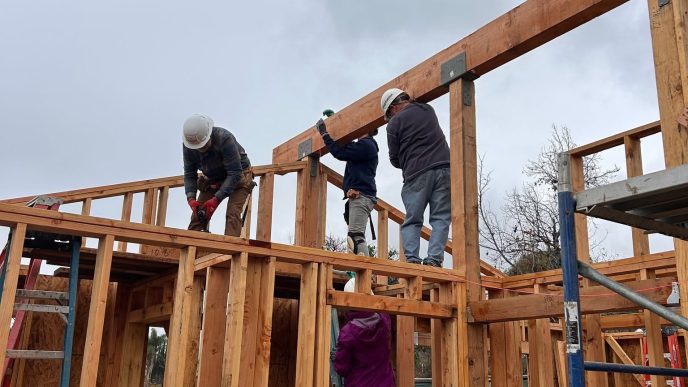
Amid a statewide housing shortage and affordability issues, the Beacon analysis shows that the price of a new single-family home in San Bernardino County could potentially increase by $26,000 to comply with the proposed MS4 permit that calls for a costly stormwater treatment system to be installed on every lot in a new home development. That requirement does not exist currently.
“Everyone agrees that clean stormwater is an important goal, but not at the risk of imposing financial hardship on cities, eliminating police and fire services, and pricing working families out of housing,” board Vice Chair and 5th District Supervisor Joe Baca Jr. said in a statement. “The board has refused to seriously grapple with those trade-offs, and that is simply not acceptable.”
Beacon’s report also highlights the U.S. Supreme Court’s 2025 decision in City and County of San Francisco v. EPA that found permit requirements must align with the statutory framework established by Congress. Justices decided that permittees are not responsible for water quality outcomes they can’t control.
The proposed permit, however, does exactly that by imposing strict numeric standards for bacteria from nature as opposed to human sources, county officials said. Federal law requires permit holders to reduce pollutant discharge to the maximum extent practicable, not to achieve specific numeric pollutant concentrations.
The proposed permit’s strict standards raise questions about whether the board is operating within its authority, which officials said is heightened by the fact that no human illness has ever been connected to the San Bernardino County stormwater.
Environmental justice organizations, labor unions and dozens of elected and public works officials from San Bernardino, Orange and Riverside counties have expressed concerns about the proposed MS4, officials said.
The Santa Ana Regional Water Quality Control Board has scheduled a public hearing where members will possibly vote to approve the permit. The meeting is set for 9 a.m. Friday, July 24 at Orange City Hall, 300 E. Chapman Ave. County and city officials called on lawmakers, labor leaders and community advocates to attend and urge the board to provide alternative ways to comply with water quality standards instead of an unattainable requirements that drive up costs.
“Our county achieves 99% compliance with nonbacteria numeric limits, and no agency in the nation has been as successful as we are in detecting and eliminating controllable sources of bacteria,” Baca said. “We should aim for a better path forward than investing billions in compliance measures that have not yet demonstrated consistent success in other regions.”
Local governments also oppose the Regional Water Quality Control Board’s process for developing the permit, county officials said. Cities submitted 100 pages of comments to the Regional Board’s original Tentative Order in 2024.
According to the county, the Regional Board’s 440-page response to those comments was not released until June 2026, “just 15 days before the comment deadline, despite prior commitments to provide 90 days for review,” county officials noted.
“This is not how sensible environmental policy is made,” Rowe said. “Fifteen months of silence followed by a 440-page data dump, broken promises on review timelines, and surprise requirements that were never discussed. Given the astronomical costs, the board owes the communities it regulates a far more transparent and collaborative process.”
County officials highlighted these findings from the Beacon Economics analysis:
$11 billion unfunded mandate with no plan to pay for it
The county and its 16 permittee cities face approximately $10.8 billion in capital and operational expenses for Watershed Management Plan compliance alone, hundreds of millions of dollars in added residential development costs, and millions more to comply with trash provisions, development and redevelopment requirements, and industrial, commercial, construction, and food and drinking establishment inspection requirements — bringing the total estimated compliance burden to over $11 billion over 20 years.
Risk of municipal insolvency
The 16 cities have no means of absorbing these costs without imposing new taxes on residents or reducing services. Cities such as Grand Terrace, Highland and Yucaipa could face annual costs exceeding 150% to 200% of their entire general fund budgets for five years. Without new taxes, permit compliance may bankrupt cities while redirecting funds for police, fire, public works and parks.
Disadvantaged communities hit hardest
According to a 2024 report, low-income residents comprise 60–78% of the populations in San Bernardino, Ontario and Fontana — among the cities facing the highest compliance costs, officials reported. Across San Bernardino County, the 33% of residents who live in disadvantaged communities will face higher housing costs and reduced public services because of the permit’s cost. Cities like Ontario, Chino, Colton and Fontana face the most severe financial impacts.
Housing affordability made worse
The permit could raise the cost of building a single-family home by $26,300 by requiring added stormwater infrastructure for each unit. Newly required “Water Quality Management Plans” for public- and private-sector projects will add to total costs.
Public safety and services at risk
“The huge financial demands of the proposed permit will force cities to make an impossible choice: pay to comply with permit or fund police, fire, roads, parks and other vital services on which residents rely, especially those in DACs,” according to the county.
Unproven and unattainable standards
The permit’s proposed numeric limits on bacteria are widely regarded as unachievable, officials said. Studies show that 77% of Santa Ana River bacteria comes from uncontrollable natural sources like wildlife and sediment that no amount of infrastructure spending can eliminate. Los Angeles has shown the standards are unreachable, proving that the Regional Board is demanding San Bernardino County and 16 cities spend billions chasing an unattainable standard.
Infrastructure and transportation obstacles
New development thresholds will impose water quality requirements on public infrastructure projects, delaying transportation upgrades and adding millions of dollars in cost obligations to projects already funded with limited budgets, according to the county.
The Beacon report is on the internet via bit.ly/4vzgHnQ.