

A coalition of environment advocates responded Tuesday to the California Department of Fish and Wildlife’s recent recommendations and evaluations on proposed changes to the state’s network of marine protected areas.
On March 20, CDFW recommended denying nearly all of the public’s proposed conservation measures. The department’s recommendations come three years after tribes, conservation organizations, and members of the public submitted 15 proposals that would expand or strengthen the state’s world-renowned MPA network, according to the Power In Nature coalition.
CDFW has not yet evaluated five tribe-led proposals for marine conservation.
The department’s recommendations are the first step in the decision-making process that culminates with the approval or rejection of proposed changes to the MPA network.
Following three regional public meetings in April and May, the California Fish and Game Commission is set to decide on June 17 whether California will continue with its robust ocean conservation policies.
In the meantime, the Ocean Protection Council plans issue its own recommendations that factor in additional and new information, coalition members said.
“We are concerned with CDFW’s recommendations, given how important strengthening the Marine Protected Area network is to reaching 30×30 and ensuring our oceans remain healthy far into the future,” Laura Deehan, state director for Environment California, said in a statement. “78 percent of Californians across broad and diverse demographics support Marine Protected Areas. We are counting on Governor Newsom, the California Natural Resources Agency and The Ocean Protection Council to push for new ocean protections that reflect the clear will of Californians and the urgency of safeguarding our ocean ecosystems.”
California Department of Fish and Wildlife spokesman Cort Klopping said Friday the agency “respects the independent role of the California Fish and Game Commission in considering regulatory and policy decisions. As such, the department does not comment on matters that are currently pending before the commission.”
Klopping added that the “CDFW will continue to provide scientific analysis, technical information and implementation support as part of the public process, and we encourage interested parties to participate in commission proceedings and submit comments through the appropriate channels.”
In 2023, tribal governments along with environmental and community organizations submitted 15 proposals to strengthen and modestly expand the state’s MPA network amid increasing climate-related impacts to the environment, ocean industrialization and habitat loss, Power In Nature reported.
“These long-awaited recommendations from CDFW are concerning, given the state’s long-standing leadership on ocean conservation and its commitment to conserve 30% of California’s coastal waters by 2030,” according to the coalition. “Cumulatively, if all of the strengthening proposals were approved, this would conserve an additional 2% of state waters, and protect some of the state’s last remaining persistent kelp forests, habitat for endangered species, and other vulnerable habitats like rocky intertidal reef.”
Environmentalists said the CDFW recommendations, as proposed, would increase protections by less than 0.1% of the state’s coastal waters.
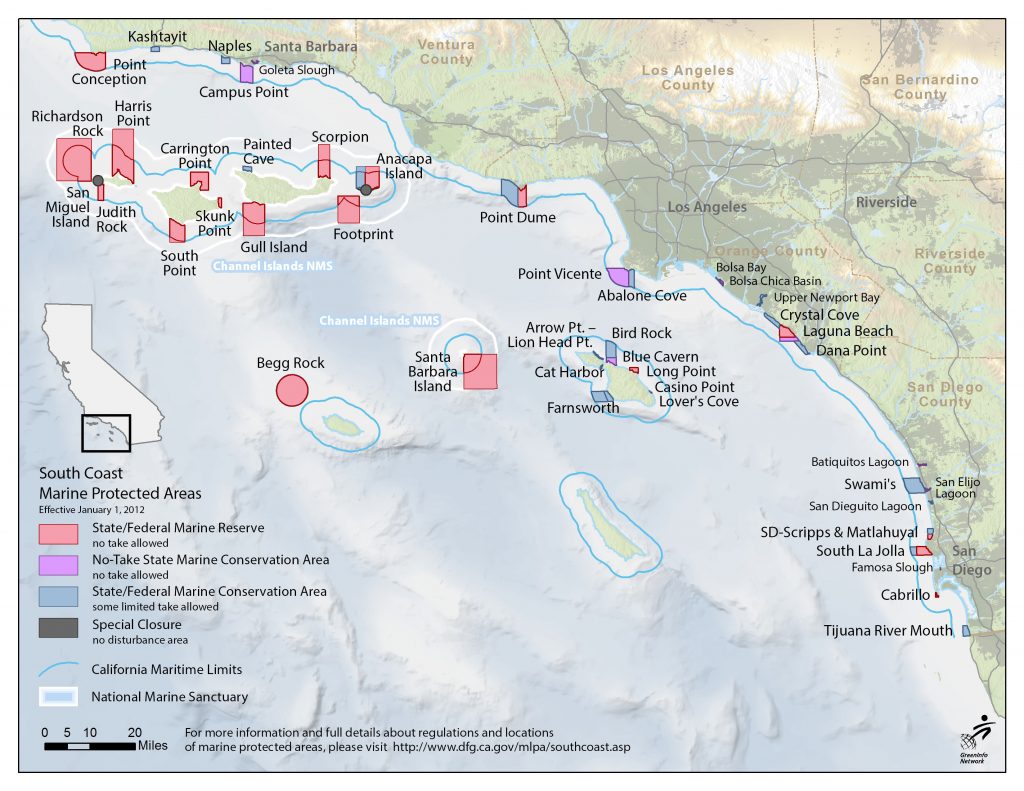
Coalition members cited research that has shown the state’s globally-recognized MPA network, which protects 16% of coastal waters, is working to enhance biodiversity, increase fish biomass and improve the resilience of key habitats such as kelp forests despite climate change-related impacts.
“However, we need over 275,000 additional acres to reach the state’s 30×30 goal,” according to Power In Nature. “Only 9% of state waters are conserved in fully protected MPAs, the most effective type of biodiversity protection.”
A global coalition of scientists agree that to protect life as humans currently know it, conservation of at least 30% of the Earth’s lands and coastal waters by 2030 is a must. First in 2020 then backed by 2023 legislation, Newsom committed California to the 30×30 goal.
Activists said California is leading the world towards “30×30,” especially for land conservation, but millions of acres still must be conserved in less than four years.
“Preserving the state’s lands and coastal waters will help address the impacts of climate change, protect animal and plant species at risk for extinction, and expand access to nature for Californians,” according to the coalition.
The CDFW recommendations released last month are available on the department’s website.
According to Power In Nature, the coalition is comprised of 250 community groups, environmental and conservation organizations, land trusts, Indigenous organizations and tribal members. The group has identified nearly 100 potential 30×30 projects across the state and works on issues that include biodiversity protection, climate resilience, equity, recreation, outdoor access and social justice.
Updated April 13, 2026, 12:00 p.m.