

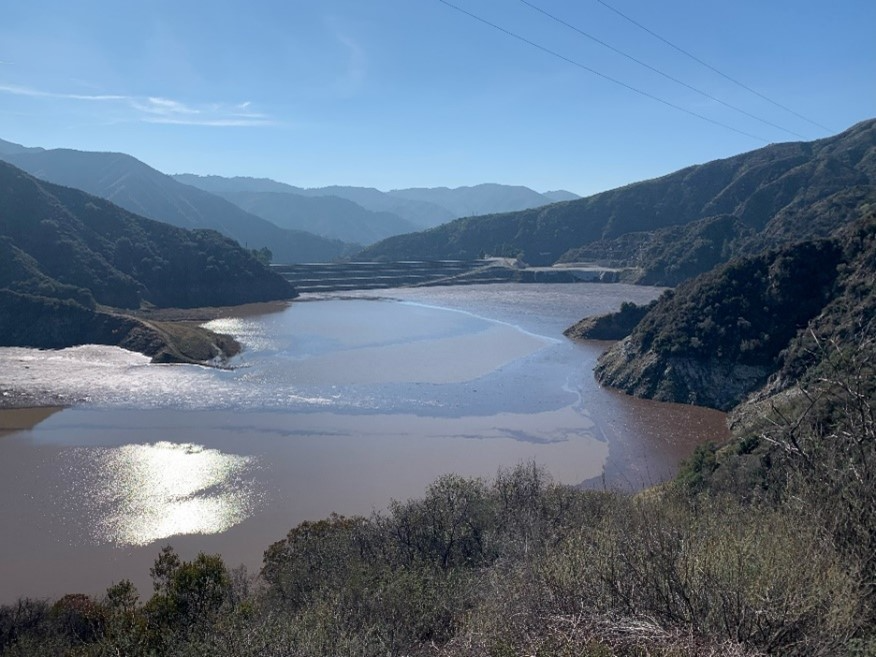
The Los Angeles County Board of Supervisors on Tuesday approved up to $300 million in revenue bonds to finance flood control and water conservation infrastructure at the San Gabriel Reservoir, including repairs to damage from the 2024 Bridge Fire.
The first round of funding from the bonds will support completing this year the San Gabriel Reservoir Post-Fire Emergency Restoration Project Part 2. In 2027 Bond funds will also launch the San Gabriel Reservoir Restoration Project for Bridge Fire fixes.
Supervisors approved the request from LA County Public Works, authorizing the agency’s Financing Authority to issue the bonds in multiple series, according to a county staff report. The first bond series will not exceed $100 million in principal and will generate approximately $100.2 million in total proceeds.
The Bridge Fire raged between September and November 2024, scorching over 56,000 acres in and around the San Gabriel Mountains, including about 37,940 acres of the watershed that feeds into the reservoir. Public Works officials estimate the fire dramatically increased the potential for debris flows into the reservoir by an additional 6.6 million cubic yards of sediment. Such volume could bury the dam’s intakes, disable its outlet works and trigger uncontrolled spillway flows, creating serious risks of floods for communities downstream.
The county’s estimate for total construction costs for both projects combined is $243 million. The LA County Flood Control District anticipates removing up to 6.6 million cubic yards of sediment between 2026 and ’32. The bonds will be backed by the District’s share of property taxes, flood benefit assessments and statutory pass-through amounts.
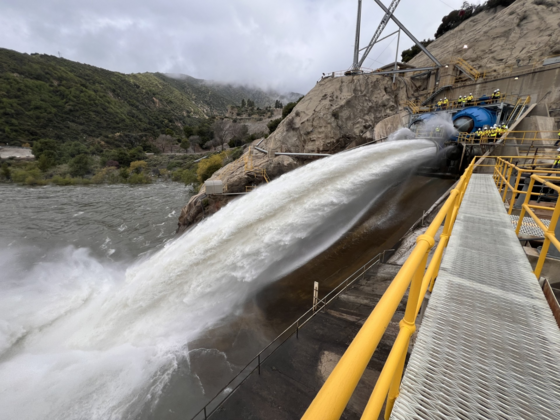
District 5 Supervisor Kathryn Barger, who represents San Gabriel Valley foothill communities downstream of the dam, welcomed the bond funds.
“When a disaster like the Bridge Fire scars tens of thousands of acres above one of our most critical flood control and water conservation facilities, we cannot afford to wait,” Barger said in a statement. “Bond financing is one of the most powerful tools we have to move quickly and responsibly. It allows us to secure the revenue needed to fund large-scale infrastructure projects like this one right now, rather than delaying action while sediment continues to threaten our reservoir capacity, our water supply, and the safety of the communities we serve.”

The San Gabriel Dam was built in 1939 and is operated by the county Flood Control District. The structure provides flood protection, groundwater recharge and hydroelectric generation.
To date, the District has spent $159.5 million on sediment removal in response to the 2020 Bobcat Fire alone. According to Barger’s office, “with committed fund balances now fully expended, bond financing provides the mechanism to continue and expand that work.”