

The Los Angeles County Board of Supervisors on Tuesday voted 4-1 to place a voter initiative on the June ballot seeking a half-cent increase in sales tax to fill funding gaps amid cutbacks from the state and federal governments.
The proposed temporary tax hike, introduced last month by Supervisors Holly Mitchell and Hilda Solis, is a half-cent general sales tax increase through Oct. 1, 2031.
An estimated $1 billion would be generated from the Essential Services Restoration Act, county officials reported.
The current sales tax of 9.75% would rise to 10.25% and take effect “the first day of the first calendar quarter commencing more than 110 days after” voter approval in the June 2 election, according to Mitchell and Solis’ motion for the proposed tax hike.
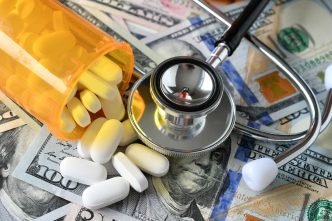
“The federal budget bill, (House Resolution 1), also known as the ‘One Big Beautiful Bill Act,’ proposed and signed into law by President Donald Trump, includes massive funding cuts,” the motion reports. “In Los Angeles County, these cuts most severely impact the County’s health care system. HR 1 cuts billions in federal Medicaid funding to California and imposes new eligibility requirements and copays, resulting in reduced care for patients.”
LA County has 3.3 million people who rely on Medi-Cal assistance, or 1 in 3 residents, including nearly a million children, according to the motion.
“In order to meet the urgent health care needs of the County’s residents and combat the looming potential closure of hospitals, clinics and the emergency room overcrowding crisis caused by HR 1, this Board must place a temporary 0.5% sales tax on the ballot at the next available election,” Mitchell and Solis wrote.
District 5 Supervisor Kathryn Barger cast the dissenting vote after a hearing of more than four hours involving board members and the public.
“Backfilling federal funding cuts on the backs of county taxpayers is not acceptable,” Barger said in a statement following the board’s decision. “Los Angeles County residents are already stretched thin. Last year, Bloomberg News reported that Los Angeles now has the highest sales tax rates of any major metropolitan region in the nation. This proposed half-cent increase would push us even higher, making our county less affordable for families and less appealing for consumers to shop and businesses to operate. We are risking imposing higher everyday costs and small businesses and employers choosing to leave Los Angeles County altogether.”
Mitchell, who represents District 2, argued during the meeting that health care services in the county will face significant shortfalls without an infusion of funding.
“HR 1 pulled the rug out from under all of us. … That’s how we got here,” Mitchell said, also noting that the bill included “the largest federal funding cut to Medicaid in our nation’s history.”
District 1 Supervisor Solis said, “Let us not forget … and underscore how we got here — the Trump administration and congressional Republicans passed HR 1 that put the safety net, which we as board members are obligated to strengthen and make sure that it’s adaptable and flexible when we incur … budget hits and crisis.”
Voters raised the county’s sales tax 0.5% in April after voters approved Measure A to replace Measure H’s quarter-cent levy. The tax finances efforts to prevent and address homelessness.
Barger called for “stronger commitments” from state legislators and questioned the proposed ordinance’s accountability measures.
“Making things more expensive — especially for those who can least afford it — without real guarantees or accountability is not the answer,” she said following Tuesday’s vote. “Placing a burden on taxpayers, with no certainty that the dollars will be spent as intended, is not responsible fiscal policy.
“If the County is going to ask voters to approve a tax, it should be a special tax that provides clear purpose, enforceable accountability, and real transparency — not a general tax which can be used for other County needs,” Barger said.
Mitchell worked with a coalition of health care organizations and workers on the proposed ballot measure. Members of the coalition Restore Healthcare for Angelenos have said that if county supervisors had not approved the proposal, the organization would have initiated a campaign to gather signatures to qualify the measure for the upcoming ballot.
Mitchell and Solis’ motion says the tax increase aims to address the immediate need to provide financial support to the county’s health care system.
“Unfortunately, after exhausting every existing alternative, this temporary emergency measure is the only option that can be implemented quickly enough to prevent hospital closures and the loss of health care access for at least hundreds of thousands of residents,” according to the motion.
“The county’s most impacted departments face projected losses totaling $2.4 billion over the next three years,” Mitchell and Solis wrote. “Due to funding losses, county officials have already initiated hiring freezes and are contemplating service consolidations, potential layoffs of 5,000 staff, and facility closures in the coming years.”
The federal budget bill approved last year slashed billions in funding to state health care programs. County officials anticipate those cuts to Medi-Cal along with more stringent eligibility requirements will cause residents to lose health coverage and access to medical care.
To qualify for Medi-Cal assistance, an individual must earn less than $21,597 of taxable income annually, according to the DHCS. A family of four must not bring in more than $44,367.
During Tuesday’s debate, supervisors advanced an amendment by 3rd District Supervisor Lindsey Horvath to change the allocation of money generated by the proposed tax:
- up to 45% for the county Department of Health Services;
- about 22% to DHS to safeguard public hospitals and clinics;
- 10% for the county Department of Public Health and its core public health functions;
- 5% distributed based on patient visits to nonprofit health care providers serving low-income and underserved populations;
- approximately 5% to support nonprofit “safety-net” hospitals in the county and entities that serve underrepresented populations;
- about 4% would be used for school-based health needs and programs as determined by the governing board of the L.A. Care Health Plan;
- about 3% would be allocated to the county Department of Public Social Services to support Medicaid outreach and enrollment efforts as well as volunteer programs;
- 2.5% would fund Correctional Health Services;
- another 2.5% would fund in-home supportive services for seniors and county residents with disabilities;
- around 1% would support the cities of Pasadena and Long Beach, which have their own Public Health Departments; and
- any remaining funds would be disbursed in a “need-based manner” mainly based on “Medicaid emergency department volume,” according to the motion.
The proposed measure would establish a nine-member citizens’ oversight committee to ensure fiscal accountability for any revenue raised. The committee would do annual independent audits and recommend how to distribute the funding.
Committee members would serve three-year terms and they would be eligible for reappointment by the Board of Supervisors, according to the motion.
Several cities in LA County submitted letters opposing the tax hike, including Glendale, Pico Rivera, Commerce, Cerritos and Bellflower.
A letter to the board from Glendale Mayor Ara Najarian and City Manager Roubik Golanian said the proposed tax increase “fails to recognize the extremely limited revenue tools available to cities to fund essential municipal services. The County’s action would consume the remaining local sales tax capacity that cities like Glendale rely upon to address their own fiscal challenges and meet the needs of their residents.”
Glendale officials added that the board’s “approach mirrors the growing pattern we have experienced from Sacramento — where state mandates dictate local priorities on housing, homelessness, transportation, and public safety without providing adequate funding or preserving local decision-making authority. Now, this same erosion of local control is occurring at the County level.”
The proposed tax-increase ordinance is available on the county’s website.