

Two studies by researchers at the University of California, Riverside found a majority of Inland Empire residents report they are struggling to get by.
The research, based on two surveys of more than 3,300 residents, paints a revealing picture of life in Southern California’s fast-growing region east of Los Angeles, according to the university on Tuesday.
More than half of survey respondents, 53%, said they were struggling, according to the research. Another 6% reported suffering indicating that they saw little hope for the future, UCR officials said.
The studies were based out of the university’s Center for Community Solutions, which is part of the university’s School of Public Policy. According to researchers, the studies uncover troubling disparities but also hopeful signs of community cohesion. While the levels of well-being were below national averages, IE residents were more likely than others in the United States to feel a sense of community belonging.
“Overall, the IE lags behind the U.S. with respect to self-reported well-being, but the region’s unusually strong sense of local connection offers hope and a foundation to build upon,” Justine Ross, executive director of the Community Solutions Center, said in a statement.
The study “Insights on Vital Conditions in the IE” followed the Cantril’s Ladder research method, UCR officials said. Survey participants were asked to rate their current and anticipated future lives on a scale of 0 to 10, which were then combined to place respondents into one of three well-being categories.
“The results were sobering,” according to UCR. “Just 41% of Inland Empire respondents are thriving — the highest well-being category — compared with 53% nationwide.”
The Inland Empire’s score is similar to countries such as Brazil, Guatemala, Nicaragua and Slovakia, researchers said.
Survey-takers who reported they were thriving tended to have higher incomes and education levels, be married and belong to churches.
A companion study provided survey questions to 1,000 women in Riverside and San Bernardino counties. Those questionnaires revealed even starker challenges — 58% said they were struggling, and 6% were suffering, researchers reported. Fewer than 4 in 10 women reported feeling they were thriving.
In Riverside County, more than one-third of participants in the “Women and Well-Being” study said they expected their lives to be worse in five years. That sharply contrasted the 9% of women in adjacent San Bernardino County.
Researchers noted that a significant gap in health care stood out among survey findings. Almost 40% of uninsured women said cost was the primary barrier to obtaining coverage, and access to care lagged behind nearby counties.
Education and economic opportunity also remain challenging for inland residents. Just 30% of pre-kindergarten-aged girls in the region were enrolled in an educational program, and 16% of adult women did not have a high school diploma. Those without a diploma earned an average annual income of just $26,000.
Despite the barriers, gaps and sense of struggling, signs of resilience did emerge, according to the studies.
Women who completed surveys said they had stable housing at the high rate of 93%, and 88% reported feeling safe in their neighborhoods.
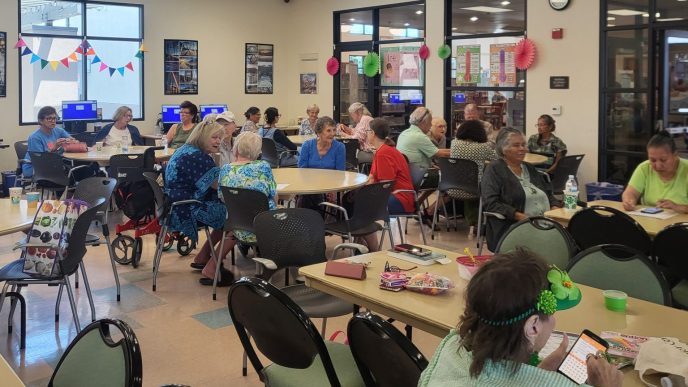
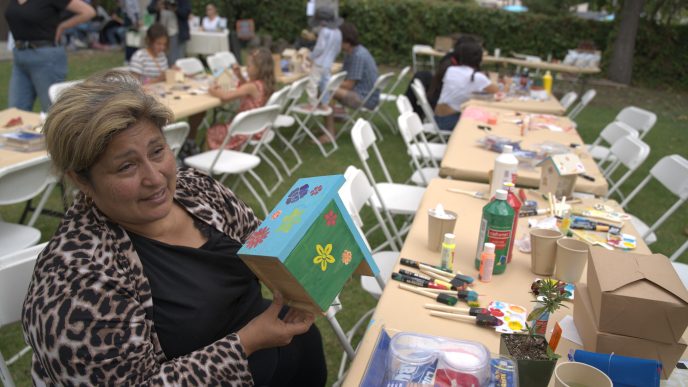
About one-third of IE residents reported a strong sense of belonging in their local communities, surpassing national rates. That sense of connection factored significantly into overall well-being.
“We often talk about income as if it is the strongest factor linked to well-being, but our study shows belonging and civic engagement are just as strongly correlated,” Ross said.
Officials noted that the boost to well-being connected with higher levels of community engagement and belonging was comparable to the benefit of earning $190,000 annually.
The studies’ findings indicate “clear opportunities for policy intervention,” according to UCR. Researchers identified opportunities to expand access to early childhood education, improve health care services, increase civic engagement and invest in initiatives intended to create social connections.
Ross described belonging as “the connective tissue that holds communities together.”