

The Los Angeles County Board of Supervisors released a report Thursday about the deadly Eaton and Palisades fires that calls for improvements to wildfire alerts, warnings and evacuation procedures during wildfires.
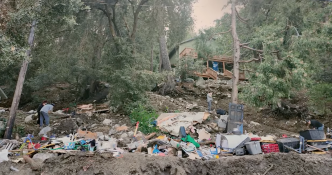
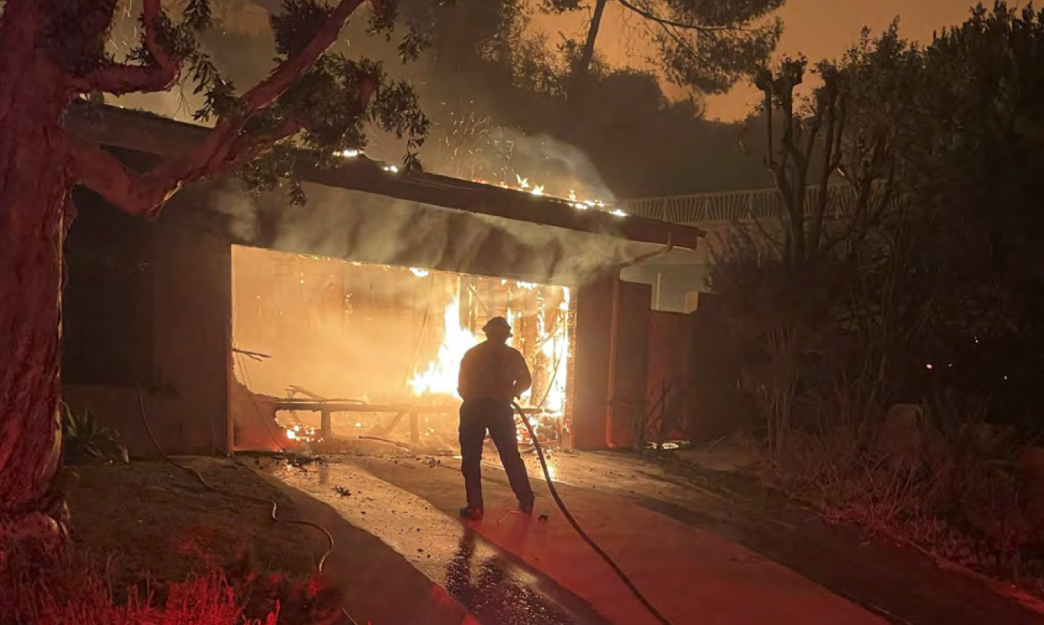
The Eaton Fire in Altadena and the Pacific Palisades blaze devastated communities in January, claiming 31 lives combined, burning 37,000 acres and destroying over 16,000 structures. The fires also reached areas of Los Angeles, Pasadena, Sierra Madre and Malibu.
While the review did not identify points of failure, it “found that a series of weaknesses, including ‘outdated policies, inconsistent practices and communications vulnerabilities,’ hampered the effectiveness of the county’s response,” according to a board statement.
Supervisors commissioned the “Independent After-Action Report” by McChrystal Group, a consulting firm led by retired four-star Gen. Stanley McChrystal. The report assesses county “alert and evacuation systems during the January 2025 fire events and provide actionable recommendations to strengthen future response efforts.”
According to the report, “While frontline responders acted decisively and, in many cases, heroically, in the face of extraordinary conditions, the events underscored the need for clearer policies, stronger training, integrated tools and improved public communication.”
Concerns emerged during and after the fires about the effectiveness of public notifications for evacuation warnings. Messages were accidentally transmitted to thousands of residents across the Southland who weren’t intended to receive them, and questions also arose regarding the effectiveness or absence of warnings for many Altadena residents during the start of the Eaton Fire.
The report delineates differences in two blazes. The Palisades Fire began during daylight hours in a community familiar with wildfire risks, while the Eaton Fire erupted at night in an area not associated with significant wildfire danger.
“Some residents in Altadena reported receiving little or no warning before the fire reached their neighborhoods,” the report’s authors wrote.
“Beyond alerting and evacuation operations, this review identified systemic issues that impacted the alert and evacuation response,” according to the report. “Outdated and inconsistent policies, protocols and standard operating procedures created ambiguity around evacuation authority and responsibilities. In many cases, decision-making roles were unclear, and pre-incident public messaging responsibilities lacked standardization across agencies. These gaps contributed to nonuniform preparedness strategies across jurisdictions and slowed coordinated efforts.”
The report also noted persistent problems with training, staffing, resource management and cooperation among government agencies that “further strained the response.”
“During this review, law enforcement and emergency managers reported inconsistent training around wildfire evacuations, highlighting the need for cross-disciplinary exercises and clearer staffing models for surge scenarios,” the report states. “Equipment and personnel shortages were magnified under the extreme conditions of this incident. Compounding this were gaps in situational awareness tools and communications interoperability, which impaired real-time coordination.”
Residents reported “confusion and frustration” resulting from inconsistent messages from authorities and the absence of clear updates on the emergency.
“Future preparedness efforts will require a more integrated approach to public information in collaboration with interagency and community partners to enhance clarity,” according to the report.
Despite the training and communication breakdowns, “frontline responders acted decisively and, in many cases, heroically, in the face of extraordinary conditions,” the authors noted.
Los Angeles County Sheriff Robert Luna said the review is an important tool.
“The Palisades and Eaton Fires were the worst natural disaster in our county’s history, and it tested us and our community in every possible way,” Luna said in a statement. “This After-Action Report is not only a reflection about the past, but it’s a tool for building a stronger emergency response. It highlights what went well and identifies where we can improve, with a focus on enhanced cross training and better technology to strengthen our preparedness. I’m deeply proud of how our deputy sheriffs performed with professionalism and dedication under dangerous and extraordinary circumstances, which exemplifies the strength and resilience of our department, and how we serve our communities.”
County supervisors are scheduled to discuss the report and its findings and recommendations at the board’s next public meeting Tuesday.
The report is available on the county’s website.