

By Roz Brown, Producer
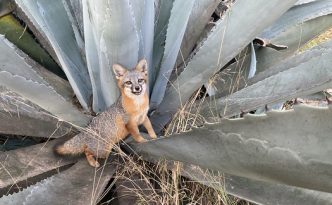
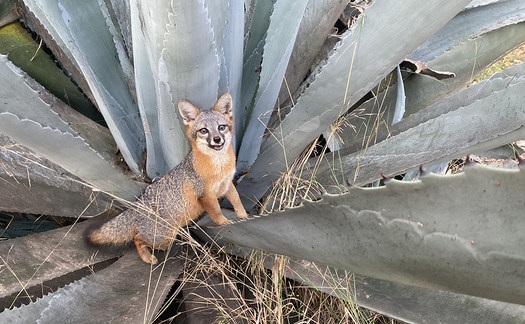
A small fox that lives on the Channel Islands off the coast of southern California is thriving after near extinction. The island fox – found nowhere else on Earth – was listed as endangered in 2004 when only about 30 remained.
A multi-agency recovery effort that started in 1999 resulted in the fastest comeback of any terrestrial mammal under the Endangered Species Act.
Chuck Graham, a photographer, traveled to the islands to chronicle their recovery and share the story.
“It wouldn’t have happened without all the work of the biologists and everything,” said Graham. “I mean otherwise, if it wasn’t successful, it would have been a really big disappointment – but everything worked out.”
Revered by the islands early Indigenous people, the fox weighs just four pounds, smaller than the average house cat. A photo exhibit by Graham is currently on display at the Santa Barbara Maritime Museum.
The population began plummeting in the 1960s after predatory golden eagles replaced bald eagles who could no longer breed on the islands due the effects of runoff from the pesticide DDT. Before the island fox could recover, golden eagles were relocated to the mainland and 61 bald eagles were reintroduced starting in 2002.
With the predators gone, the fox survival rate increased to 90% and the population rebounded to more than 2,000 in 2015. Graham said he wanted to document not just the Island Fox, but its environment and the urgency of preserving it.
“I knew the foxes were an item and I knew the bald eagles were, but it was one of those things that you just have to go to know,” he explained. “I definitely broadened awareness.”
Scientists still debate how the foxes got to the islands some 10,000 years ago. Some speculate they rafted there on storm debris when ocean levels were lower, or were more likely introduced by the Native American Chumash Tribe who considered them a sacred animal.