

By Jeanne Kuang, CalMatters
This story was originally published by CalMatters. Sign up for their newsletters.
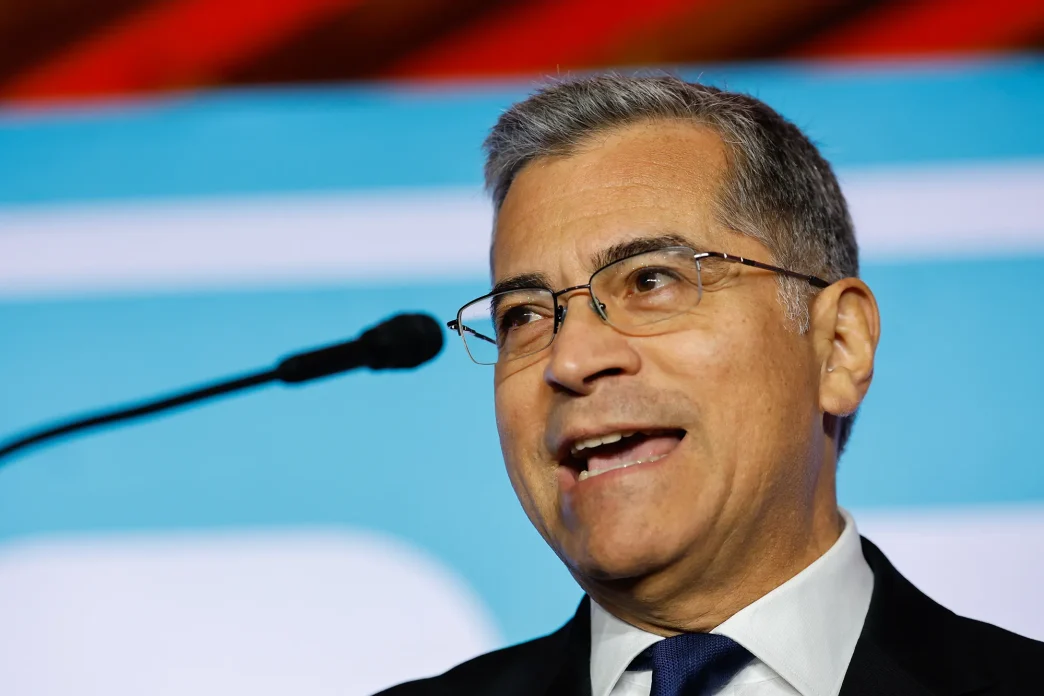
California Gov.-elect Xavier Becerra will take the reins during a delicate time for California.
He faces the prospect of deeper federal health care cuts, skyrocketing wildfire costs and a persistent cost-of-living crisis. But many of the specifics of his policies are still unknown after he ran a quiet race as a Democrat in a safe blue state, promoting few programs and avoiding making commitments.
Here’s what to know about what Becerra will tackle and how he’ll govern.
He’s open to new taxes
Becerra opposed the billionaire tax ballot proposition, saying he does not think taxing assets is a stable way to provide state revenues. And while he’s said he believes the wealthy should pay their “fair share” in taxes, he hasn’t explicitly endorsed any new income taxes.
But he has signaled that he supports the idea of taxing corporations whose workers are paid so little they qualify for public benefits, or potentially ending tax credits to those companies. The state Department of Finance is studying what that kind of tax would look like and is expected to deliver recommendations to lawmakers next year.
He has also said he’s considering a controversial proposal for the state to tax drivers based on their miles driven as a way to pay for road and highway repairs. The state collects that funding through gas taxes, but that source is expected to decline by $31 billion over the next decade as more drivers adopt electric vehicles.
“I take no pleasure in telling people taxes are for a purpose,” he told reporters last week. “I believe that users should pay for (roads).”
Big decisions on climate and energy
Becerra has emphasized the need to keep energy affordable while California continues its clean energy transition.
One program he’s pushing would give low-income households two hours of free electricity each day during daytime hours when solar energy is abundant and usage is low. The program, which he’s calling “power hour,” would be limited to utility customers who already qualify for assistance programs.
He’s said he wants to “continue the path toward clean energy, but while we’re on that path we have to make sure we stabilize the prices,” including by drilling more oil in-state and will decide whether to keep California’s 2030 deadline to ban the sale of new gas cars on the state of electric vehicle charging infrastructure.
He’ll also face pressure from investor-owned utilities that have been pushing lawmakers and outgoing Gov. Gavin Newsom to reduce how much they must pay to insurance companies and fire victims when their equipment sparks destructive wildfires.
If Newsom doesn’t resolve the issue in the next two months, Becerra will have to deal with it when he takes office; so far he’s declined to take a position, calling the debate a “food fight” between insurers and utilities.
Health care for undocumented immigrants
As a first-term congressmember from Los Angeles in 1993, Becerra caused a splash on Capitol Hill by arguing with an elder Democratic statesman over a plan to single out legal immigrants for social safety net cuts — he opposed it. He’s said he will seek to reverse restrictions to Medi-Cal that forced tens of thousands of immigrants who are in California illegally off the program.
Immigration has remained a key issue throughout his career. As governor, he’s promised to enforce new state laws that aim to curb immigration agents’ use of force and activities on state property.
Newsom had expanded immigrant health coverage gradually to all income-qualifying adults but he began rolling back some coverage last year amid a budget deficit and unexpectedly high health care costs.
“My values and my fiscal beliefs tell me that anyone who works hard in California should have access to the health care they need for themselves and for their family and they should be able to afford it, and that includes undocumented,” Becerra told KQED.
Continuing Newsom’s death penalty moratorium
Newsom placed a moratorium on the death penalty in 2019 when he took office, citing his moral opposition to executions, and during his terms he began to dismantle the state’s death row at San Quentin. Prisoners sentenced to death have since been moved to other prisons.
California has not executed any inmate since 2006. Newsom is considering whether to commute the death sentences of more than 560 prisoners to life sentences without parole but even if he doesn’t, don’t expect Becerra to resume executions.
As attorney general, Becerra defended death sentences and said he supported them in principle, but said during the campaign that he would continue California’s moratorium over concerns about racial bias and wrongful convictions.
He calls himself a ‘pragmatic progressive’
In a party undergoing a yearslong identity crisis over how far left to push its policies, Becerra chooses incremental change over progressive moonshots.
In his more than two decades in Congress, he had the ear of both progressive advocates and established Democratic leadership and was a close ally of former Speaker Nancy Pelosi, though the pair had a testy moment in 2009 when Becerra wanted her to push harder for a public option in the Affordable Care Act.
This year, he backed away from his longtime support for single-payer health care, saying it’s a longshot for California with the Trump administration unlikely to give the state permission to launch.
Even before that, he said he valued experience over grand promises like Medicare for All. As President Joe Biden’s health secretary, for example, he said he focused on expanding coverage.
“When I was helping Hillary Clinton in 2016, my daughters wanted to vote for Bernie Sanders,” he said in an interview. “And I kept saying to them, I get it, I understand. I want Medicare for All … But we got to get (things) done, and I want someone who’s actually been in the thick of things.”
This article was originally published by CalMatters and was republished under the Creative Commons Attribution-NonCommercial-NoDerivatives license.