

Italy consistently ranks as one of the top travel destinations in the world and one of the most visited countries globally. I have had the pleasure of touring some of its most popular cities once — Siena, Florence, Rome — and Venice twice. While I had no immediate plans to visit again, I didn’t hesitate to accept an invitation from my niece to attend her wedding last month at the historic Villa Mapelli Mozzi in Casatenovo in the Lombardy region.
Accompanied by my daughter and her husband, I flew from LAX to Milan via Frankfurt as there’s no straight flight. We arrived in the afternoon one day before the event in late September and stayed at the villa — an 18th century aristocratic estate in the rolling hills of the Brianza region, which sits between Milan and Lake Como at the foot of the Alps.
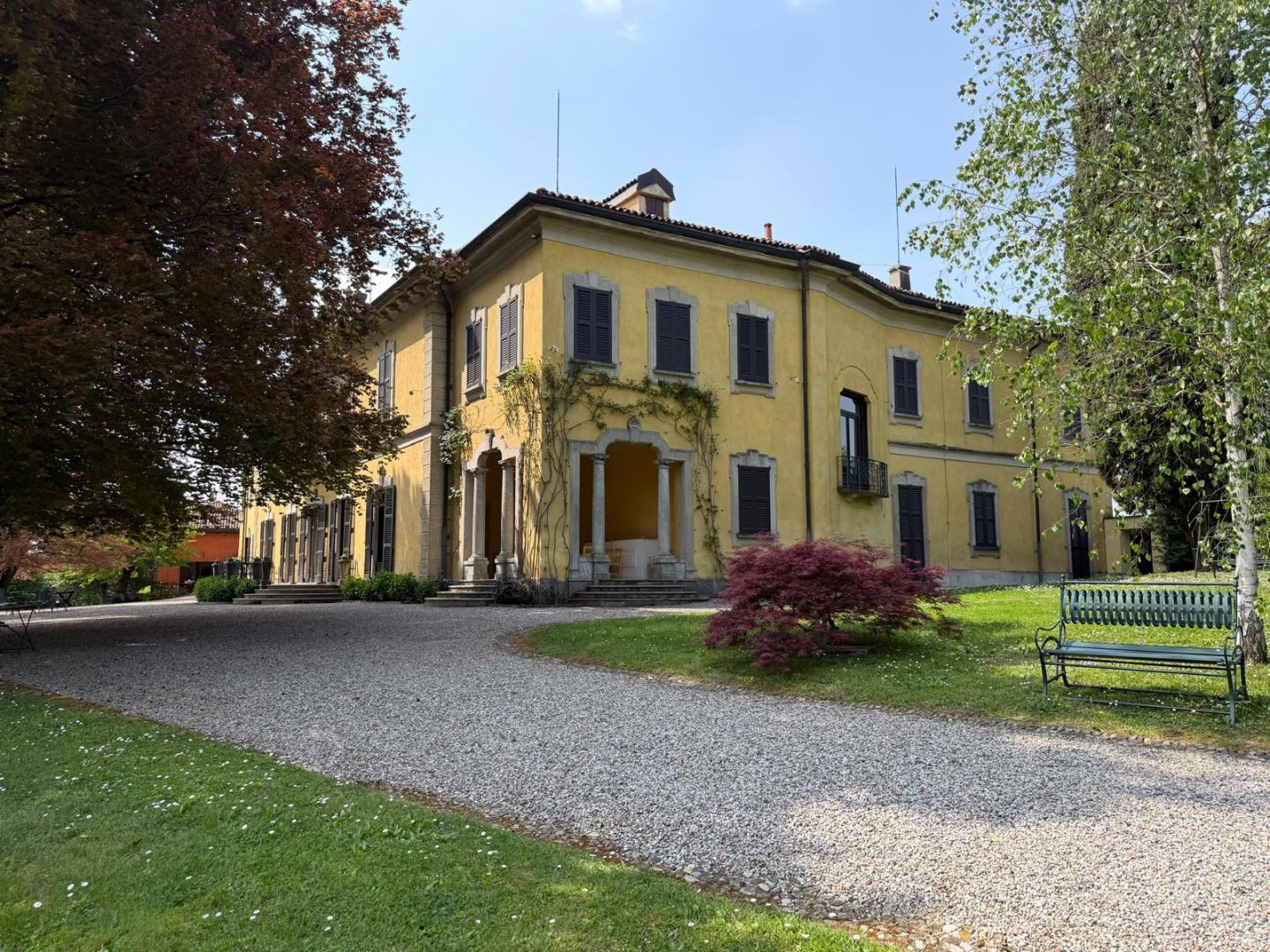
Villa Mapelli Mozzi is renowned for its architectural history and its connection to the Mapelli Mozzi family, whose prominent modern descendants include Count Edoardo Mapelli Mozzi, husband of Princess Beatrice.
Four grand reception halls and two libraries grace Villa Mapelli Mozzi’s lower level, which has direct access to the gardens. The interiors feature traditional Venetian terrazzo and antique oak wood floors and many rooms retain their original fireplaces. The ceilings are detailed with lavish period stuccowork.
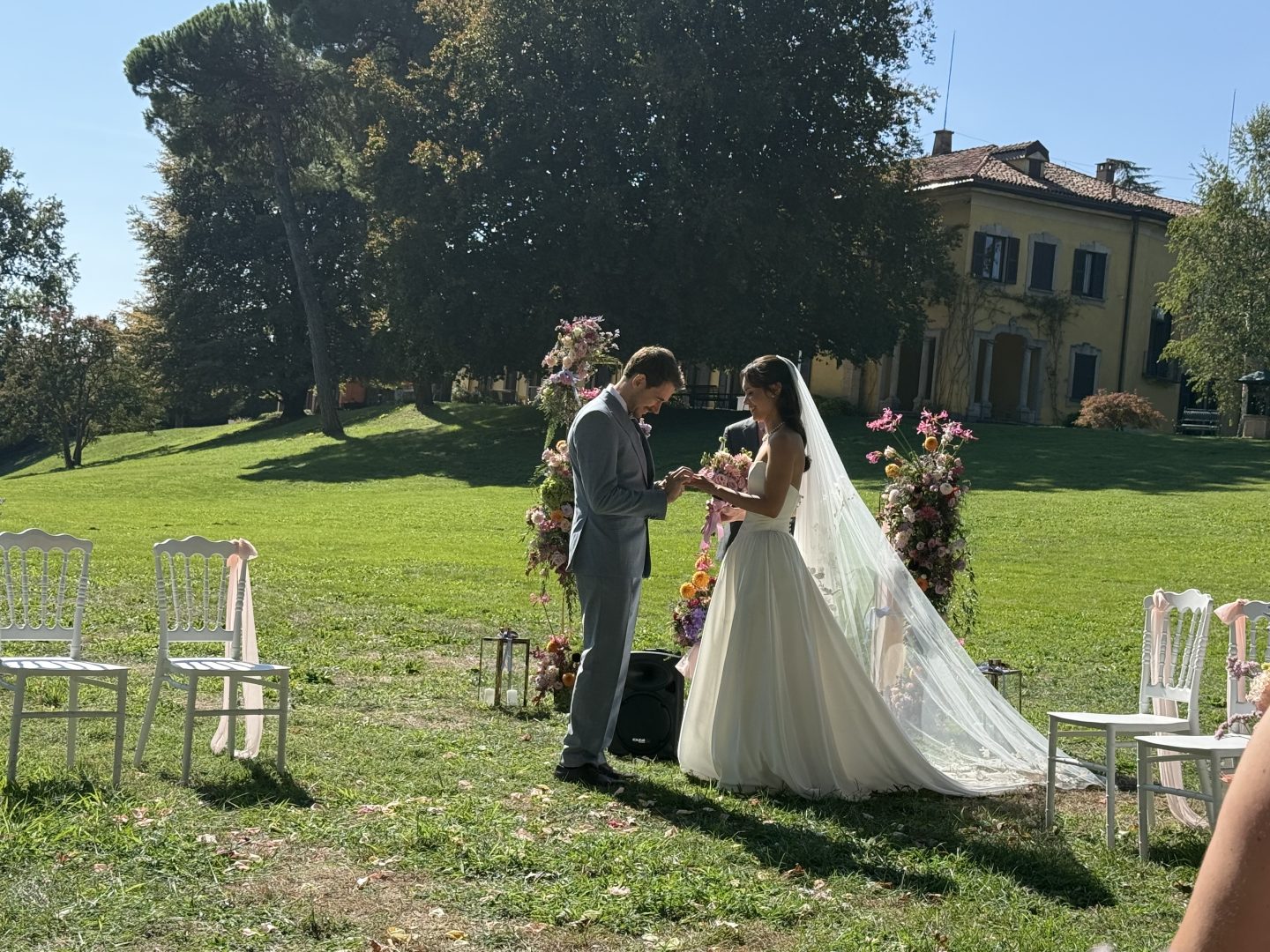
A grand main staircase opens into an exquisite upper gallery. The second level hallway connects bedrooms which overlook 4.5 acres of English Park. The lush lawn features century-old trees and manicured paths. A large outdoor swimming pool blends the villa’s Old World stateliness with modern lifestyle amenities.
After a bit of rest from our 13-hour flight and the hour-long car ride from Linate airport, we joined the other guests at the courtyard for an olive oil tasting. It was conducted by a British olive oil sommelier, or oleologist, who asked us to sample four different kinds — ranging from the ultra-premium olive oil to the supermarket quality. It seemed that the better variety was the one that was spicy and made you cough. Most of us at our table agreed we preferred what we could buy at the grocery store. A make-your-own-pizza dinner was supposed to follow, but there was a problem with the electricity so the chef made all the pizzas instead.
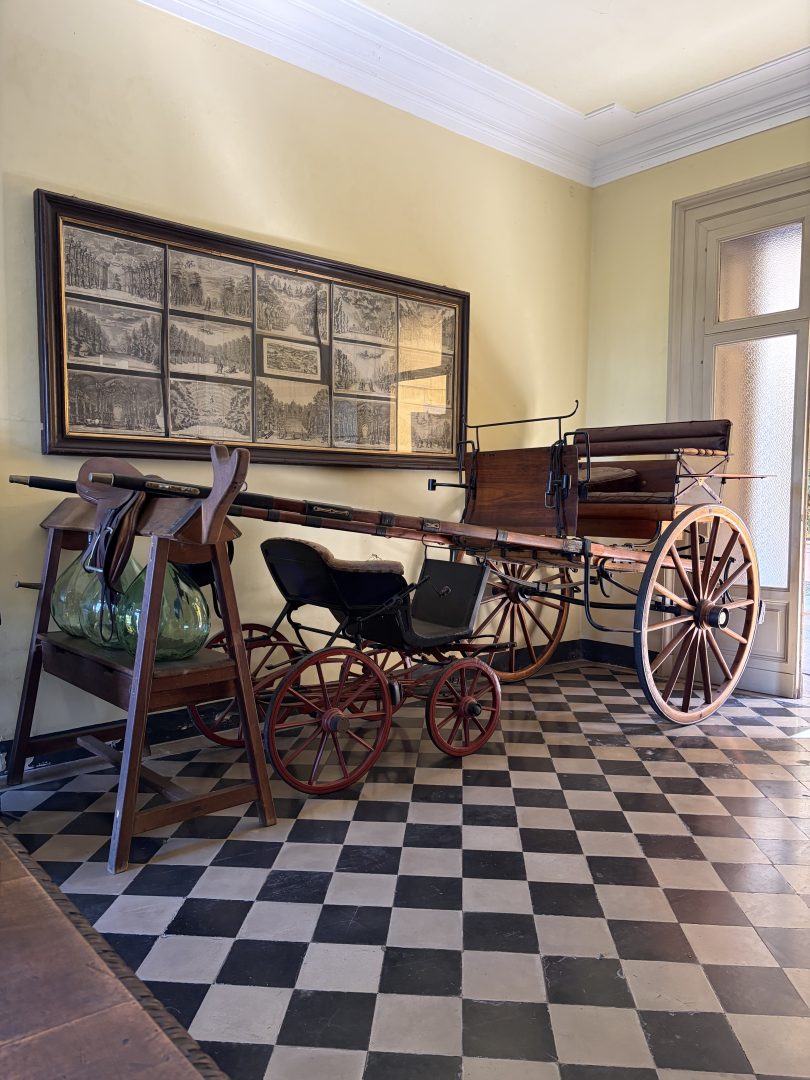
The wedding ceremony took place at 2 p.m. the next day at the estate’s park with 75 guests in attendance — friends and family who came from Switzerland, Canada and the United States. To give us a chance to talk with others we weren’t acquainted with, we played a wedding bingo game after the nuptials. It was a fun ice-breaker!
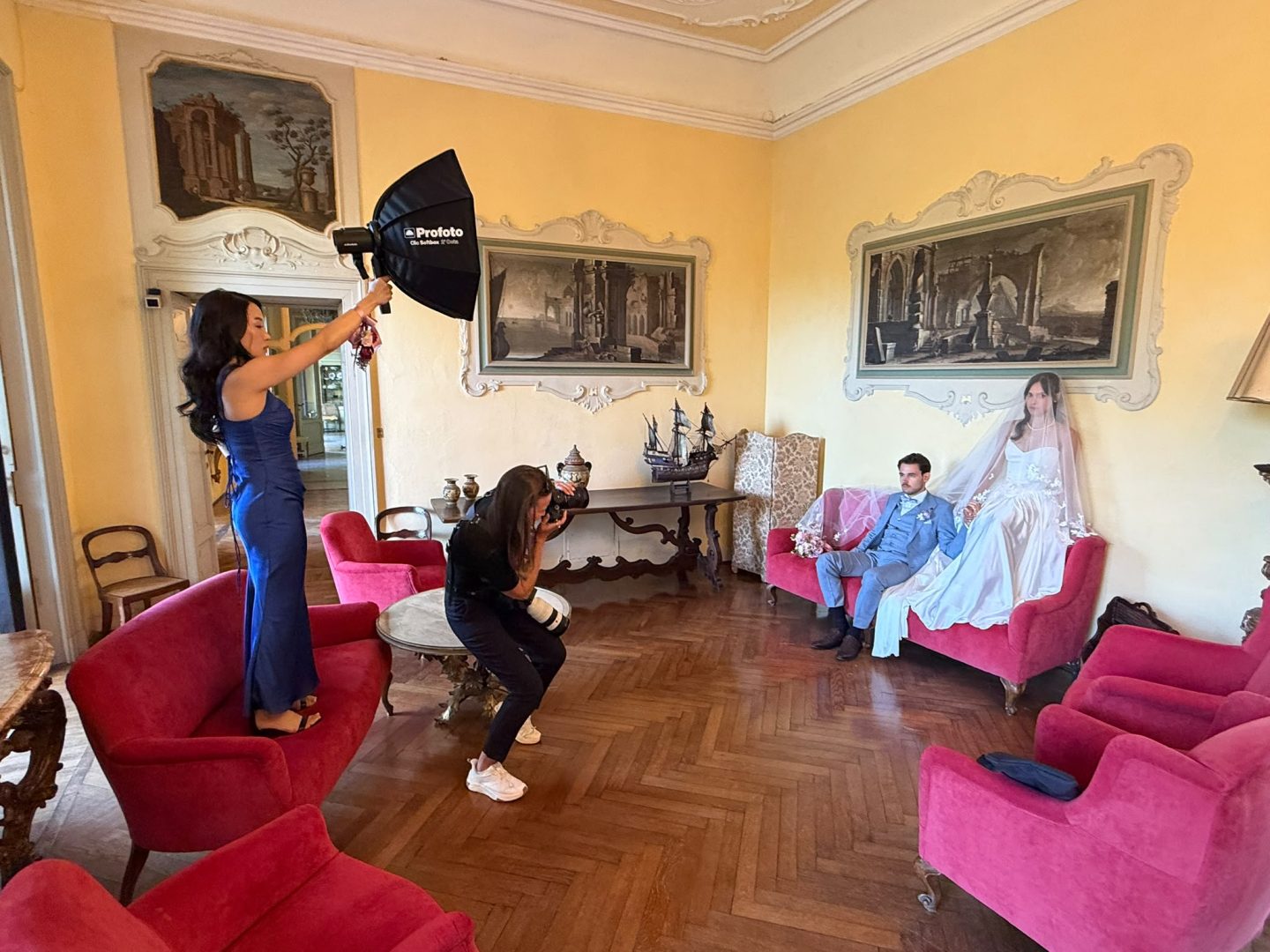
While the photographer took pictures of the bride and groom, guests chatted in the sitting rooms or headed to the game room which had a billiard table in the center and a foosball table at one corner. Hors d’oeuvres and drinks were served after the photo sessions at the front courtyard as the newlyweds played a wedding shoe game to the guests’ amusement.
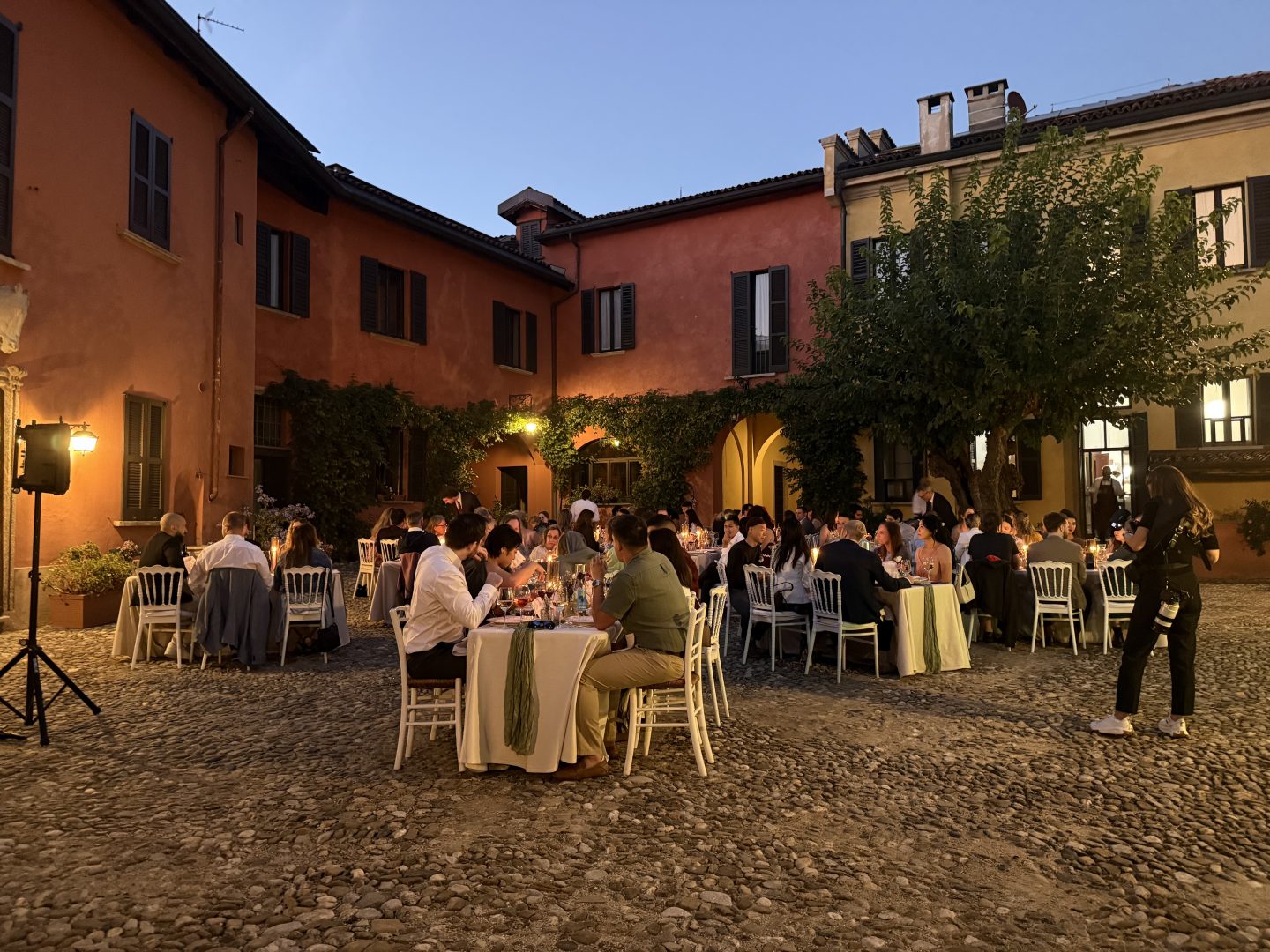
At 7 p.m., dinner was served at the back courtyard followed by the cutting of the cake and dancing till the wee hours. Everyone had a great time making new acquaintances and catching up with family.
We stayed at the villa until the morning after the wedding then headed to Milan, approximately 20 miles south of Casatenovo. The Hotel dei Cavalieri, located at the city center, was our ‘home’ during our short stay in the city. It is within walking distance to several tourist attractions — the Duomo di Milano, Teatro alla Scala, Galleria Vittorio Emanuele II, among others.
Because we only had one-and-a-half days in Milan, we needed to strategize to make the most of it without stressing out. We intentionally didn’t prepare an itinerary, opting to leisurely explore the city — and there’s much to see.
The Duomo is unarguably the centerpiece of Milan. A majestic Gothic cathedral that soars 365 feet from the ground, it is the largest church in the Italian Republic — and one of the biggest in the world. Its construction was a massive undertaking that took nearly six centuries to complete.
In 1386 Archbishop Antonio da Saluzzo commissioned the construction of the Duomo to coincide with his cousin Gian Galeazzo Visconti’s ascension to power in Milan. The Veneranda Fabbrica del Duomo was established in 1387 to oversee the complex design and construction which shifted materials from brick to unique pink and white Candoglia marble transported via dedicated canals.
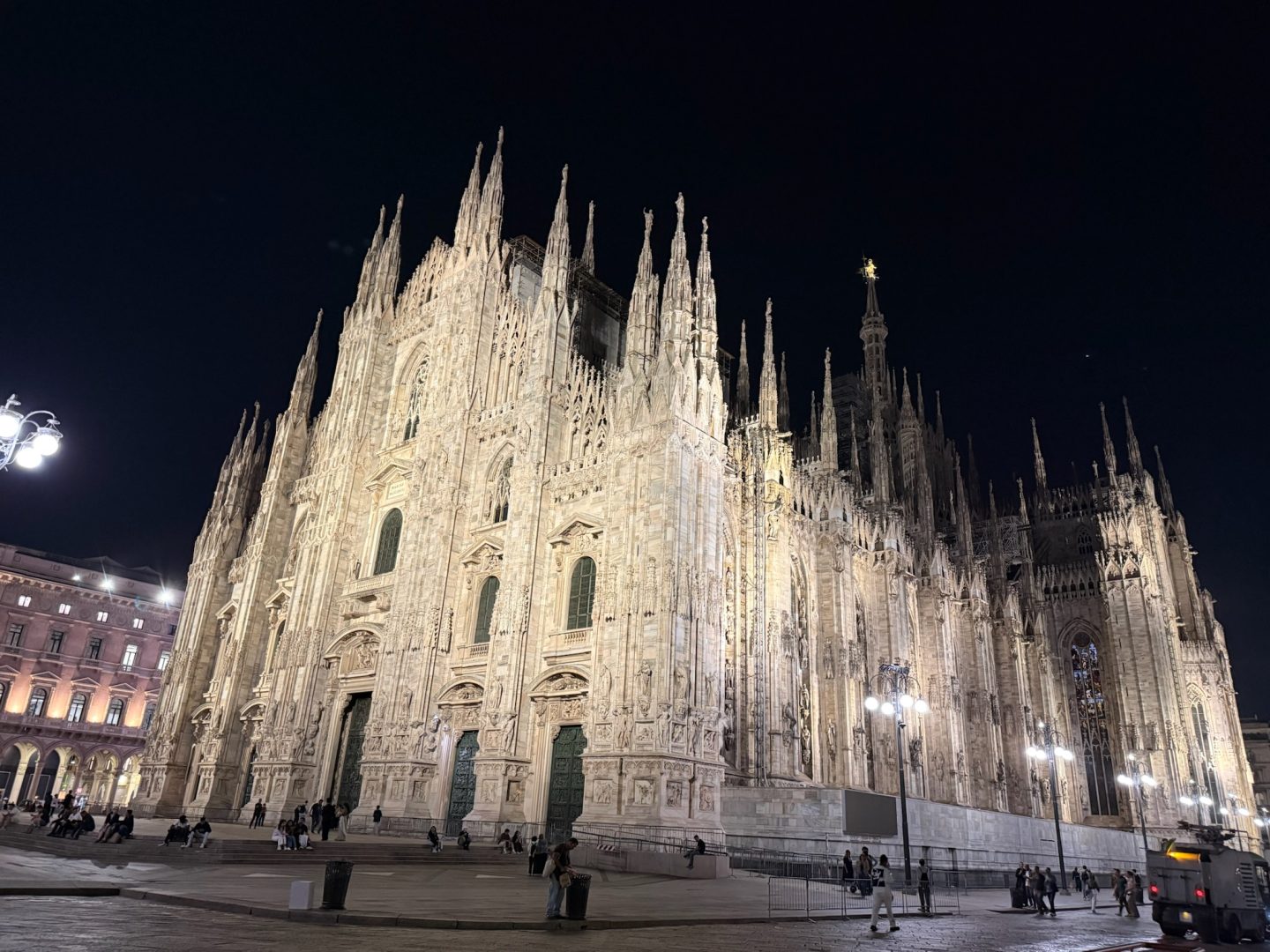
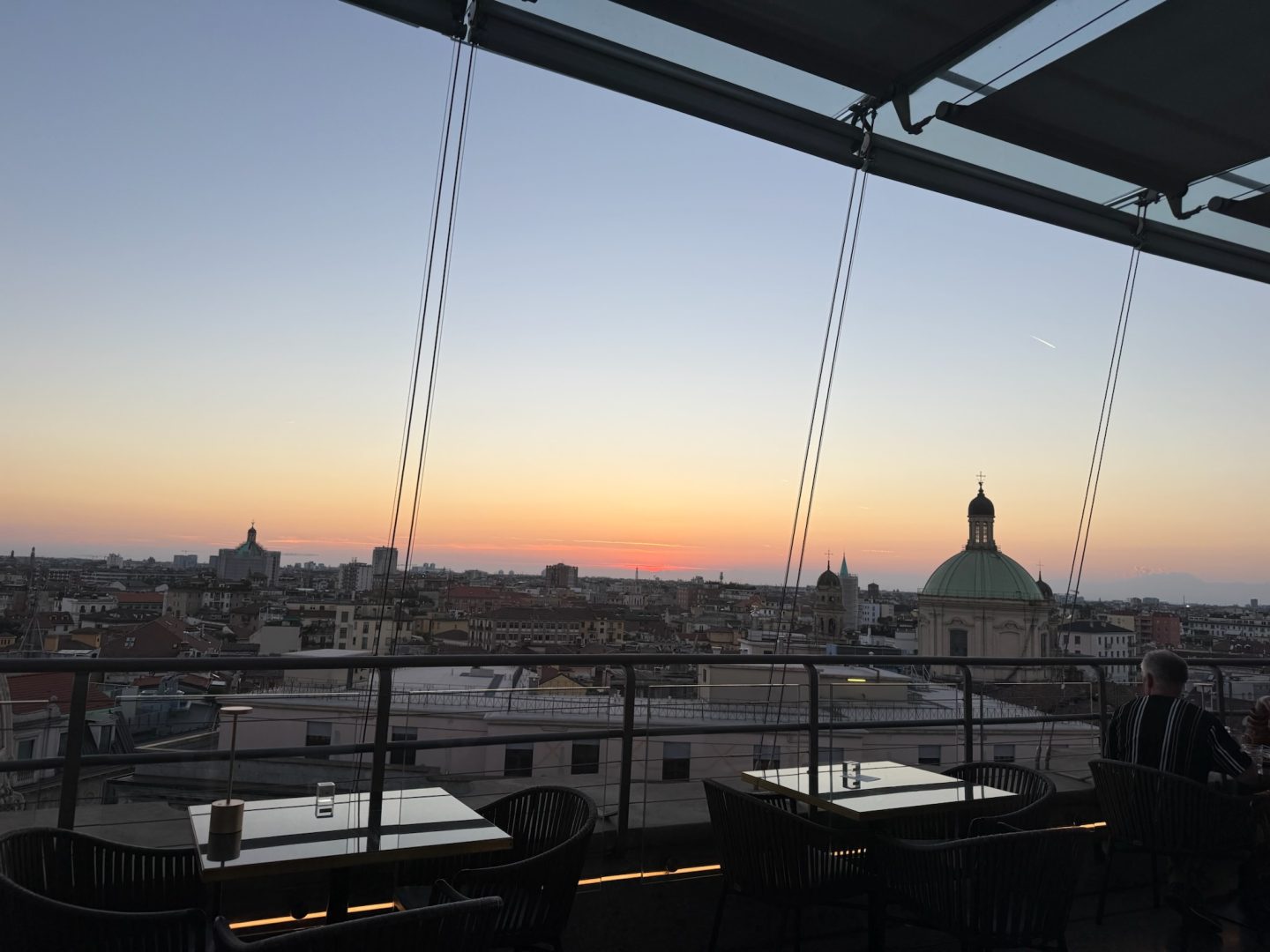
The iconic golden statue of the Virgin Mary — La Madonina — was raised to the top of the highest spire in 1774. Construction on the Duomo halted due to budgetary shortage; Napoleon Bonaparte’s coronation as King of Italy became the catalyst for a vigorous fundraising campaign that propelled the building of the grand façade between 1805 and 1813.
But it was in the 20th century when the details, decorations, and the final bronze door were officially completed. The Duomo di Milano we see today was unveiled on Jan. 6, 1965.
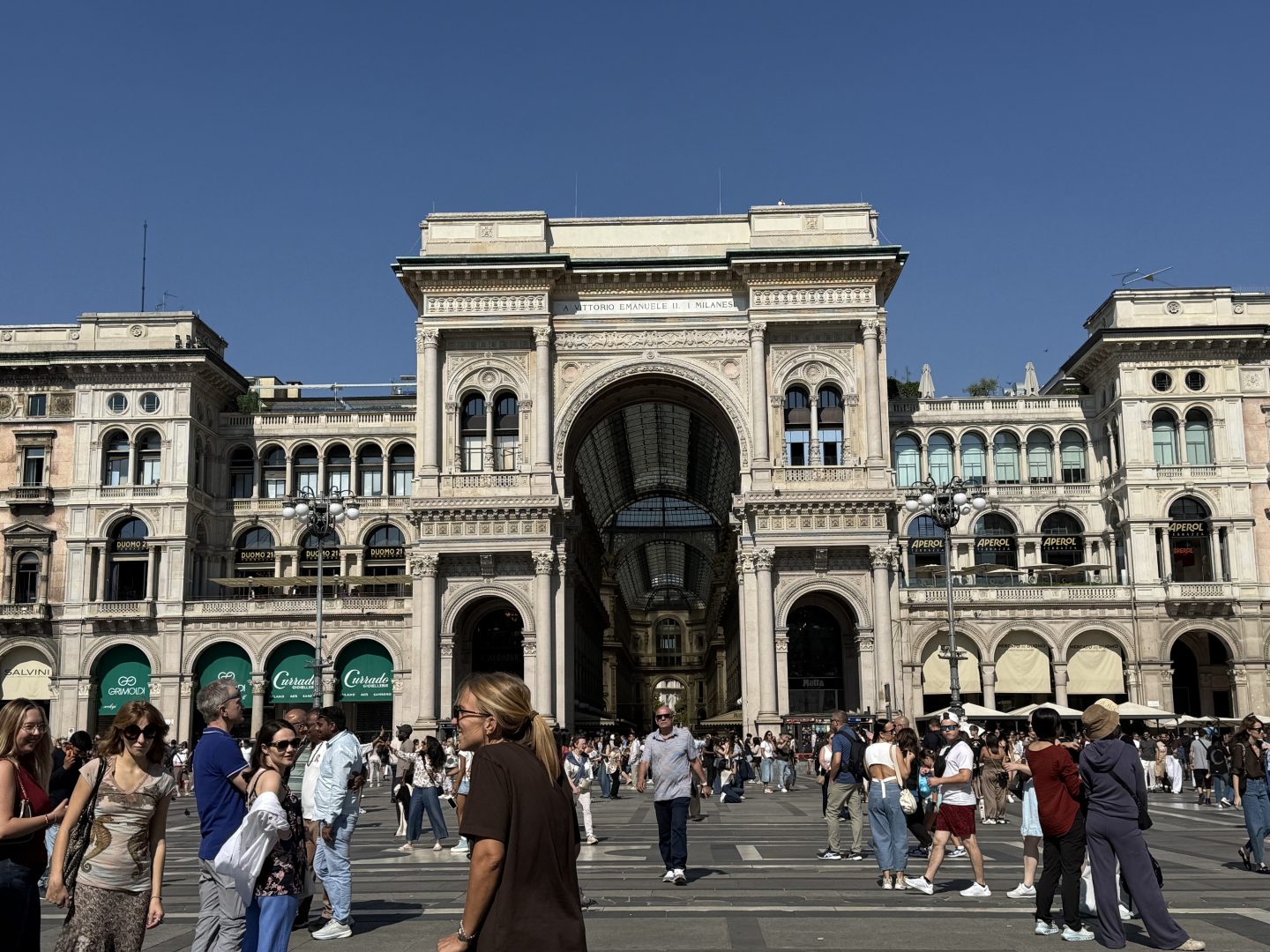
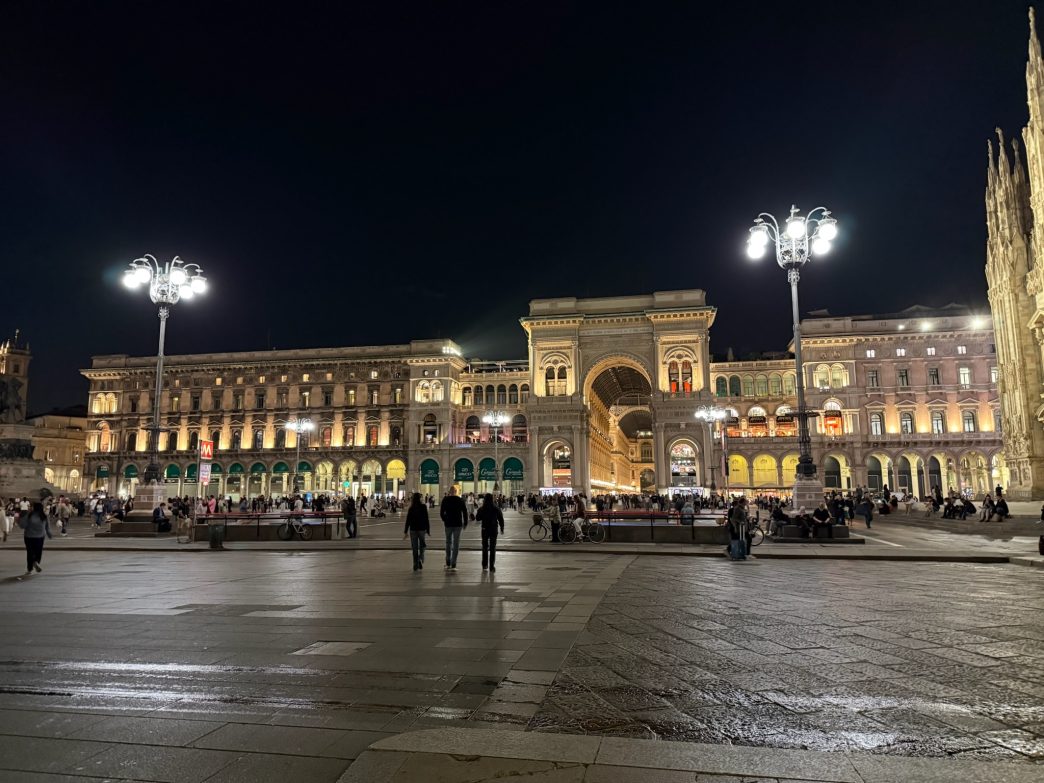
Milan’s other celebrated landmark is the magnificent Galleria Vittorio Emanuele II — Italy’s oldest shopping arcade and a breathtaking 19 century architectural masterpiece. It was conceived in 1860 when the local government launched a competition to revitalize the central historic district between the Duomo and the Teatro alla Scala.
Bolognese architect Giuseppe Mengoni’s monumental design that incorporated an imposing glass-and-iron vault inspired by the elegant glass arcades of Paris was chosen out of countless entries. The project evolved into a significant civic monument celebrating national identity following Italy’s unification in 1861 and was named after Victor Emmanuel II, the first king of the united Kingdom of Italy. It was he who laid the initial foundation stone on March 7, 1865.
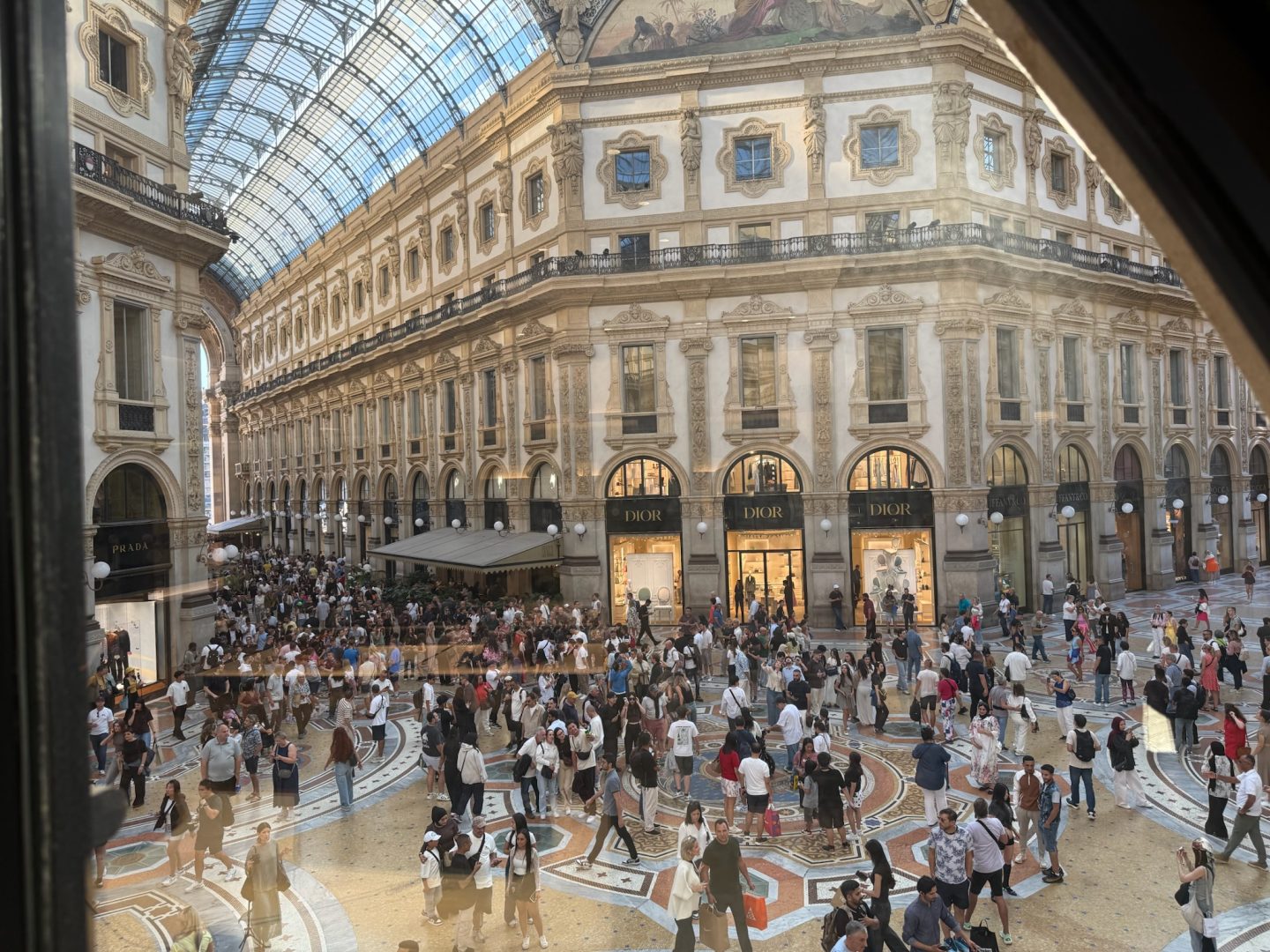
Construction pressed forward rapidly despite early skepticism and financing obstacles. The arcade partially opened to the public on Sept. 15, 1867, but it wasn’t until 10 years later that the exterior details were completed. Not too long after, it earned the nickname “il Salotto di Milano” or Milan’s drawing room and became a popular venue where politicians and local thinkers debated civic life.
Today Galleria Vittorio Emanuele II is home to iconic Italian and global luxury houses, including the original Prada flagship store, Gucci, Louis Vuitton, Armani and Dior. It also houses the legendary Camparino in Galleria, where the famous Campari aperitivo was invented. Elegant sit-down restaurants and traditional cafes serving classic Milanese dishes line the arcades.
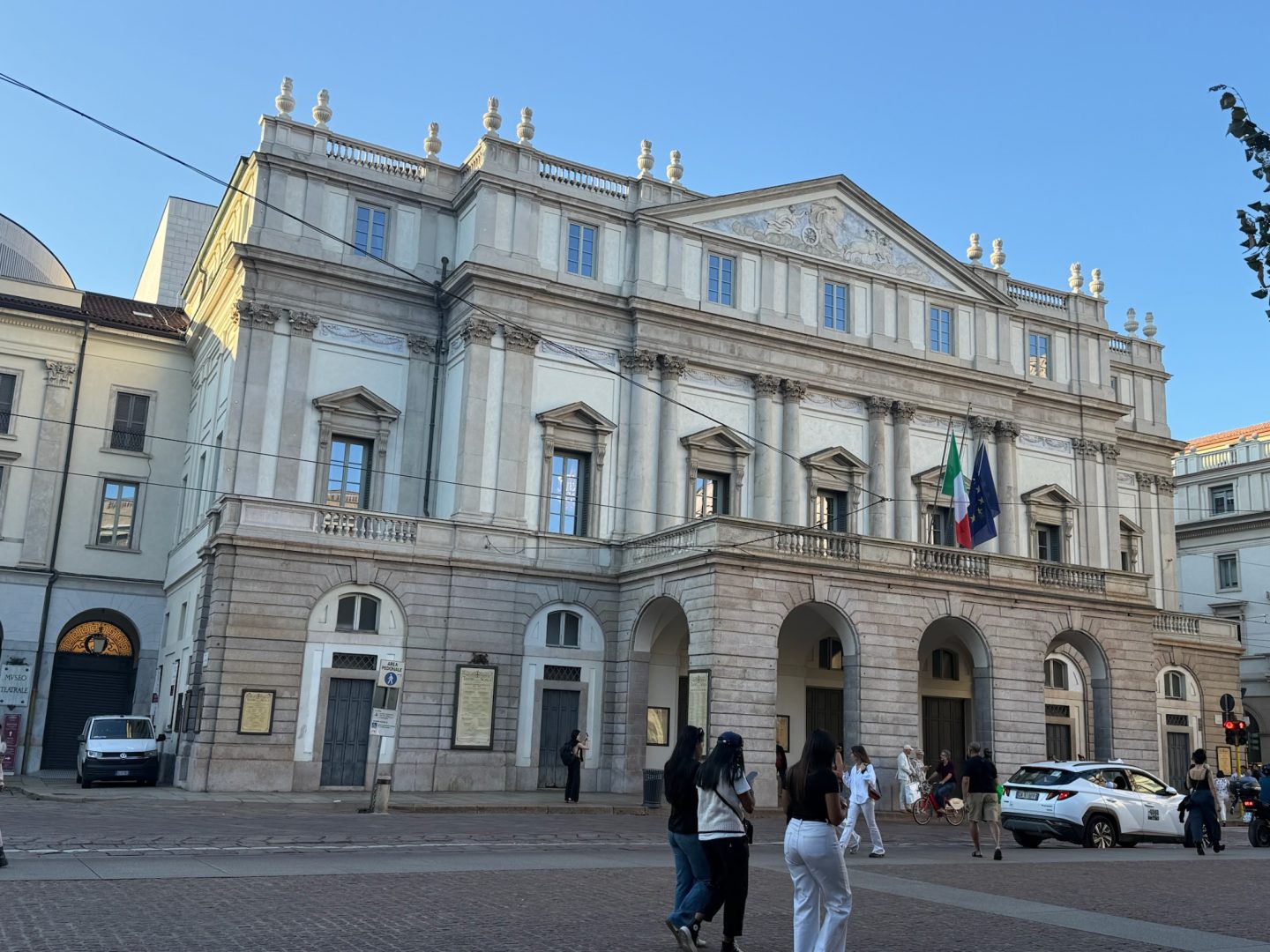
People coming from the Duomo di Milano and walking straight through the northern exit of the Galleria Vittorio Emanuele II — which opens right into Piazza della Scala — will encounter the Teatro alla Scala. More commonly known as La Scala, it was commissioned by Empress Maria Theresa of Austria to replace the previous opera house that burned to the ground in a devastating fire. It took its name from the former Church of Santa Maria alla Scala which was demolished to make room for the structure and opened on August 3, 1778.
Designed by prominent architect Giuseppe Piermarini, La Scala opened with Antonio Salieri’s opera “L’Europa Riconosciuta.” During the theater’s 19th Century Golden Age, it became the showcase for Italian opera seria, premiering foundational works by illustrious composers like Rossini, Donizetti, Bellini, and Giuseppe Verdi. In the late 19th and early 20th centuries, conductor Arturo Toscanini revolutionized operations by introducing an orchestra pit, dimming auditorium lights and raising artistic discipline.
La Scala was severely damaged by allied air raids in August 1943 and underwent a thorough reconstruction. It reopened in May 1946 with a glorious concert led by Toscanini. A major modernization project spearheaded by architect Mario Botta between 2002 and 2004 updated its stage machinery and acoustics.
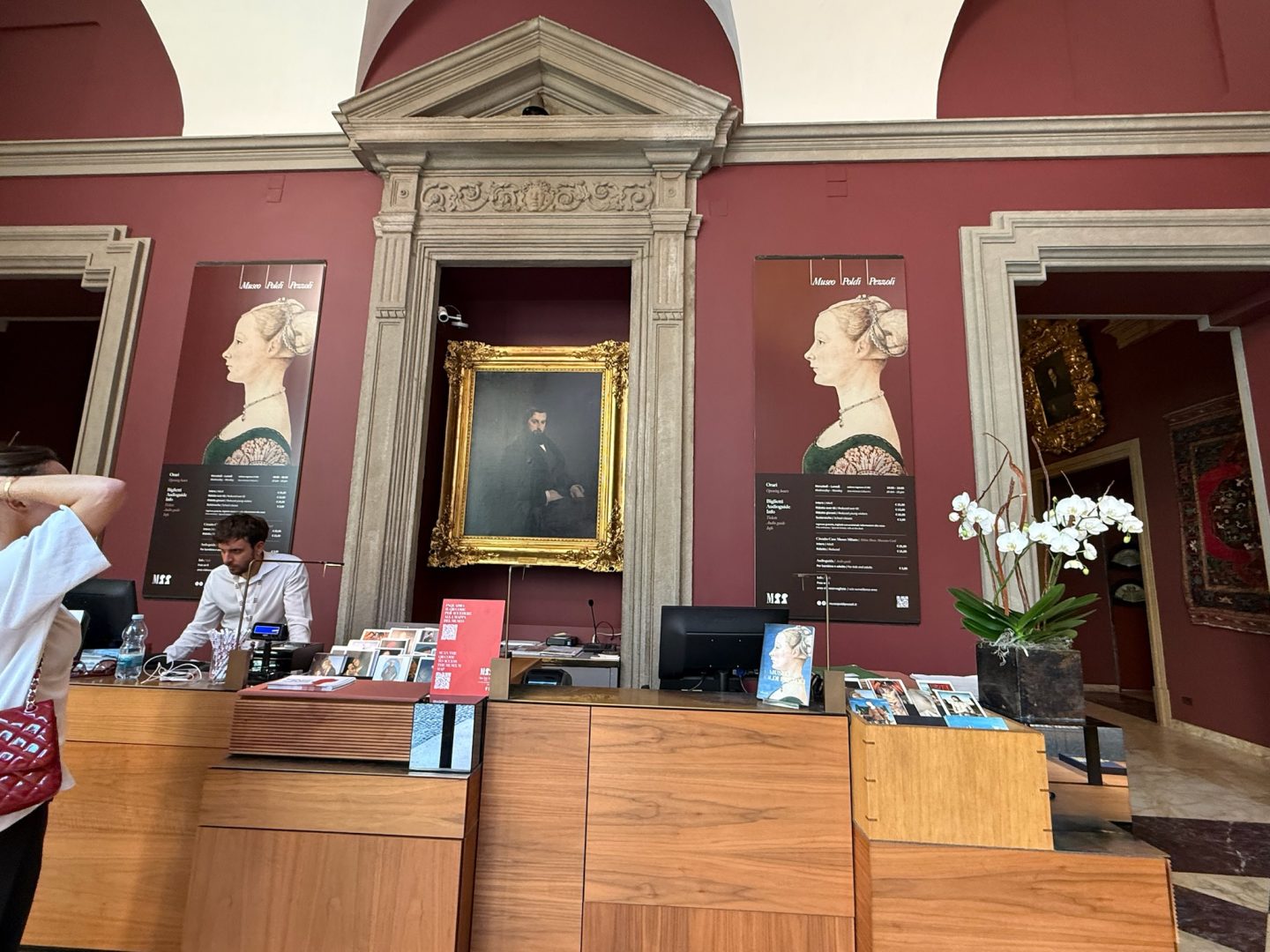
Tucked among Milan’s famous attractions is the compact Museo Poldi Pezzoli. It is a three-minute walk north of La Scala and is very close to the Duomo and the high-end Montenapoleone fashion district. Count Gian Giacomo Poldi Pezzoli, a wealthy Milanese aristocrat and passionate art patron, converted his multistory family mansion into a museum to display his private collections. He pioneered the concept of period rooms — where the decor, furniture, and wall finishes matched the era of the artworks displayed.
Upon his death in 1879, Poldi Pezzoli left his palace and vast holding of over 6,000 works — including Italian Renaissance masterpieces, armor, and clocks — for public use, managed through an artistic foundation. It debuted to the public in 1881and became one of Europe’s foremost house museums. The house-museum model originated by Poldi Pezzoli was the influence for international cultural institutions. It was the inspiration for similar residences-turned-museums like the Isabella Stewart Gardner Museum and the Frick Collection here in the United States.
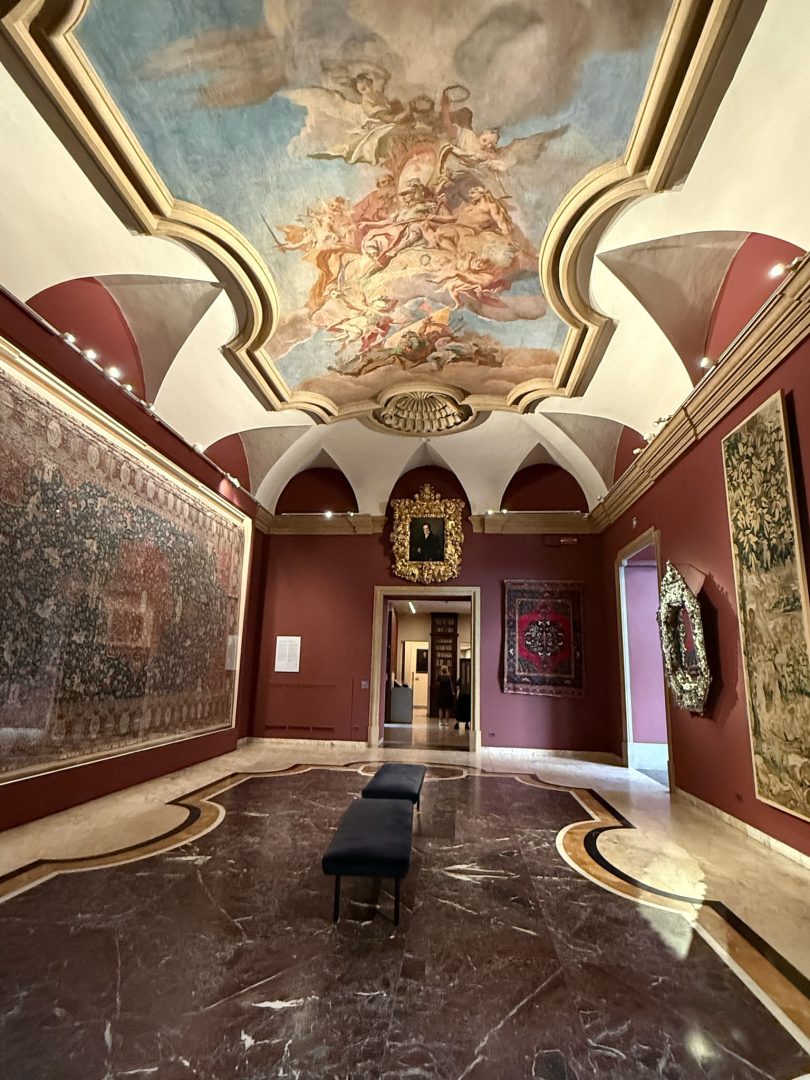
The Museo Poldi Pezzoli was the only cultural landmark we visited in Milan. From the courtyard, we entered the reception area where a large portrait of Poldi Pezzoli greets guests. The grandeur of the entrance hall is a prelude to what lies ahead. On the ground floor are the Arms Room, where visitors see one of the most significant collections of historical weaponry and armor in Europe, and the Decorative Arts and Library, which houses an assemblage of oriental rugs and rare historical books.
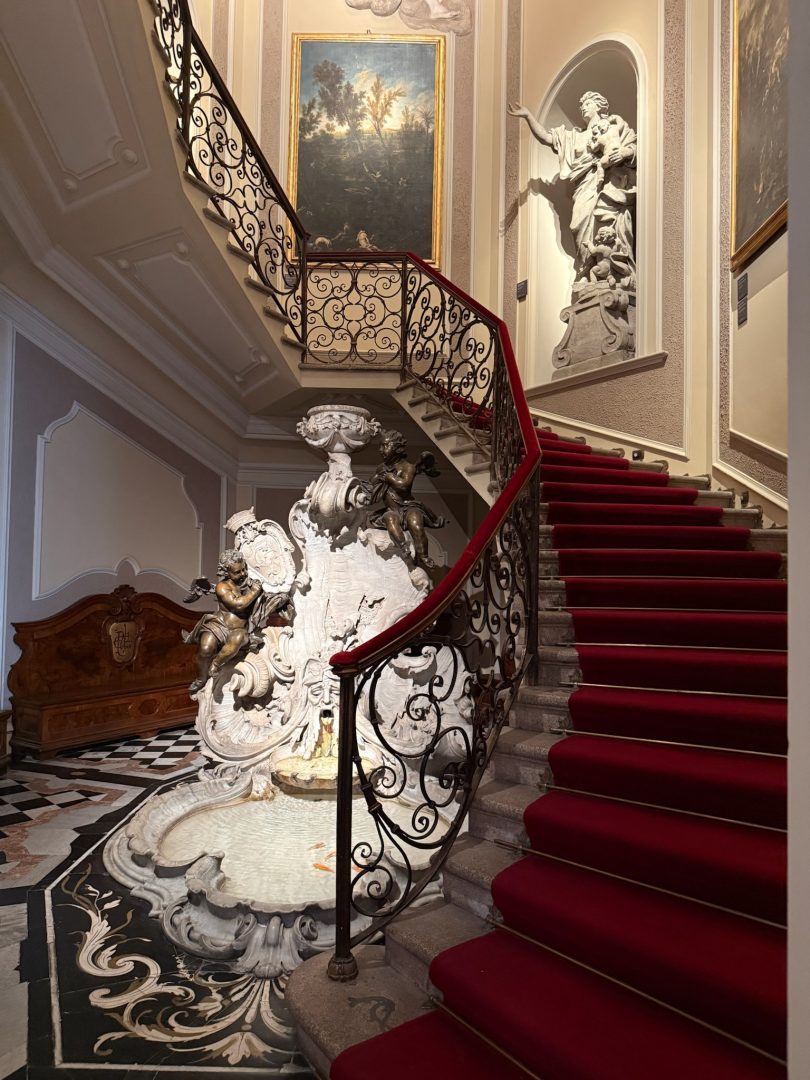
An antique staircase featuring an opulent Neo-Baroque rockwork and shell fountain designed by artist and director Giuseppe Bertini leads visitors to the first floor which has 20 themed, period-style rooms containing the museum’s primary art collections and masterworks. These include renowned Renaissance masterpieces, the museum icon Portrait of a Woman by Piero del Pollaiolo, Tuscan and Venetian Masters panels and paintings. Integrated into the first floor galleries are unique curated pieces including antique watches, sundials, historical jewelry, tapestries and rare lace embroidery.
We left greatly impressed by institution’s architectural and decorative elements as much as the breadth and provenance of the collections it held. It was a jewel box of a museum!
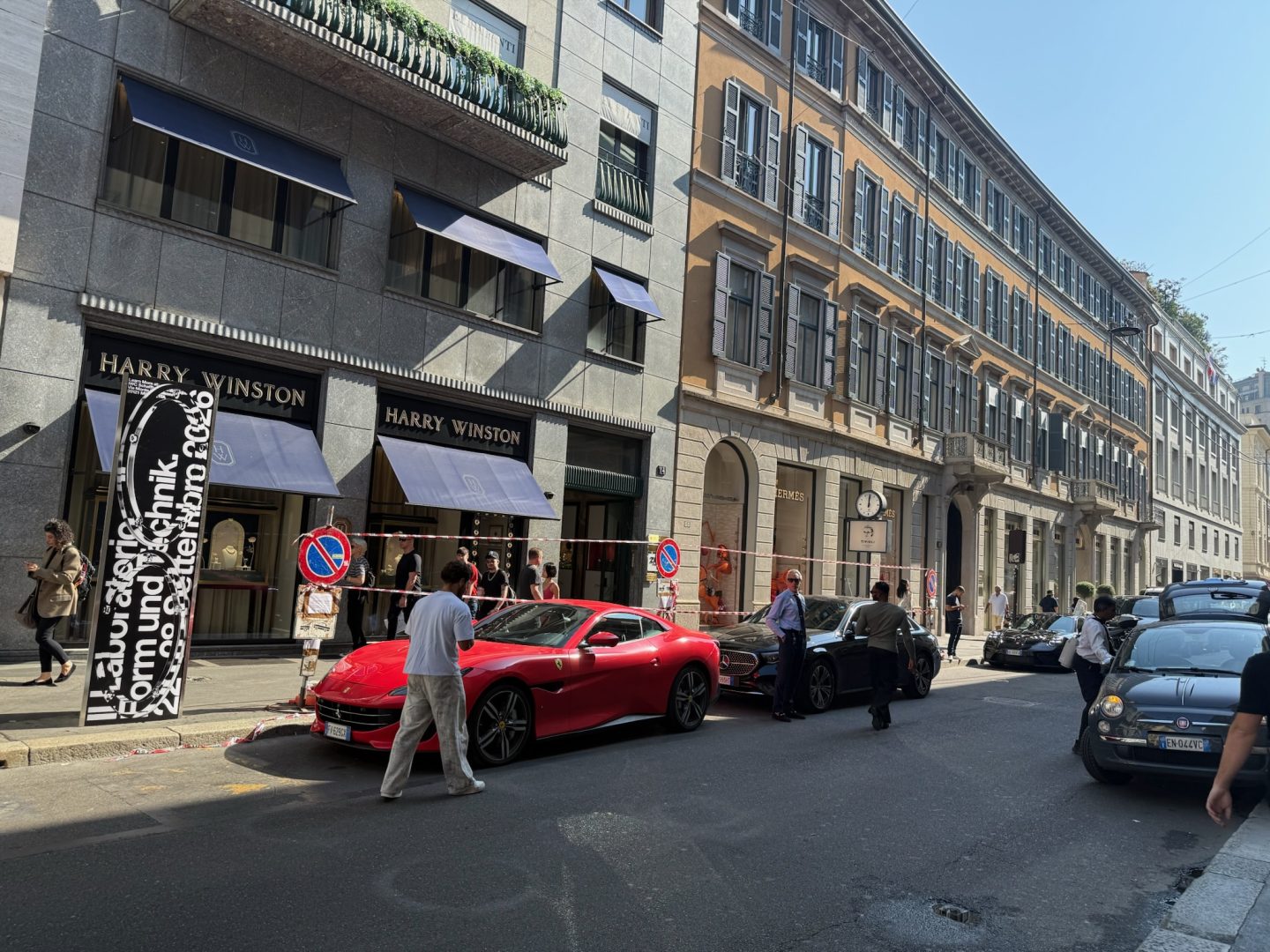
Milan is the fashion capital of Italy so it would be a grave omission if we were there during Fashion Week and didn’t explore its haute couture district — the Quadrilatero della Moda, or Fashion Quadrilateral, also known as the “Quadrilatero d’Oro.” This upscale neighborhood forms a shape defined by four prestigious boundary streets.
The Via Montenapoleone is the heart of the district and one of the most expensive and famous shopping streets in the world. It was where we found the flagship House of Dior store, which reopened this year on Sept. 18 after an extensive two-year architectural refurbishment. This location also features Monsieur Dior by Enrico Bartolini, the brand’s first restaurant and cafe concept in Italy.
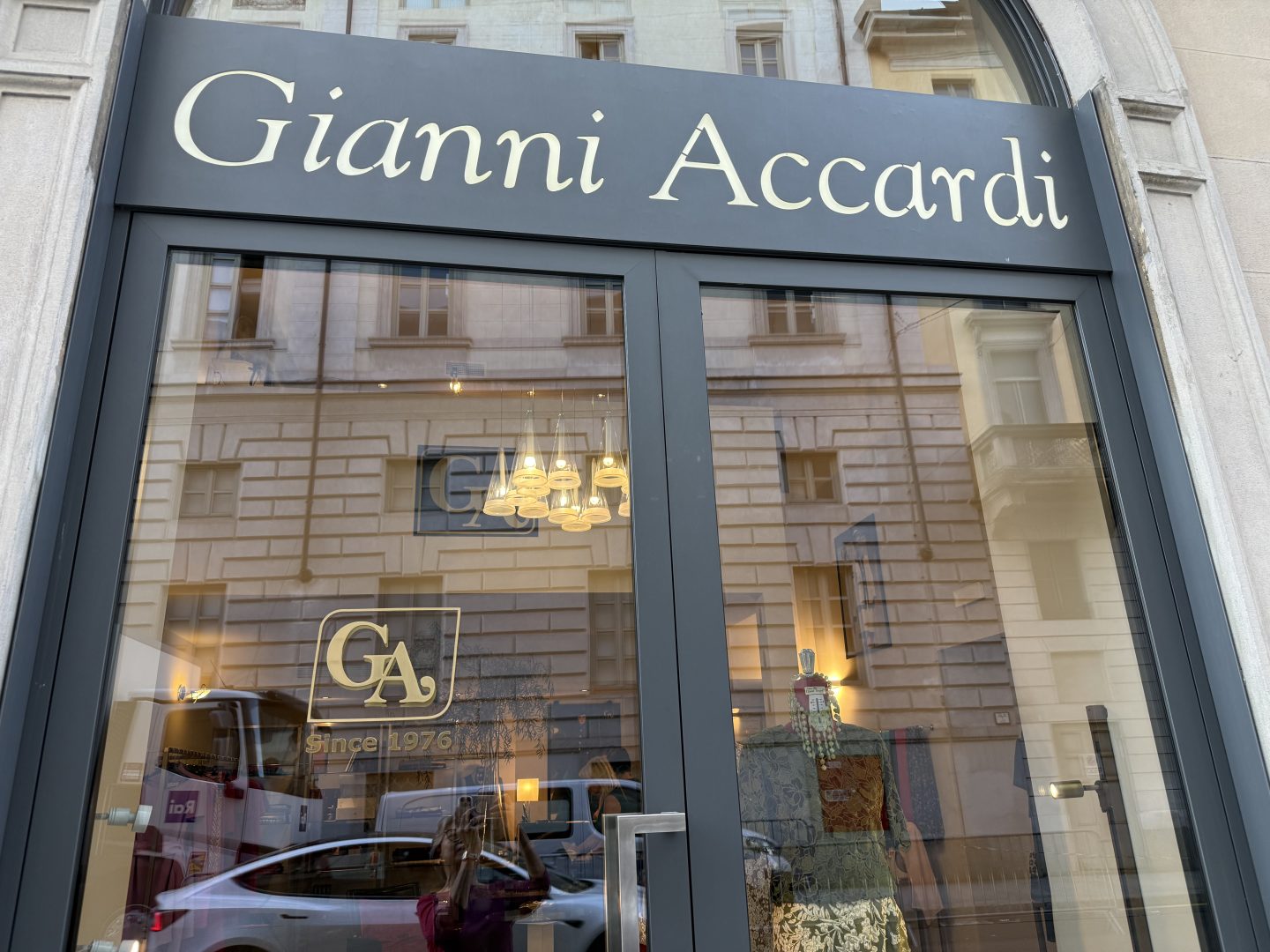
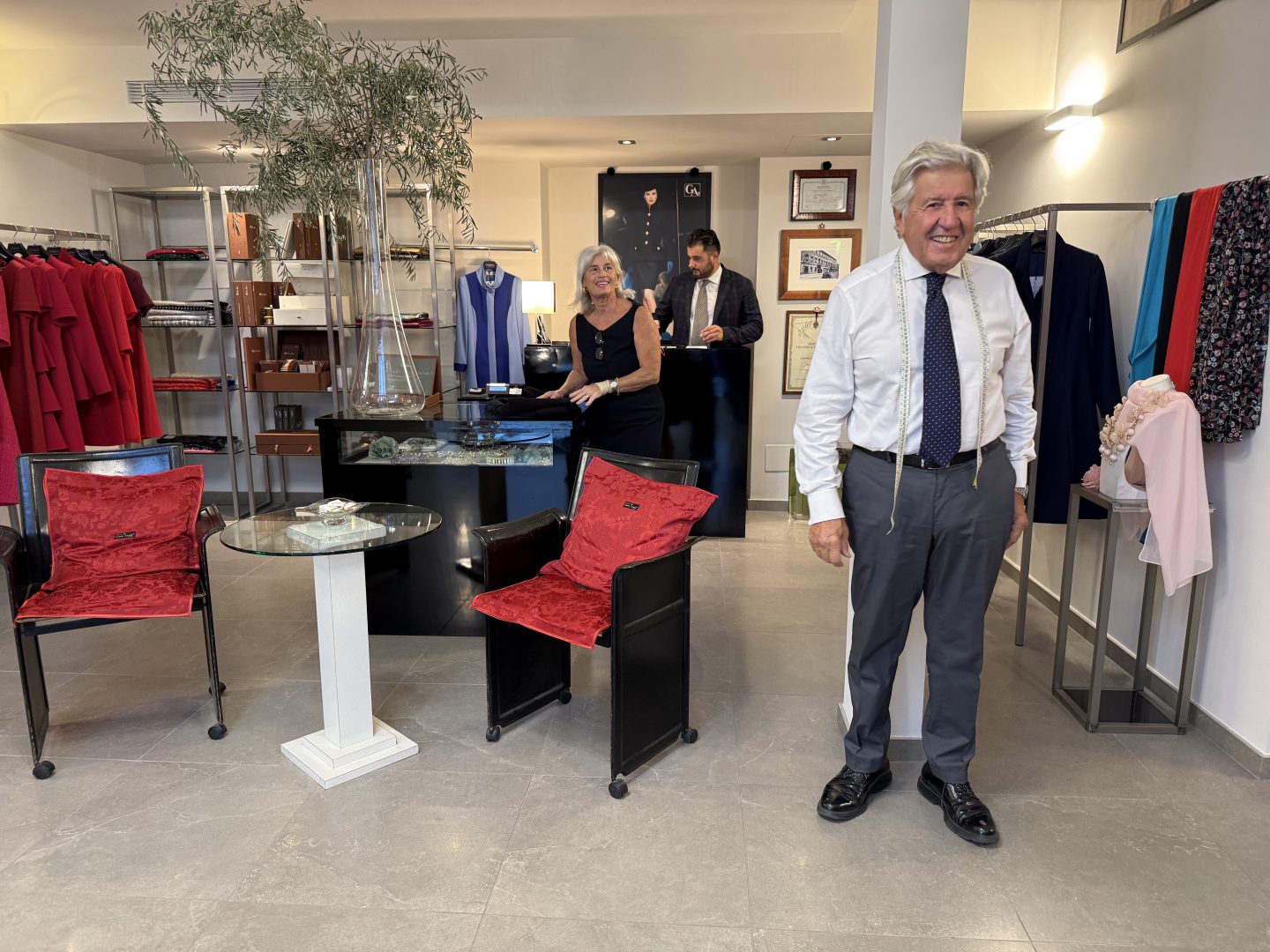
While we were strolling at Via Giuseppe Verdi 2 near La Scala, we chanced upon a Gianni Accardi boutique. A striking black jacket and asymmetrical skirt on the mannequin in the shop’s display window attracted our attention and we went in. A prominent Milanese institution established in 1976, Gianni Accardi is widely celebrated for its women’s haute couture and bespoke tailoring. When the skirt didn’t fit right on my daughter, Gianni took her measurements so he could make the alterations.
Our fashion expedition took us to the Brera District, Milan’s principal design hub alongside luxury boutiques, artisan shops, and vintage stores. It features narrow cobblestone streets, hidden courtyards, historic cafes, and a lively evening social scene. It’s where the Sealup Flagship Store has been located since 2016. The name is a portmanteau of the English word “sea” and the Milanese dialect word “lup” or wolf.
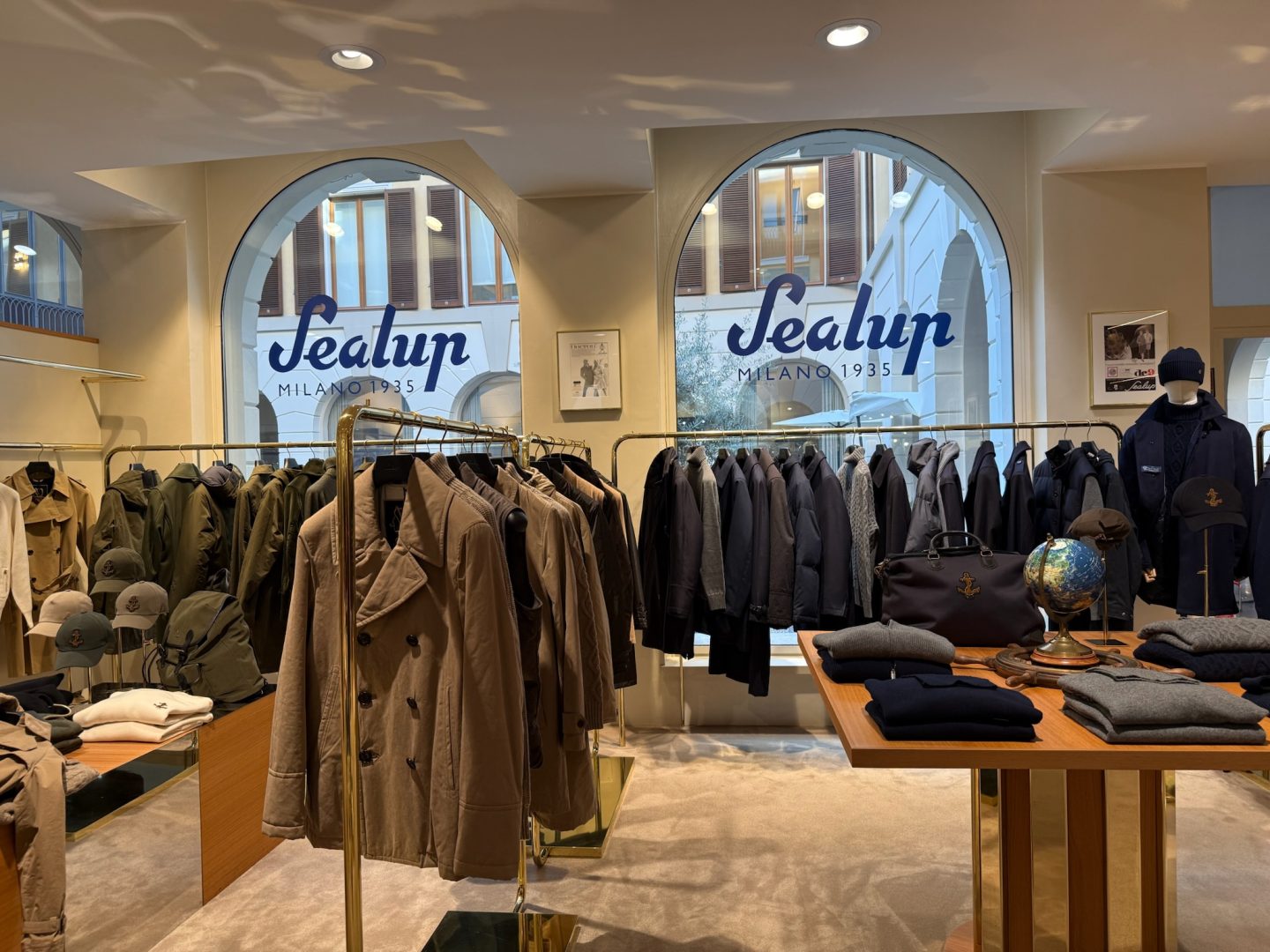
Established in 1935 as an avant-garde rainwear company specializing in innovative water-repellent garments, it gained international fame in the 1960s when style icons like Jacqueline Kennedy Onassis wore Sealup raincoats. From the 1960s through the 1980s, the brand produced outerwear and fabrics for well-known designers like Karl Lagerfeld and Prada. The company has since shifted its focus back to its own high-end label.
Sealup offers a wide selection of coats and jackets — all beautifully designed and made. A friendly and efficient staff patiently helped us find the appropriate trench coat to wear in California.
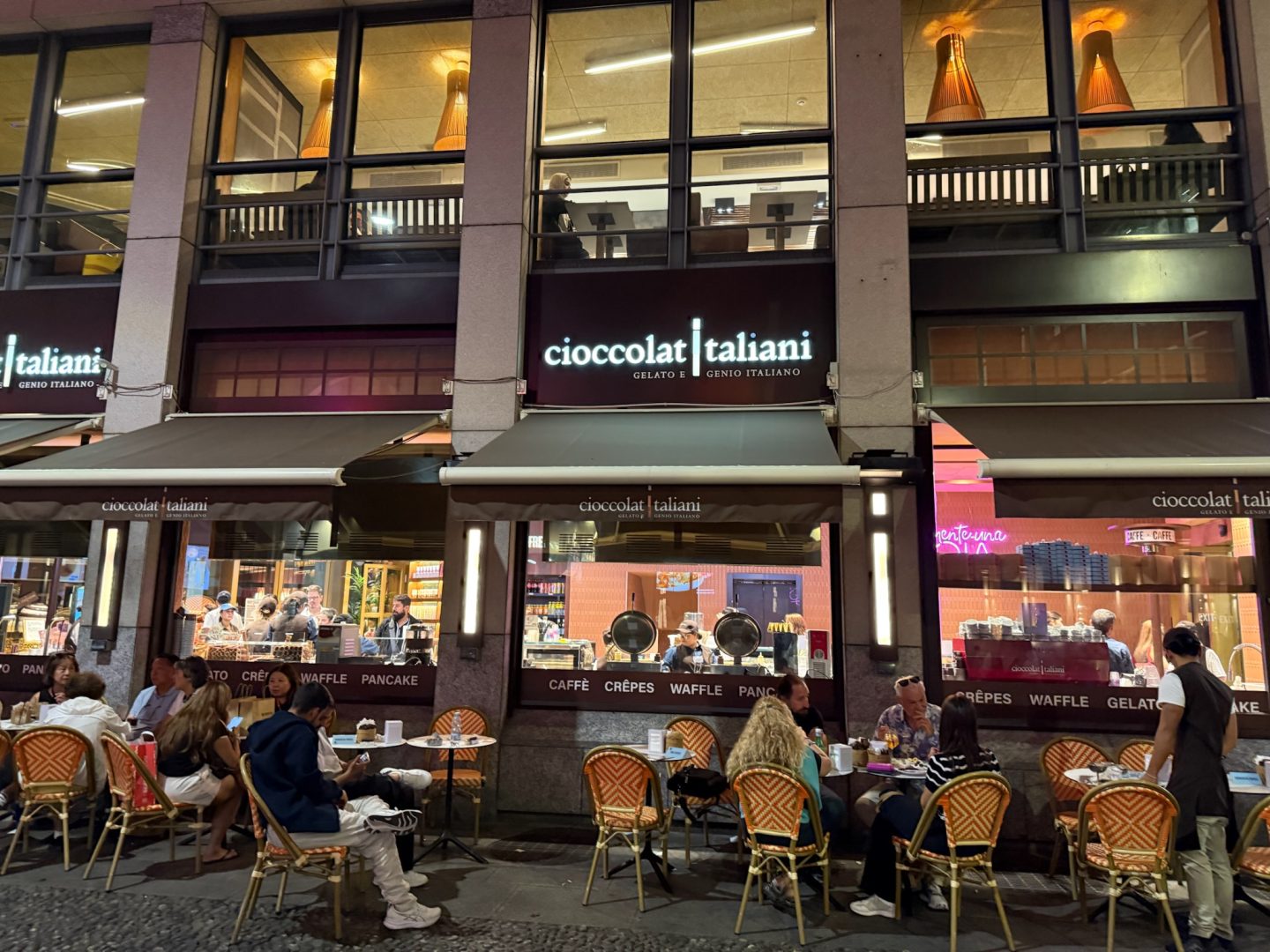
It was our last evening in Milan and we couldn’t leave Italy without eating pizza and pasta. We headed to a pizzeria on the Piazza del Duomo to indulge in a pizza dogana and spaghetti alle vongole. Then off we went to Cioccolati Italiani for gelato — it was a sweet finalé to a brief but very fun adventure in Milan.