

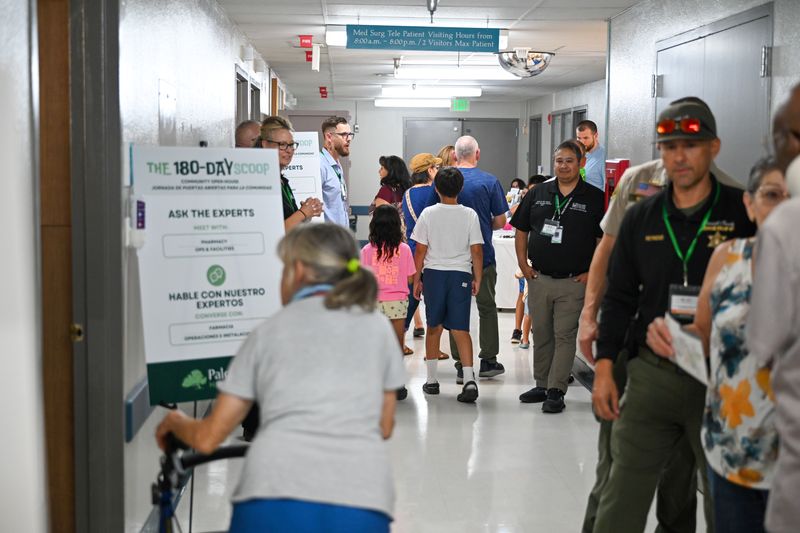
As the county’s attempt to rescue financially failing Palo Verde Hospital in Blythe continues, officials held an open-house event last week to showcase improvements and efforts to keep open the only medical emergency room for miles around.
Without emergency services at the hospital, more than 20,000 residents would lose access to timely medical treatment for life-threatening emergencies where time is of the essence. Other than Palo Verde Hospital, the nearest option for emergency healthcare is over 70 miles away.
Building upgrades and increasing staff remain objectives in Riverside County’s ongoing turnaround plan for bankrupt Palo Verde Hospital in Blythe, according to a statement Tuesday from the Palo Verde Healthcare District, the business entity that manages and operates the facility at 250 N. First St.
“Every week, we learn something new about this hospital,” Michelle DeArmond, interim executive director of administration, said in a statement. “We brought operational expertise from the Riverside University Health System, but this hospital has its own history, its own way of doing things. The learning went both ways.”
Jennifer Cruikshank currently is the hospital’s interim CEO following Sandra Anaya’s resignation in April after 13 years as chief executive, according to the PVHD.
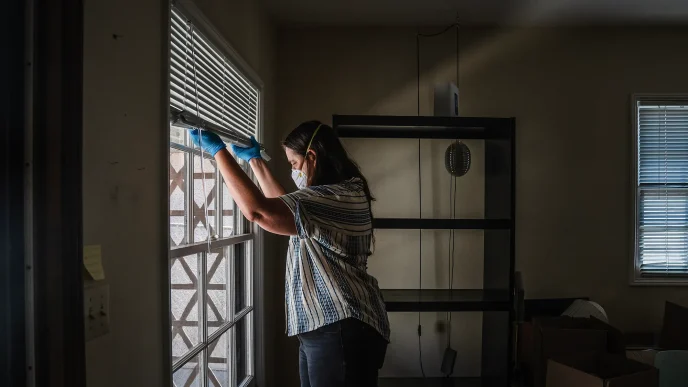
With assistance from administrators such as DeArmond from the county’s Riverside University Health System, the district plans to modernize treatment rooms and the cardiopulmonary unit and install Americans with Disabilities Act signage around the building, officials said. Completed projects include repairs to the hospital’s roof, cafeteria renovation and the removal of hundreds of boxes of decades-old documents are being removed.
Through a contract with hospital staffing company Vituity, in May the hospital added more than 20 certified emergency room doctors for 24-hour patient intake and treatment. Additional positions still remain unfilled for techncians in radiology, environmental services, ultrasound and cardiopulmonary, according to the district.
The “180-Day Scoop” event July 30 gave more than 200 area residents in attendance a first-hand look at ongoing changes and offered answers to some of their questions.
“We came in and my daughter was having a seizure,” Dakota Webb, whose 12-year-old daughter received emergency care at the hospital, said in a statement. “I thought after this, what a shame if this hospital wasn’t here. What would I have done if I had had to drive to Parker, Arizona or Yuma, Arizona (for care) when this is going on with my daughter? And I just couldn’t think — we were at risk of losing this place completely.”
Webb’s experience serves as the north star of the broader effort to stabilize the hospital and ensure residents have access to emergency care close to home.
In February, the Riverside County Board of Supervisors approved a six-month plan to stabilized the hospital’s finances and start technical improvement projects intended to get the facility into a sustainable state.
Officials announced a three-month extension of the agreement, the Palo Verde Healthcare District Board OK’d July 29.
“The County of Riverside made a commitment to this community because the question of whether the hospital would stay open kept many of us up at night,” county CEO Jeff Van Wagenen said in a statement.
The board authorized $3.44 million from the county’s General Fund as payment to the California Department of Health Services on behalf of the PVHD. That followed a separate $1 million General Fund disbursal directly benefiting the hospital’s day-to-day operation that was central to a stabilization loan aimed at keeping the bankrupt facility open.
According to the district, the county’s financial bailout enabled the district to acquire taxpayer-backed credit available through the state Medi-Cal program totaling $9.9 million to further bolster the hospital’s solvency. The hospital later received a $3 million state grant following $1.8 million in aid from the federal government.
The city of Blythe also contributed $330,000 to the hospital.
A county “strike team” authorized by the Board of Supervisors and composed of RUHS medical professionals on Feb. 23 began an effort to stabilize the hospital’s Emergency Department.
The agreement for management services between the county and PVHD entails RUHS staff implementing all needed processes connected with the strike team’s stabilization plan, with the main goal being to maintain emergency operations at the bankrupt hospital.
The financial agreement between the county and PVHD notes that the county will have “first priority” among the district’s creditors and will not be liable for any of the hospital’s debts.
The PVHD Board of Directors voted in September 2025 to seek federal Chapter 9 bankruptcy protection. Administrators said the hospital had been struggling to remain solvent since the start of the current decade, with revenue streams depleting as the amount of patients seeking care stayed the same.
The California Health Facilities Financing Authority provided $8.5 million from the Distressed Hospital Program in 2023, but that turned into a short-term fix, according to the PVHD. District officials expressed frustration at the time about the inability to recruit a chief financial officer willing to stay the course — four CFOs arrived and departed within an 18-month period.