

The Huntington’s opening program Sunday evening in its “This Land Is … Sunday Supper and Conversation Series” featured the podcast “This Filipino American Life,” exploring the culture of the Philippines and Filipino American food, storytelling and legacy through historical archives, discussion, artmaking and a tasting menu by Justin Foronda of HiFi Kitchen.
Co-presented by The Huntington and the Smithsonian Folklife Festival, the event on was hosted by the team from “This Filipino American Life.” Attendees pondered on the theme of “This Land Is …” and shared their lived Filipino experience in the United States.
“This Land Is … Sunday Supper and Conversation Series” was conceived by Nenette Luarca-Shoaf, The Huntington’s director of education and public engagement. By email she discussed how it came about, her collaborators and what programs are in the series, among other things.
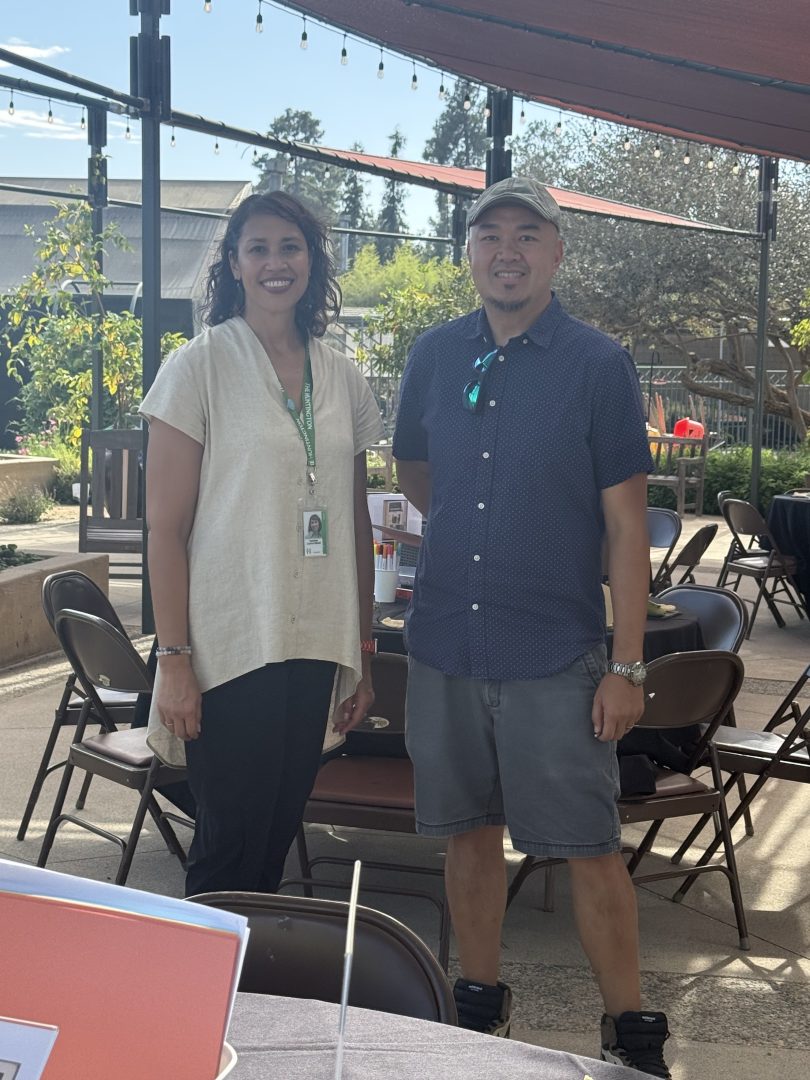
“I first had the idea for the series a little more than a year ago as we brainstormed programs for The Huntington’s ‘This Land Is …’ initiative,” Luarca-Shoaf recalled. “Institutionally and within the Education division, we wanted to create opportunities for learning history while also reflecting on how those histories have shaped who we are today. I kept thinking about a family dinner or kitchen table and the way that current events and serious issues can be discussed by people with differing opinions, and how food can help to soften the edges of those encounters.
“We always knew we wanted the programs to be co-created with local partner organizations so that we could tell a wide range of stories and bring together existing Huntington audiences with other communities,” continued Luarca-Shoaf. “It was also a great opportunity to partner with the Smithsonian Institution Folklife Festival, and they were especially keen for us to delve into Southern California traditions and culture. It is because of their co-sponsorship that we can make the series free to participants.
“As plans developed for the ‘Filipino Food Magic’ program in March, I had the chance to meet Joe Bernardo over lunch with research fellow Cathy Ceniza Choy and Huntington curator Linde Lehtinen,” Luarca-Shoaf said further. “I floated the idea of partnering with the This Filipino American Life podcast on one of the Sunday Suppers and we continued to develop the program with our teams virtually and in-person.”
“We explored working with several different organizations and the Filipino supper turned out to be first because of scheduling,” explained Luarca-Shoaf. “However, it worked out well because of the way that the topic will survey centuries of history, dating back to the earliest cultural exchanges between the Philippines and the Americas. It allows us to show that American history is not just 250 years old, and that we need to think about how we are ‘setting the table’ for those who come after us.”
Luarca-Shoaf expanded on how the partnership with the This Filipino American Life podcast and Lehtinen informed The Huntington’s program.
“We drew a lot on Joe’s knowledge of Filipino diasporic history and were inspired by objects in The Huntington’s collection that photography curator Linde Lehtinen — one of the curators of the exhibition and someone who has been adding to the depth of our library collection relating to the Philippines — brought to our attention. One example is a scrapbook in The Huntington collection that visitors can see in the ‘This Land Is …’ exhibition. It belonged to Domingo Salas, a Filipino chauffeur working in the first half of the 20th century and includes clippings from his life in Southern California as well as memories of home in the Philippines. We thought about the ways in which different generations document their lives and share their stories with the next generations, and also the way that food connects us to our memories and our heritage.
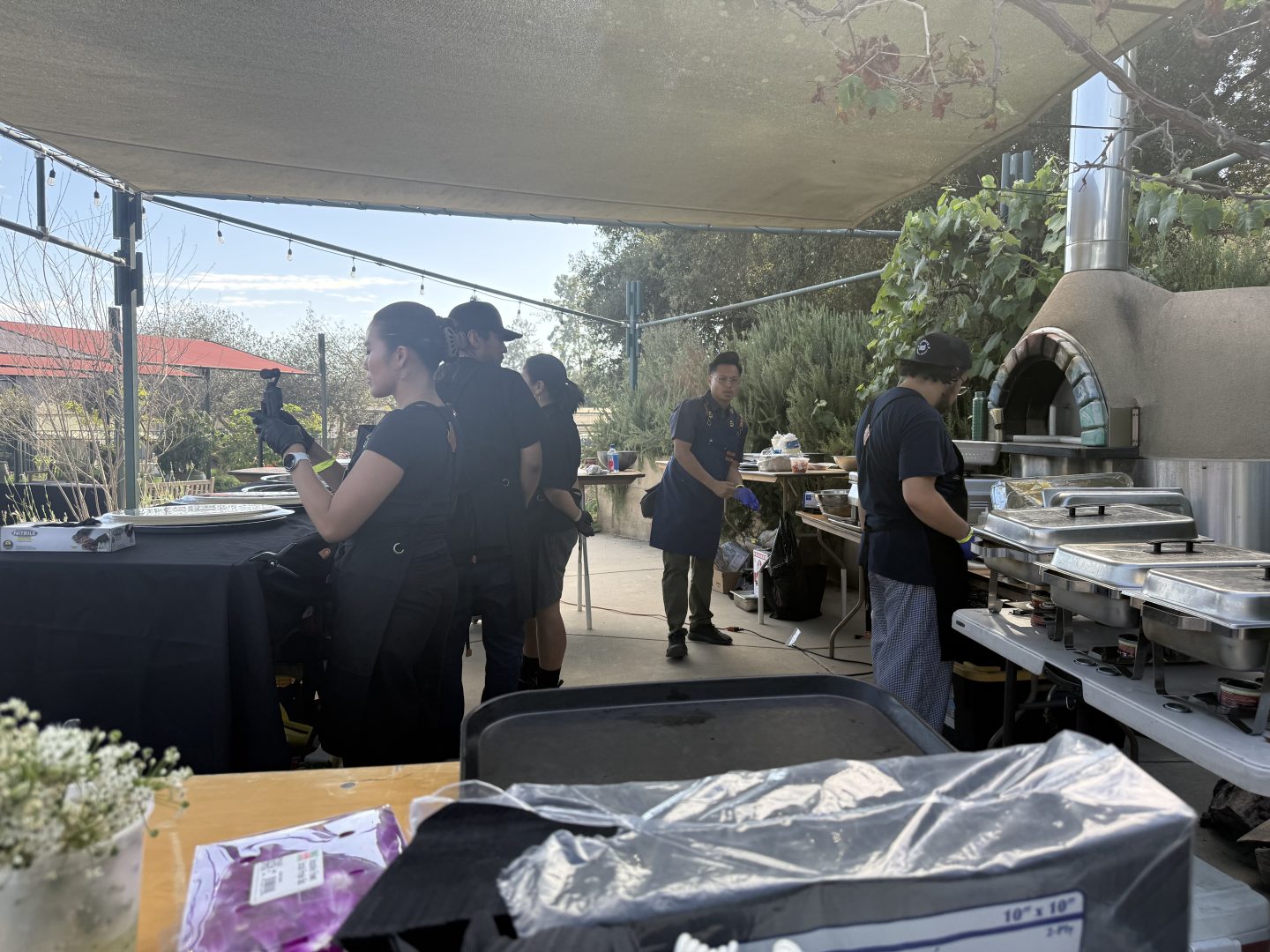
“Working with Justin Foronda of HiFi Kitchen has been exciting as well, as he understood what we were trying to do in showing how culture continues but also evolves, and he was able to create dishes that accompany each era of Filipino American history,” added Luarca-Shoaf.
Through the series, Luarca-Shoaf wants to bring together people from diverse backgrounds to learn from one another’s stories, find their common ground, and use history and creativity to look ahead. She hopes that partaking in a meal will help people create a sense of community and joy in the process. Taking their cue from Salas, her team will be making their own scrapbook pages during the program to document the evening and the ideas, memories and experiences from their time together.
A total of three suppers and conversations have been planned for this year. On the last week of August, the program will feature Zocalo Public Square and discuss community-based agriculture. The LA Commons will take center stage on the first Sunday in October and look into healing in relationship to land and the connections between Leimert Park and Altadena.
Luarca-Shoaf’s collaborator on this program, Joseph Bernardo, was one of the three original founders of the This Filipino American Life podcast. He earned a doctorate degree in Filipino American history and culture, a subject he had been studying for years. After leaving academia, he discovered podcasting as an ideal forum to share ideas and discuss issues affecting the Filipino American community in a fun and entertaining way. He approached Ryan Carpio, who worked with him at Mayor Eric Garcetti’s office, about starting a podcast; Carpio loved the idea at the outset.
Elaine Dolalas, who ran her own podcast — the now-defunct Oblivious Nerd Girl’s Great Idea — joined the team as a counterpart to Bernardo and Carpio’s perspective. She also brought on board her husband Mike, who had helped produce her previous podcasts and, like her, was also involved in LA’s Filipino American community. This Filipino American Life podcast was born and the three have been co-hosting it since. In 2024, Carpio stepped down and the team brought on Kat Carrido-Bonds.
“In the podcast, we explore the numerous experiences of being Filipino in the United States,” Bernardo stated by email. “Each of us have certain interests and we take turns coordinating an episode. If you look at our archive of episodes, we’ve covered so many political issues affecting our community or cultural phenomena we just want to dive into. We can discuss a certain topic like gentrification, Catholicism, undocumented immigration or karaoke among ourselves or bring in an expert to interview. Our hope is that our discussions spark even more discussion and education in our community. Usually each episode runs 45 minutes to sometimes an hour-and-a-half, depending on the topic.”
The team examines a specific topic on the podcast only once. Bernardo explained, “There are very few issues that we come back to after we covered it. Not to say that there isn’t much to talk about something in view of a new set of political and social context. I think we’re just ready to move on after we finish one episode. However, we covered Filipino gangs twice — one from a member’s perspective, and the other from a cop’s perspective — and I think that’s the only time we returned to the same topic.”
Asked if there has been an episode that stood out for him in the years that he’s been hosting, Bernardo replied, “I’d say our interview with Maria Ressa, journalist and Nobel Peace Prize recipient, was the most star struck we’ve ever been. To think that someone that important and vital to both Filipinos, and the wider world, came to our podcast was something that will stick with us forever.”
This Filipino American Life podcast enjoys a loyal following and listeners frequently give them feedback. Bernardo said, “We used to get voicemails and play them on an episode, but folks stopped doing that. Maybe because nobody really leaves voicemails in general anymore? We’d regularly receive messages from Filipinos living in the Midwest or the South, where there aren’t too many Filipino American communities. They say that our podcast is one of the few ways that they connect to their heritage, which makes us feel honored and responsible for delivering meaningful content — and having done the podcast for ten years, teaming with The Huntington and working on a project that helps spread awareness of the history and culture of Filipino Americans gives us reassurance that our work remains vital and necessary.”
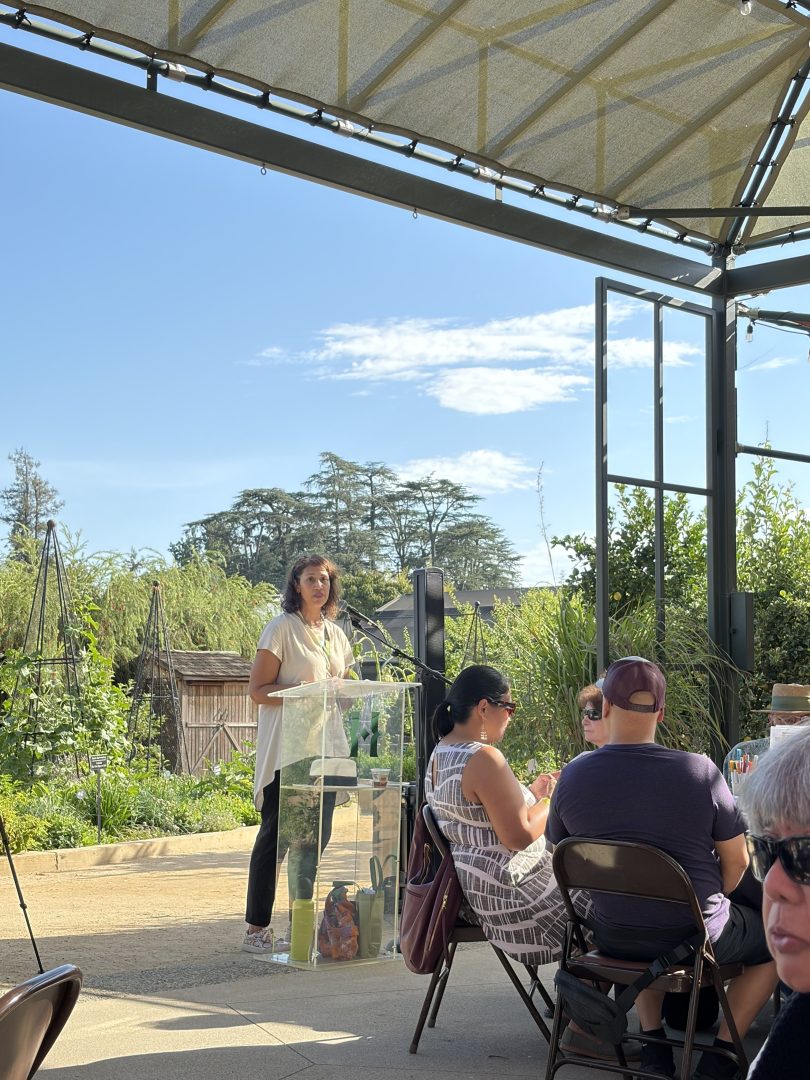
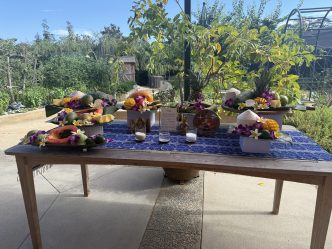
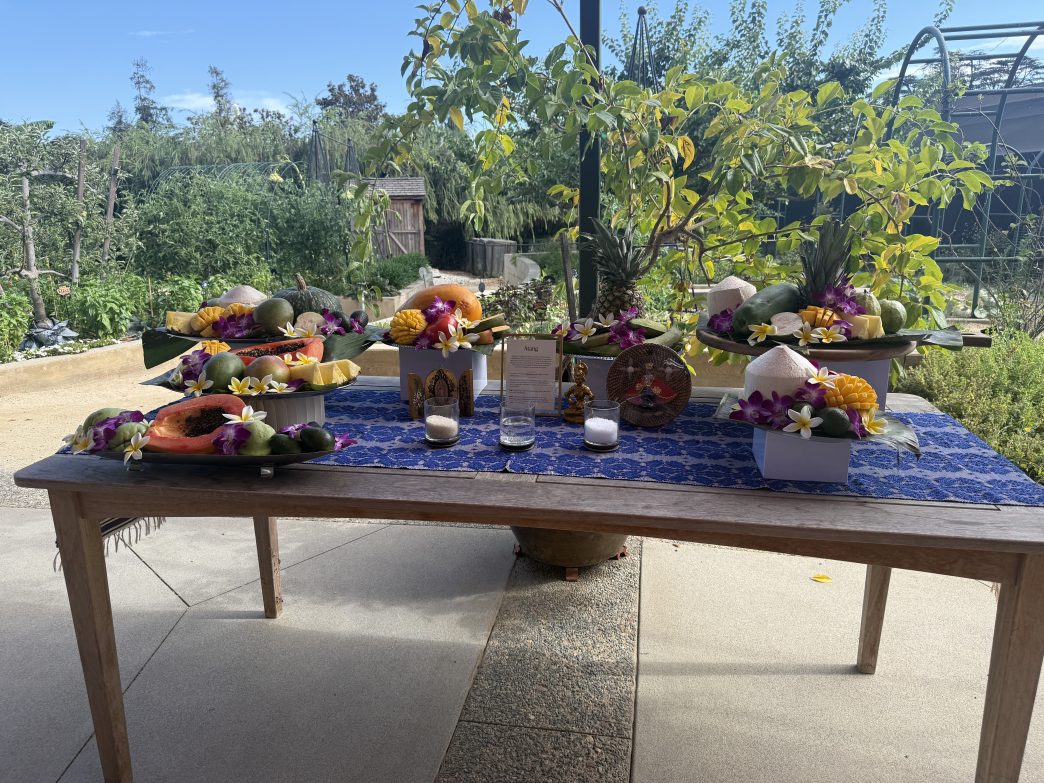
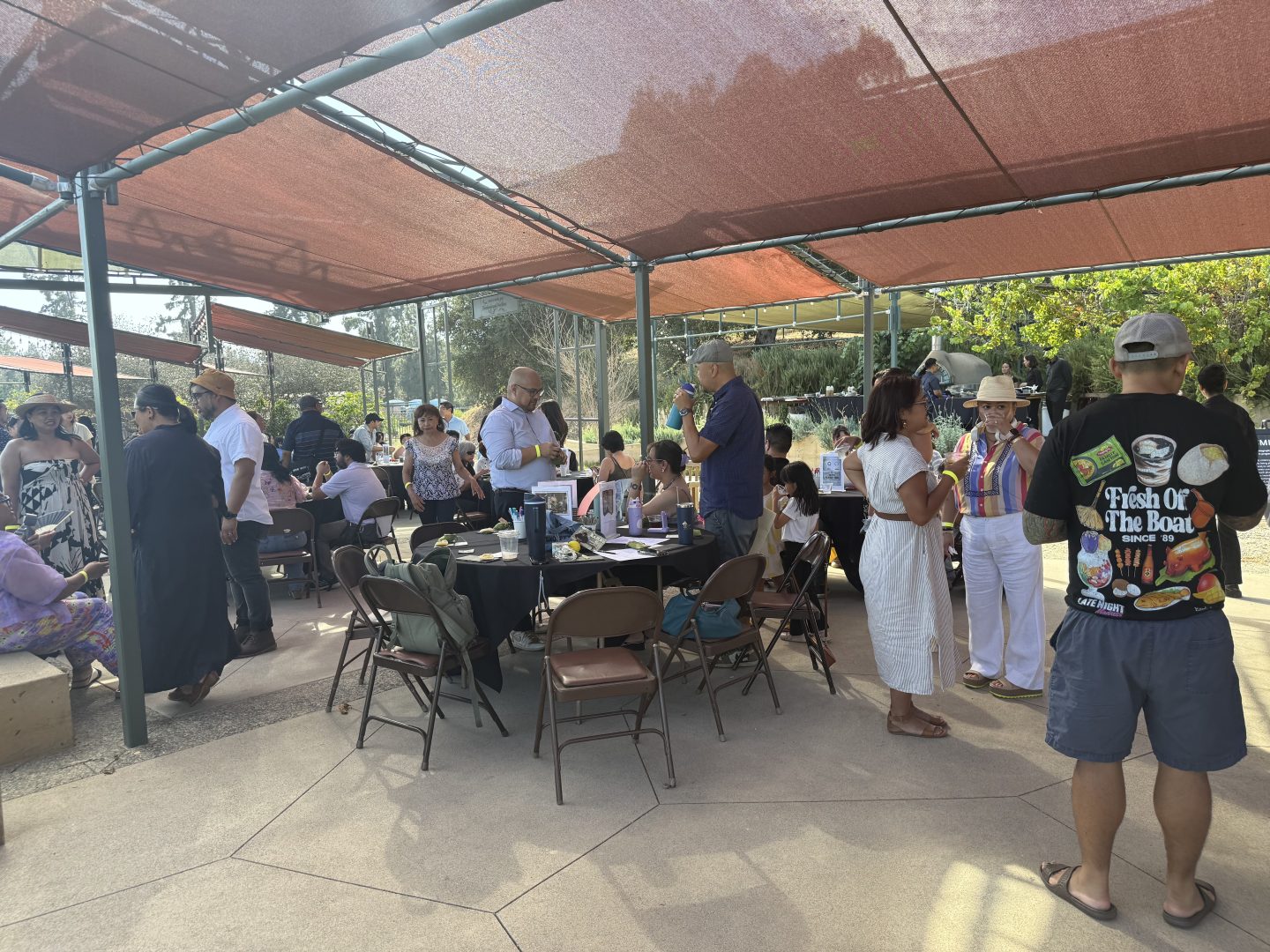
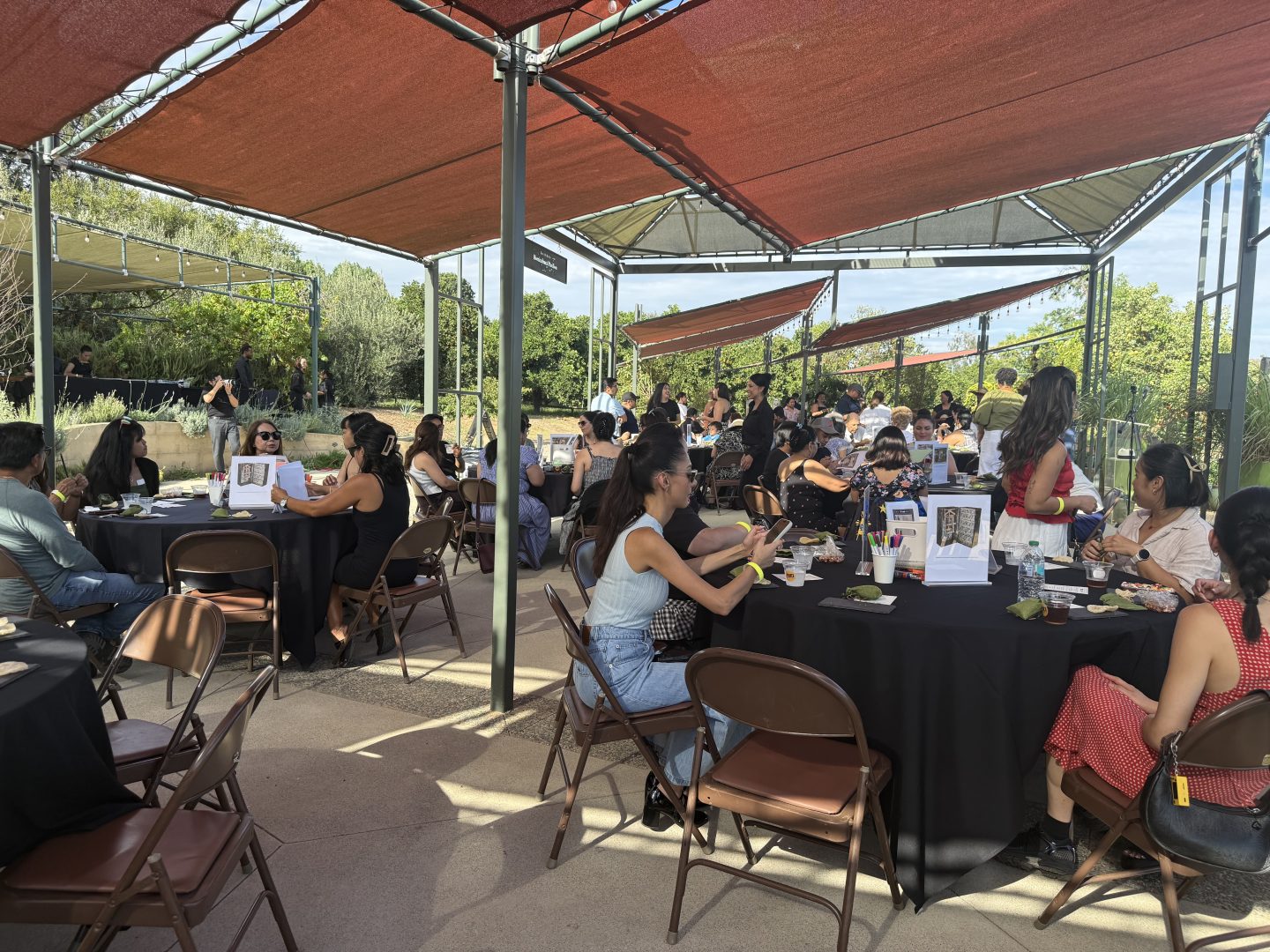
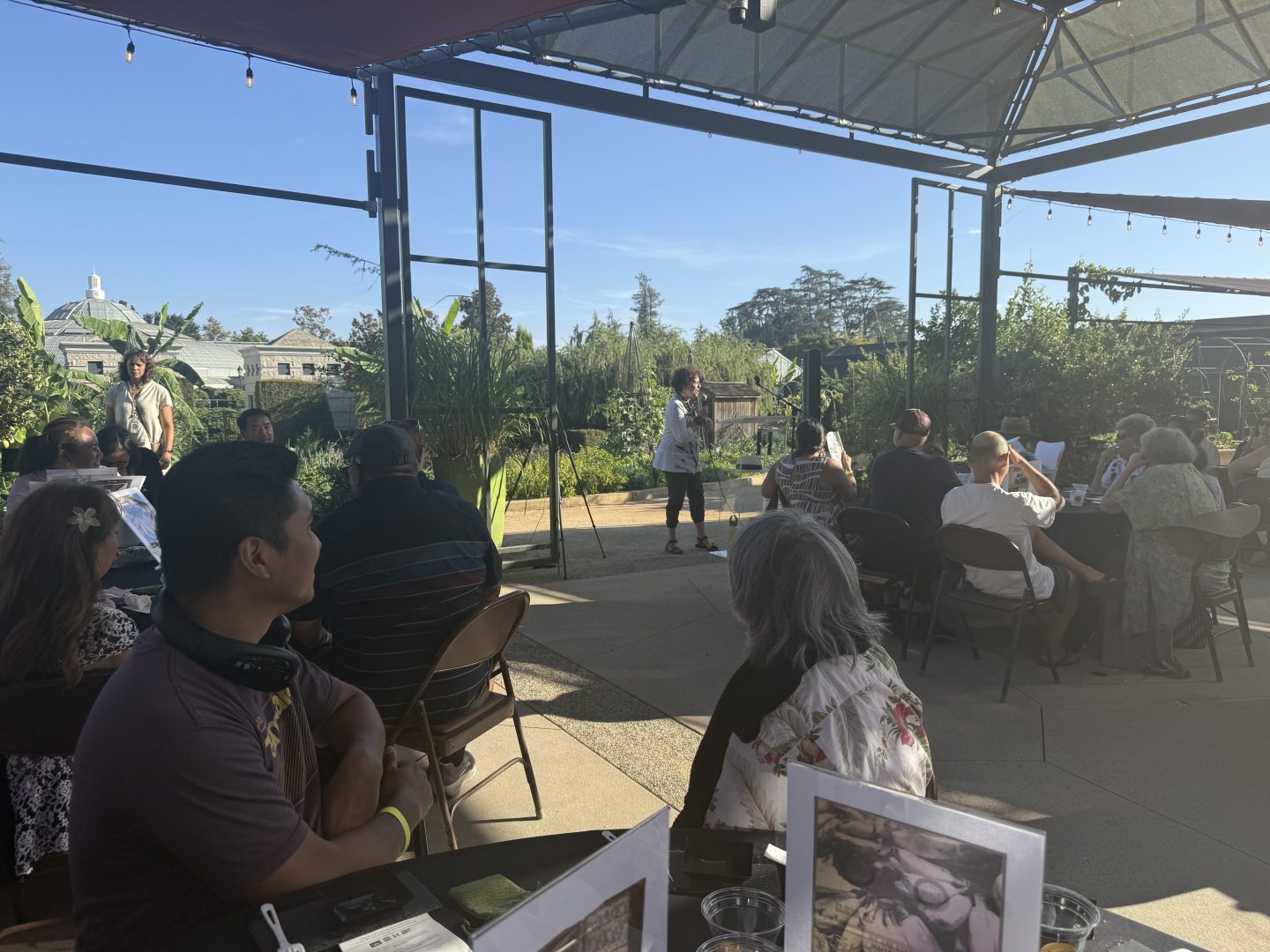
The Sunday Supper and Conversation featuring This Filipino American Life was a sold out event and had a long wait list. It took place at an outdoor venue –—The Huntington’s Kitchen Garden — on a sweltering evening. The temperature was 93 degrees F and seemed even hotter because of the humidity. While one of the speakers commented on the Manila weather, everyone just laughed; not one of the 90 attendees complained.
In the spirit of exchange and sharing, Luarca-Shoaf asked us to take a few minutes to meet the people at our table and answer the question “What specific food or dish helps you feel connected to your family’s history?”
A few agreed on one particular food — kare-kare; other dishes mentioned were adobo, pinakbet, pochero, sinigang and sisig. An animated conversation of which version of the dish one preferred, ingredients and recipes ensued.
Before leading us into the shared history of the United States and the Philippines, Bernardo introduced his co-hosts from “This Filipino American Life.” A trivia question started off the program: When was the first documented presence of Filipinos in what is now known as the United States?
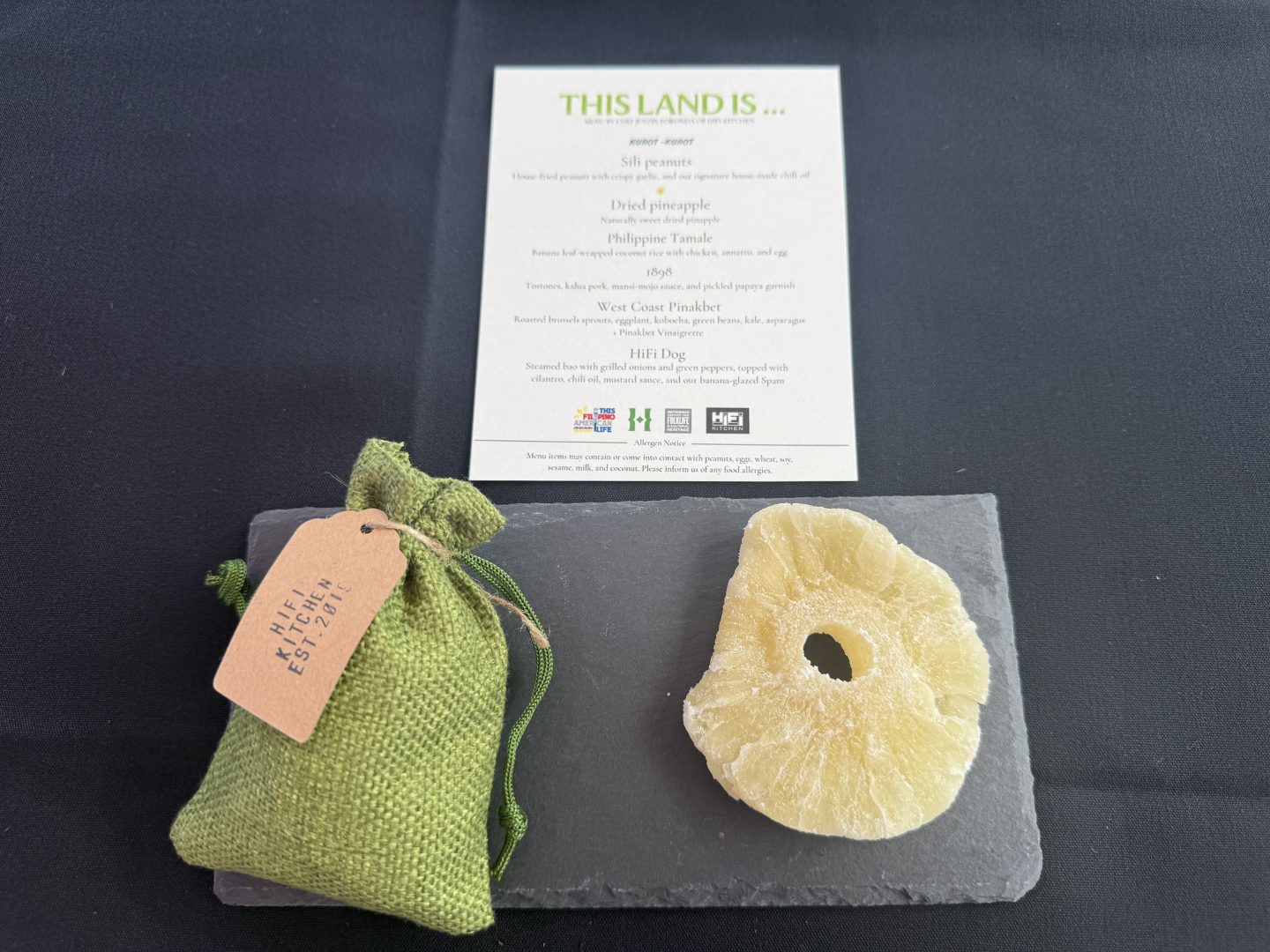
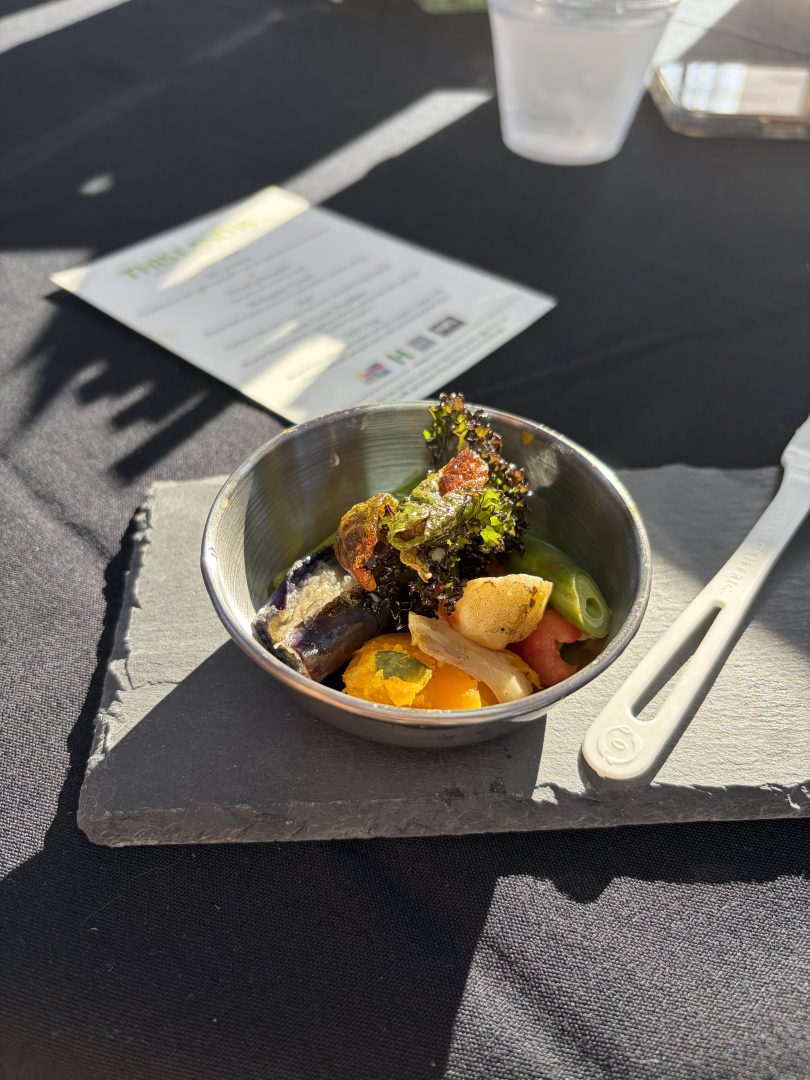
It was on Oct. 18, 1587, that Filipinos landed on Morro Bay and it was the theme of the first dish on Foronda’s tasting menu — the Philippine tamale. Bernardo also informed us the bag of peanuts and dried pineapple on each place setting represented the fruits and vegetables that were introduced to Filipinos at the time of the Manila Galleon Trade.
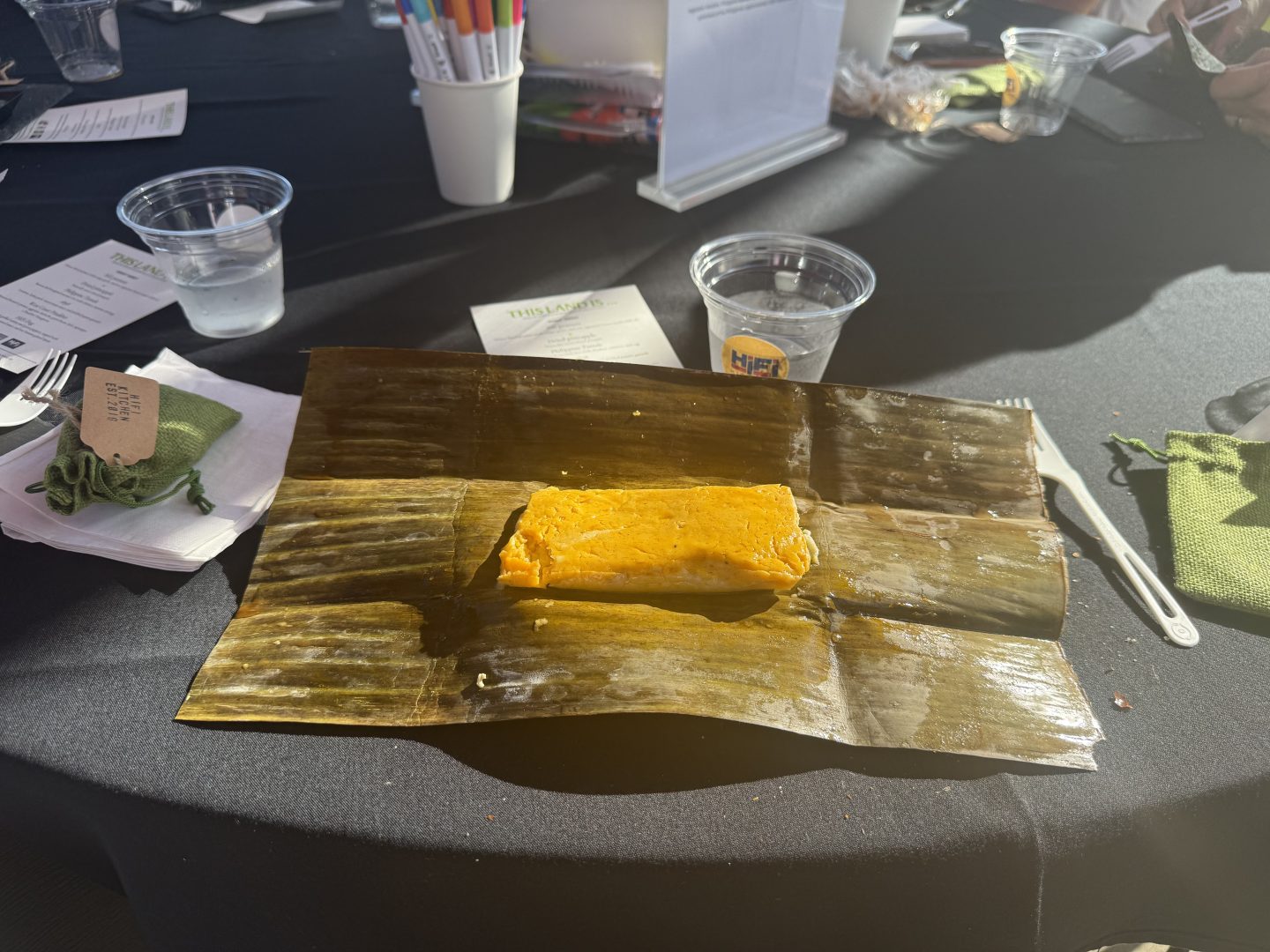
Filipinos built the ships for the galleon trade established by the Spaniards. The economic trade route linked Asia, the Americas, and Europe from 1565 through 1815, according to Bernardo. The trade route brought goods from Asia to Acapulco, Vera Cruz and on to Spain. It was one of the reasons Spain wanted to keep the Philippines as a colony.
Lehtinen provided imagery pertaining to that time period. On each table there was photograph in a plexiglass which had a map of Asia and the ship that Magellan was on when he discovered the Philippines in 1521. It also visualized the spice trade and emphasized how Manila became the collecting hub for the trading activity.
Before the second course was served, a This Filipino American Life podcast co-host asked the next trivia question, “Besides the Philippines, name the other nations America colonized at the turn of the 20th century?”
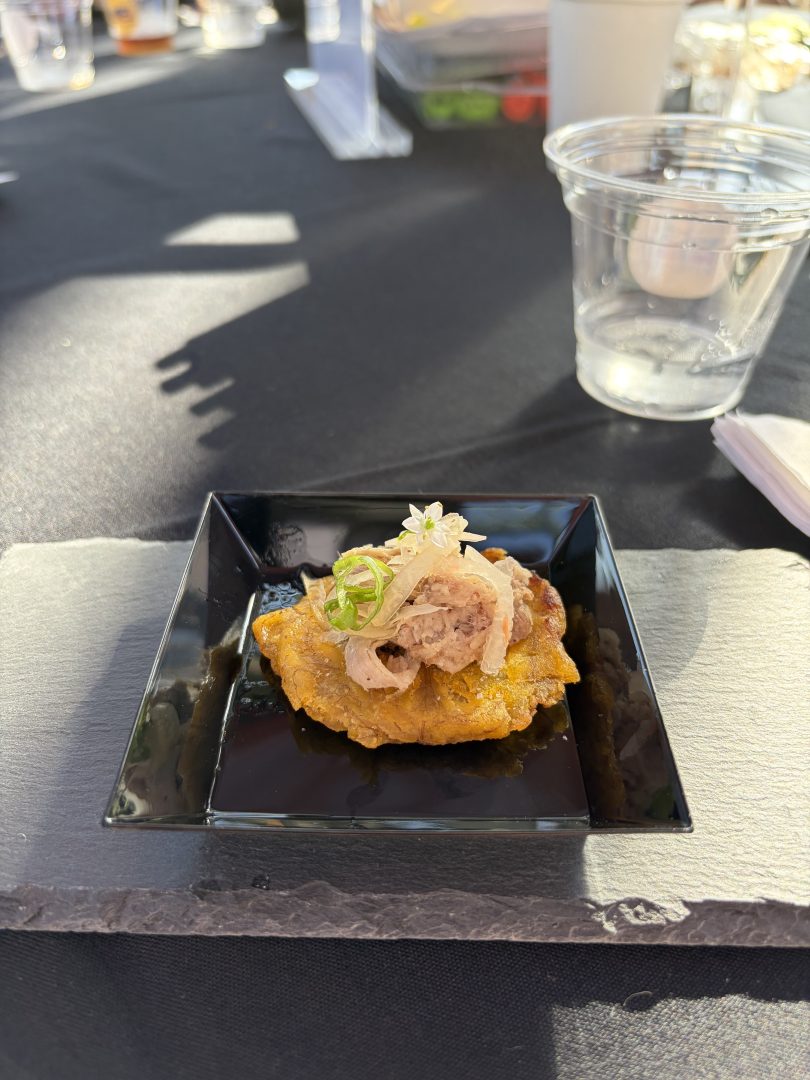
Cuba, Guam and Puerto Rico were also colonized by the U.S. in 1898. Bernardo discussed American Expansionism when it acquired the Philippines from Spain for $20M at the Treaty of Paris. At the same time that the United States was fighting the Spaniards, Filipino revolutionaries were engaged in its own war for independence against this new colonizer. Approximately 200,000 Filipinos died during the Filipino-American War.
The United States prevailed and reigned for 48 years and shaped Philippine culture and society. Examples of this are the form of government, Filipino economic dependence on the U.S., English as the medium of instruction, industries like nursing, and popular culture including food and food science, music, and sports.
Such was the long introduction to the next course — fittingly called 1898. Foronda informed us that it was influenced by Cuba, Guam and Puerto Rico, and is eaten like a pizza.
In the spirit of community, Bernardo gave us the next table discussion question: “How did this history that we learned in course number 1 and 2 broaden your understanding of the United States?”
This prompted a lively discussion at our table that went beyond the scope of what was asked. Someone suggested that U.S. global trading was the precursor to globalization. Another posited that the two dishes were an amalgamation of cultures, to which someone supplemented that it started multiculturalism. A Gen-Zer then argued that going down that line of reasoning meant nothing is indigenous anymore. Yet one person — an authority on Filipino language, literature and culture — referenced anthropologist Franz Boas’s historical particularism to argue her point.
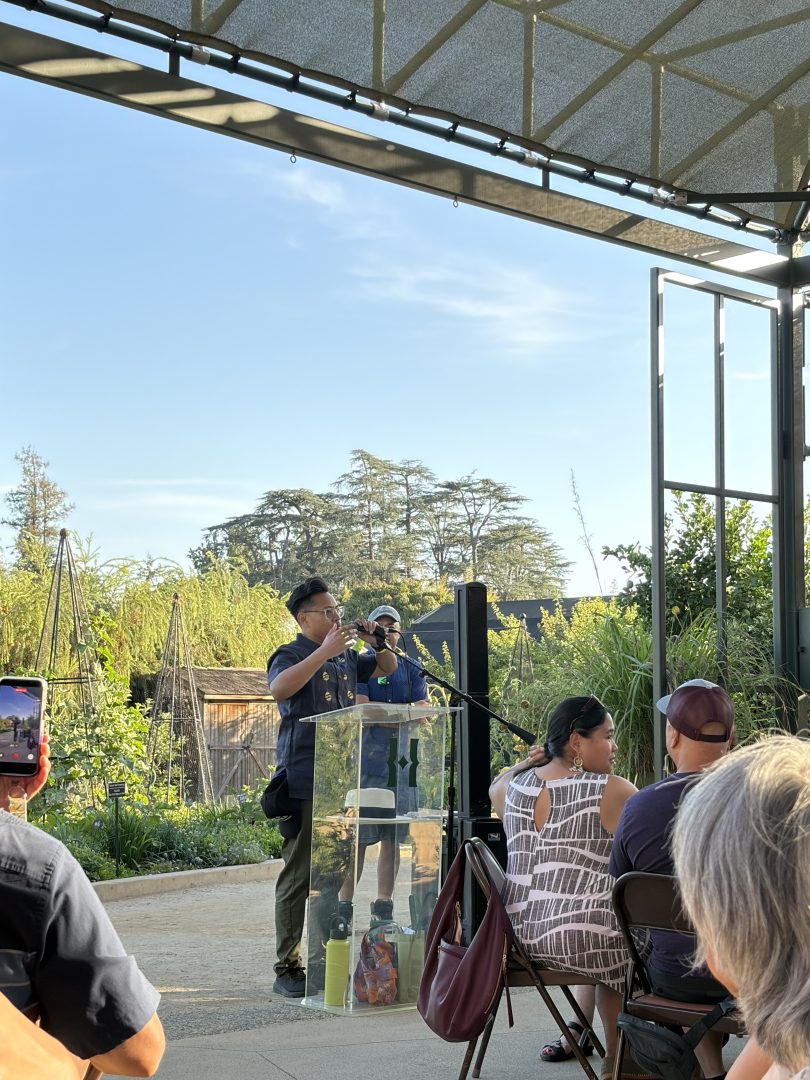
A special guest that afternoon was native Californian Sam Vong, who came all the way from Washington D.C. He talked about an exhibition he curated called “How Can You Forget Me: Filipino American Stories” currently on view at the Smithsonian’s Asian American Center at the National Museum of American History. It shines a light on Filipino migrant labor, community-building, and history in Stockton, California — the home of one of the largest Filipino communities outside of the Philippines in the 1930s.
Between the food tasting and history lesson, music by Filipino American artists played in the background while attendees got up to mingle or get a drink from a selection of spa water on a side table. Kat Carrido-Bonds, podcast co-host, acknowledged the individual who created the playlist for the evening. She then invited us to join them to celebrate This Filipino American Life podcast’s 10th anniversary party on Aug. 8 at Hello Stranger in Little Tokyo in downtown LA. She also announced the next trivia question: “What is the name of the U.S. legislation that led to Philippine independence?”
Bernardo provided context for this next historical discussion. When the Philippines became a U.S. possession, Filipinos come to this country freely. A large wave of Filipinos — particularly men from the Ilocos region — migrated to the U.S. during the 1920s and 1930s to provide immigrant labor on the West Coast.
These Filipinos resettled in Los Angeles and neighboring areas like Orange County, the San Gabriel Valley, and the San Fernando Valley. They worked on the farms alongside the Mexicans, but also in the service industry as domestics, hotel workers, and restaurant busboys. Eventually, a Little Manila in LA was established and then later a Historic Filipino Town. This generation of Filipino Americans were the Manongs, an Ilocano term of respect that’s taken from the Spanish word for brother, “hermano.”
The passage of the Tydings-McDuffie Act in 1934 set the date for Philippine independence and the primary reason for that was to curb immigration.
One of the photographs on the tables was of an archival object in The Huntington’s collection — a scrapbook made by Domingo Salas. Lehtinen explained that it contained pictures that told the story of the man who compiled it. He was a Filipino who worked as a chauffeur in Pasadena in the early 20th century and was part of the Manong generation. He was a U.S. veteran and served in both World War I and WWII. He was born in 1899 and died in 1985; he is buried at Riverside National Cemetery.
Lehtinen pointed out that the scrapbook reflected the anti-racial sentiments at that time. Salas had several photographs that showed him with white girlfriends, yet the U.S. census records showed him as never having married – probably due to anti-miscegenation laws.
To discuss the present day, which Bernardo jokingly said was 1985, he invited his co-host Elaine Dolalas to ask the final trivia question: “What metropolitan area has the largest population of Filipinos in the United States?”
The answer is Los Angeles. Bernardo informed us there are over 700,000 Filipino Americans in the Greater LA area, which includes Orange Ventura counties, etc. Filipino immigration to the U.S. increased dramatically because of the 1965 Immigration Act which is the basis of immigration policies today. It prioritized family reunification as well as employment-based immigration. Many Filipinos came here as skilled professionals and their family members joined them later through sponsorships.
“As a result of the 1965 Immigration Act, many second generation Filipinos came of age in the 1980s and 1990s,” Bernardo expounded. “We established many institutions and became leaders in respected fields, fighting for representation and social justice.… Many second and third generation Filipinos have developed a unique Filipino American culture and identity influenced by multi-ethnic environment, especially in California. Our food, culture, and sensibilities reflect that.”
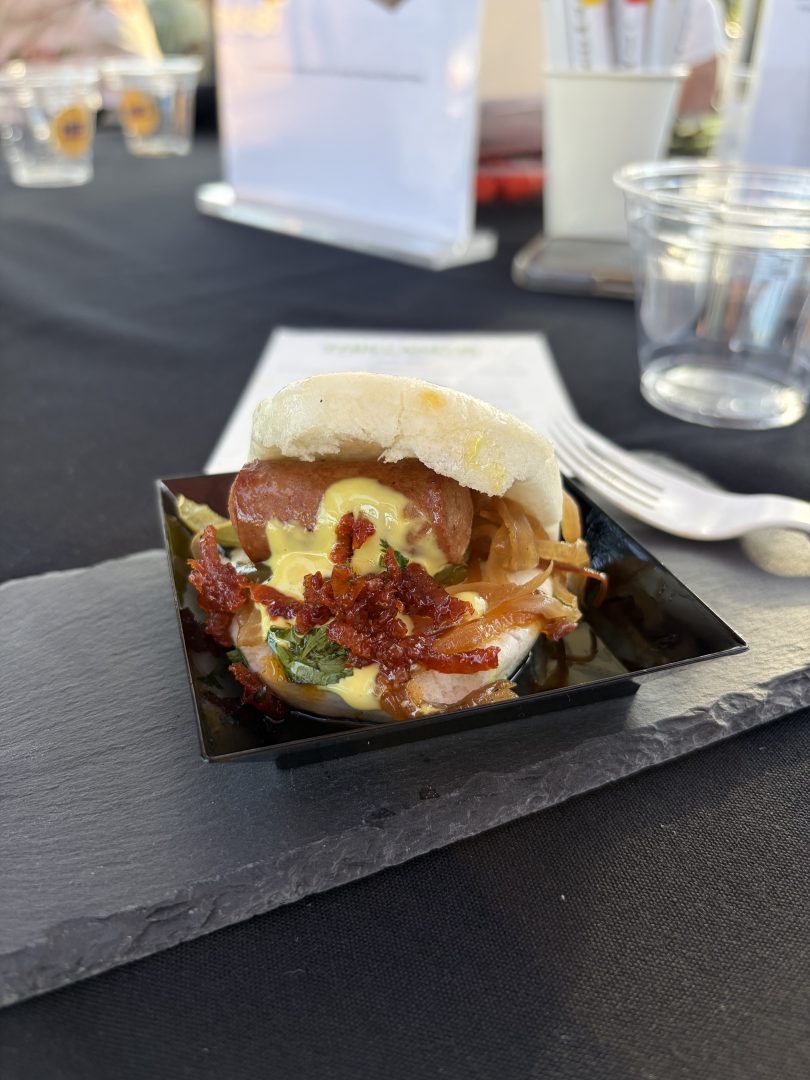
Today’s Filipino Americans were the inspiration for Foronda’s last tasting menu course, which he called HiFi Dog and he put in a bao.
Domingo Salas’s scrapbook was the inspiration for the artmaking project at close of the event. Luarca-Shoaf invited us to create our own scrapbook about the afternoon’s experience to share with others. They provided an instant camera, some sharpies, scissors, glue, and decorative paper for the project.
Luarca-Shoaf and her collaborators — Lehtinen, Bernardo and his This Filipino American Life podcast co-hosts, Foranda and his HiFi Kitchen team — methodically planned each segment of the event and made it such a success. They even managed to import Manila weather that reminded some of us of our homeland.
It’s worth noting that the Sunday Supper and Conversation series is part of The Huntington’s celebration of the 250th anniversary of the U.S. Declaration of Independence from British rule and, incidentally, marks the day the Philippines gained independence from American sovereignty on July 4, 1946.
The United States freed the Philippines 80 years ago, but many Filipinos today still feel a deep connection to America. For while the U.S. relinquished its hold on the Philippines, the ties that bind the two countries are forged within the hearts of the Filipino people.