


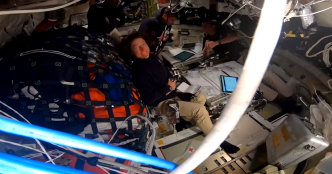
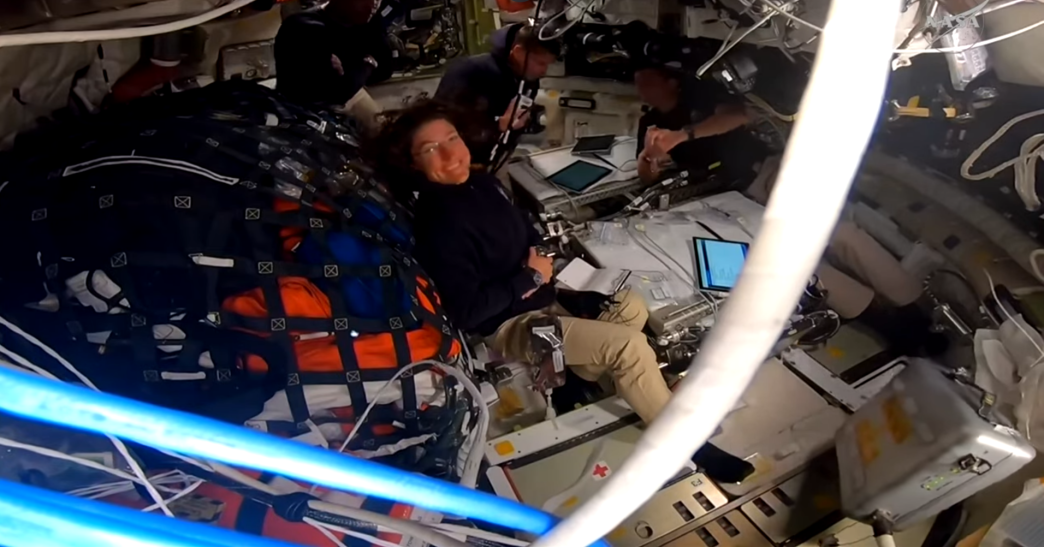
The Artemis II mission and its crew with a Southern California native at the helm were on their way back home on Tuesday after flying around the far side of the moon and the farthest distance from Earth that humans have ever traveled.
The spaceflight surpassed Apollo 13’s previous distance record set in 1970 at 248,655 miles. Artemis II set the record during its lunar flyby Monday, according to NASA. At its farthest point, the astronauts inside the Orion spacecraft will have traveled 252,756 miles, before looping back toward Earth, establishing the new record for human spaceflight.
The lunar loop took six hours and was the highlight of NASA’s first mission to the moon since the Apollo era. Artemis II sent three Americans and a Canadian into lunar orbit as a step toward a planned landing near the moon’s south pole within two years.
The spacecraft is more than halfway done with its mission and was on a return trajectory toward Earth, with splashdown expected Friday off San Diego, NASA reported.
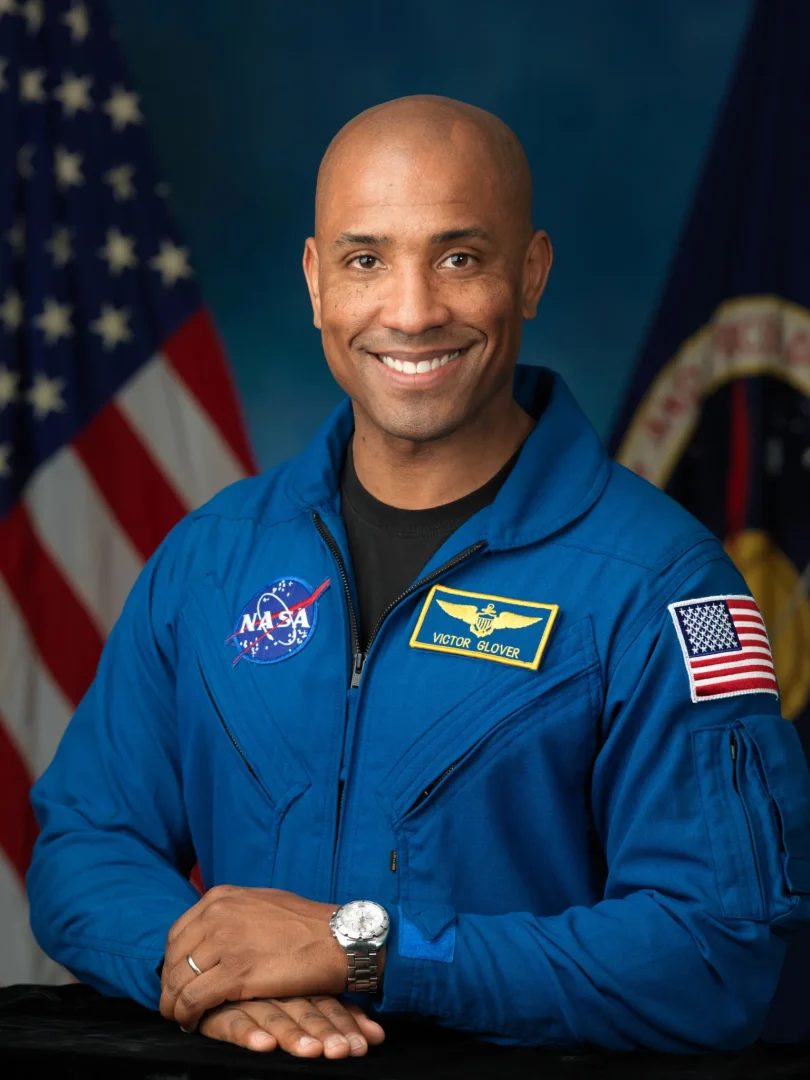
The mission launched Wednesday from Kennedy Space Center in Florida. Artemis II astronaut Victor Glover was born in Pomona, went to Ontario High School and graduated from Cal Poly San Luis Obispo. Glover, 49, is the pilot of the Orion spacecraft and is the first person of color on a lunar-mission crew.
Glover spent more than five months aboard the International Space Station in 2020-21, traveling there aboard SpaceX’s first full crew rotation flight by a U.S. commercial spacecraft. That work made him the first Black crew member on the ISS.
He also was a test pilot at Naval Air Weapons Station China Lake in the Mojave Desert and earned a master’s degree from Air University at Edwards Air Force Base.
Glover’s crewmates are Commander Reid Wiseman and mission specialists Christina Hammock Koch and Jeremy Hansen, a Canadian Space Agency astronaut.
“As we surpass the furthest distance humans have ever traveled from planet Earth, we do so in honoring the extraordinary efforts and feats of our predecessors in human space exploration,” Hansen told mission control Monday. “We will continue our journey even further into space before Mother Earth succeeds in pulling us back to everything that we hold dear. But we, most importantly, choose this moment to challenge this generation and the next to make sure this record is not long-lived.”
The crew also suggested that an unnamed lunar crater be named in tribute to the mission commander’s late wife Carroll Wiseman.
“It’s a bright spot on the moon, and we would like to call that Carroll,” Hansen said.
They named another crater after their Orion spacecraft that’s called Integrity.
During the flyby, Artemis II astronauts took photos of the lunar surface and recorded observations while briefly losing contact with mission control for about 40 minutes as Integrity moved behind the moon. The crew’s fleet of digital cameras captured high-resolution images of lunar features that humans have never directly seen, NASA officials said.
On Friday, NASA released high-resolution images of Earth captured by the crew after the spacecraft completed a key engine burn placing it on a trajectory toward the moon.
Astronauts said they were “glued to the windows” taking photos of Earth as it receded into the distance, with Hansen describing “a beautiful view of the dark side of the Earth, lit by the moon.”
Wiseman later asked mission control how to clean the spacecraft’s windows after the earthward gazing left the glass smudged. He added that taking pictures of the Earth from deep space turned out to be a challenge.
“It’s like walking out back at your house, trying to take a picture of the moon,” he told mission control. “That’s what it feels like right now.”
NASA’s Deep Space Network, which Jet Propulsion Laboratory in Pasadena manages, is involved in the communications between Artemis II and mission control.
“At NASA, we dare to reach higher, explore farther, and achieve the impossible. That’s embodied perfectly by our Artemis II astronauts — Reid, Victor, Christina, and Jeremy,” Lori Glaze, acting associate administrator for NASA’s Exploration Systems Development Mission Directorate, said in a statement. “They are charting new frontiers for all humanity. Their dedication is about more than breaking records — it’s fueling our hope for a bold future. Their mission is carrying our promise to return to the Moon’s surface, this time to stay as we establish a Moon Base.”
Officials expect Artemis III to launch sometime next year to test lunar landers being developed by Hawthorne-based SpaceX and Jeff Bezos’ Blue Origin. In early 2028, Artemis IV is expected to launch with the goal of astronauts returning to the moon’s surface via a lunar lander.
Artemis V, another lunar surface mission, is expected in late 2028, with subsequent missions planned about once each year.
The first humans on the moon were U.S. astronauts Neil Armstrong and Buzz Aldrin on July 20, 1969, during the Apollo 11 mission. A total of 12 men have walked on the moon, the last being Apollo 17 astronaut Gene Cernan in December 1972.
The current mission’s progress is charted online at nasa.gov/artemis-ii.
Satellite launch
Another Falcon 9 rocket from Vandenberg Space Force Base near Lompoc is set for Friday after the latest launch sent spectacular visuals sky that could be seen from the Los Angeles area to Central California.
The rocket carrying 25 Starlink satellites launched at 7:50 p.m. Monday, the first flight for the first-stage booster supporting the mission, SpaceX announced.
Following stage separation, the first stage landed on the Of Course I Still Love You droneship stationed in the Pacific Ocean.
Unfavorable conditions postponed the launch Sunday.
The launch scheduled for Friday will also carry 25 Starlink satellites and will be the 32nd flight for its Stage 1 booster.