


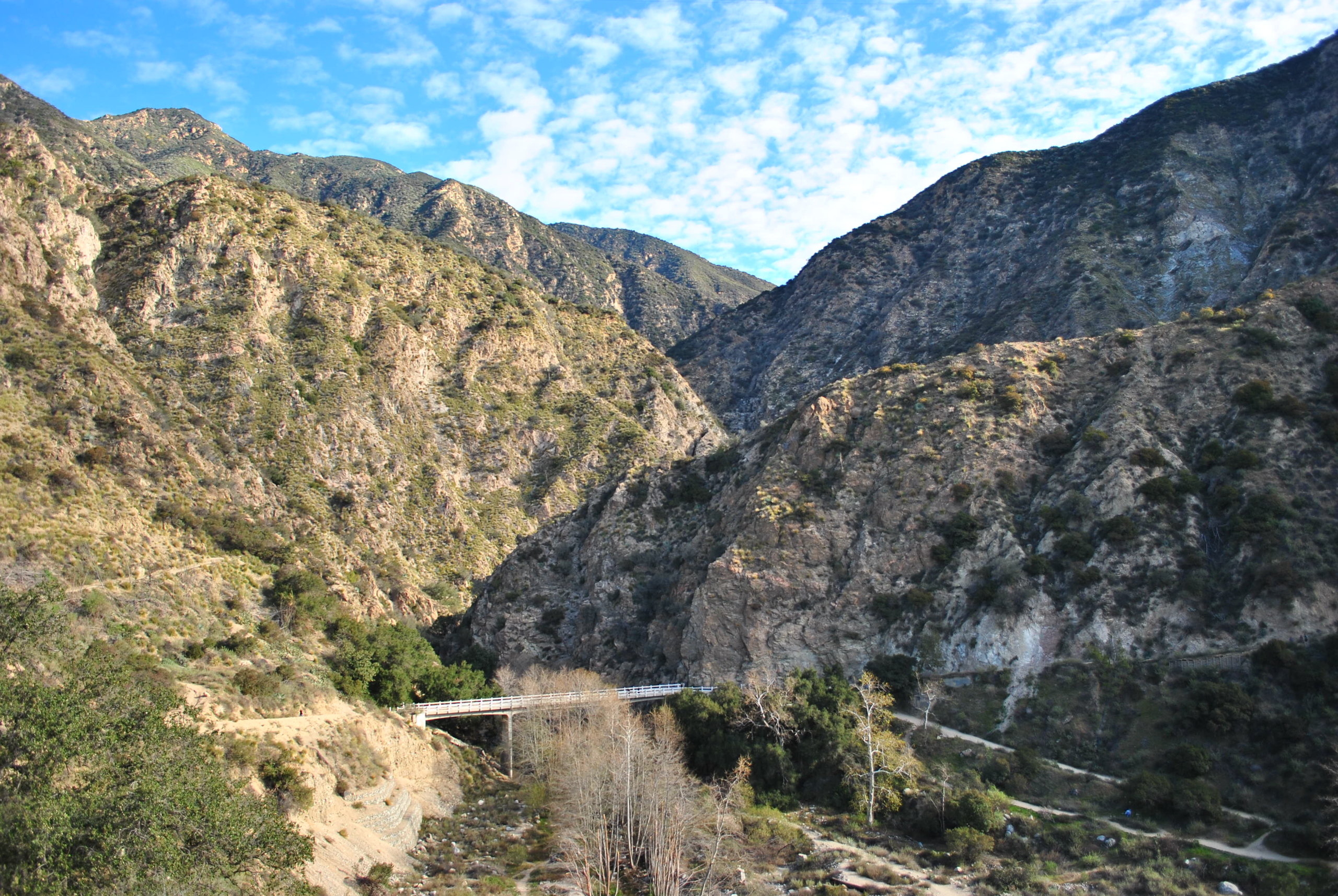
A panel of experts working on the long-term restoration of fire-damaged Eaton Canyon said Wednesday science and lessons from prior wildfires can help ensure the resiliency of the landscape and eventually a new Nature Center.
The January 2025 Eaton Fire devastated the canyon’s natural area and Los Angeles County’s nature facility in the Pasadena foothills. Officials said Eaton Canyon is one of the most popular outdoor destinations in Southern California and since the firestorm, the beloved 198-acre natural preserve that draws over 1 million visitors annually has been closed.
The panelists Wednesday at the LA County Arboretum and Botanic Garden were from the county Department of Parks and Recreation, Studio-MLA, SWCA Environmental Consultants and Theodore Payne Foundation. About 130 people attended the free community discussion “Ashes to Action,” and the evening was hosted by the Arboretum Foundation.
Experts who spoke during the event described Eaton Canyon’s recovery as an unprecedented opportunity to reimagine the nature preserve and the center.
The Eaton Canyon Natural Area and Nature Center also carries the designation of a county Significant Ecological Area, located minutes from urban Pasadena, said LA County Parks Director Norma E. García González.
“We are learning we do not have all the answers, and we are creating a space to learn from the experts,” García González said in a statement. “We want to reimagine a sense of place and restore ecologically this beautiful place where so many people grew up.”
Some of that expertise is in the archives of the Arboretum’s Fire-Resistant Plant Project Collection, said panel moderator and Arboretum CEO Su Oh. Southern California wildfires in the 1950s and early ’60s prompted this research headed by the Arboretum’s former Director Francis Ching in 1958. Following the 1961 Bel Air Fire, the project developed a leaflet with information about fire-resistant plants that was distributed to 200,000 residents as planting guidance.
This botanic knowledge continues with the role of native trees and shrubs in Eaton Canyon, officials said.
“If you plant natives, the animals will come,” Tim Becker, director of horticulture at Theodore Payne Foundation, said in a statement. Eaton Canyon also offers an opportunity for families to experience wilderness areas, and the 1,000 native plants the Foundation brought to the new Eaton Landscape Recovery Center will help visitors experience the canyon’s natural habitat, Becker said.
Recalling the tragic night of the fire when she rushed to the burning Eaton Canyon Nature Center, Kim Bosell, LA County Parks regional operations manager, said her 11 years of being stationed at the canyon — plus years of seeing other county natural areas burn — has changed her views of how nature returns.
“I believed that nature will heal itself,” Bosell said in a statement. “But in this case we are learning we can help.”
Working on Eaton Canyon’s restoration with the partners on the panel, Bosell said, “We are finding a way to help it come back better.”
Megan Horn, principal at Studio-MLA said, “We don’t think of this as a place to design. It’s a system to design.”
Rebuilding the nature center must incorporate a “hardened and defensible” design to resist fire, flooding and wind, she said. The rejuvenated landscape must also incorporate the impacts of these elements, and fostering community stewardship of the land will be crucial.
Understanding the cycle of fire ecology will inform the canyon’s regeneration, added Marcus Goncalves, senior restoration ecologist at SWCA Environmental Consultants. The Eaton Fire impacted much more than loss of trees and shrubs.
“After fire there is loss of vegetation. Erosion issues will follow,” Goncalves said. “This can trigger a chain of events, where a riverbank may collapse, a hillside loses stabilization, and that crumbles into a river, raising it and reducing its flow and impacting water quality.”
Another group of experts will speak at a second Eaton Canyon panel discussion at the LA County Arboretum on April 8 from 5 to 7 p.m. Free admission by reservation is available online at Arboretum’s ticketing webage.