

The city of Los Angeles spent about half of the money it had available to address homelessness during fiscal year 2025-26, according to the City Controller’s Office on Monday.
The ’25-26 homelessness budget for the city of more than 3.8 million residents was $961 million, or about $1.1 billion when adjusted for additional appropriations and unspent dollars that carried over from the prior years. The city spent $516 million along with $119 million encumbered, meaning that money dollars has been committed but may or may not end up being actually being used, according to Controller Kenneth Mejia’s report. The remaining $473 million went unspent.
Most of the unspent homelessness money comes from special funds, which are usually get rolled over to the next fiscal year to spend again on efforts to reduce homelessness and provide assistance to people living on the streets or experiencing housing insecurity.
During fiscal year 2024-25, LA did not spend more than $500 million of the $1.3 billion homelessness budget, the controller’s office reported. Last fiscal year, the city spent $599 million.
According to Mejia, the money went unspent money because:
- Funds that won’t be spent until later years such as some state grants that include the Homeless Housing, Assistance and Prevention program won’t be used until future years;
- Affordable housing development funded by Measure ULA can take up to three years for the city officials to approve projects;
- Delays in approvals for spending plans and contracts related to Measure ULA tenant protections, defense and assistance;
- Lack of staff and resources regarding city departments’ homelessness spending to fully utilize budgets; and
- Homelessness efforts are decentralized without a single department overseeing efforts, resulting in additional delays.
“For the second year in a row, the city ended up spending much less on homelessness than it promised,” Mejia said in a statement. “Often, most of the unspent money is rolled into the next year’s budget, but there are risks that some funds may be lost to other budget priorities. People need housing and services today, not a year or two from now.
“The large homelessness budget leads the public to believe that the City is spending much more on homelessness than it actually is, increasing the public’s expectations and causing frustration when results inevitably do not align with the budget,” Mejia added.
He recommended that Mayor Karen Bass and the City Council revise the homelessness budge’s configuration, suggesting that they should only appropriate funds that are expected to be spent for the coming fiscal year and also properly categorize expenditures related to homelessness.
The City Controller’s Office is the first entity to formally track city homelessness spending, starting in fiscal year 2024-25, Mejia said.
He also recommended that any state HHAP grants be included or listed in the homelessness budget along with when the money will be spent.
Unspent Measure ULA dollars should be clearly communicated with the timelines for acquisition and rehabilitation of affordable housing and tenant related services, according to Mejia.
A large portion of the underspending is connected to tenant assistance, defense and protections. Mejia encouraged his colleagues to bolster staffing to address delays in contracting and approval processes.
Mejia also urged city officials to determine if certain Measure ULA spending is rightfully categorized under the homelessness budget and emphasized the importance of providing monthly or quarterly updates on homelessness spending.
“Other responsible departments should also give regular updates on their spending plans,” according to Mejia’s report. “The Controller’s Office currently tracks real-time spending and gets monthly updates from departments on homelessness spending. Formalizing these updates will help the city identify issues and bottlenecks to ensure timely utilization.”
Bass said she was glad to support Mejia’s recommendations for improvement. The mayor, who is seeking reelection for a second term, noted that the city has brought homelessness down by 17%, citing figures from the 2025 point-in-time count to assess the number of people living unsheltered.
“We are committed to transparency so Angelenos will have a clear picture and understanding of how much is being spent in one year and what funding is supporting programs over multiple years,” Bass said in a statement. “It’s important that we strategically spend funding over multiple years to ensure we can sustain progress despite state and federal changes.”
City Councilwoman Nithya Raman chairs the Housing and Homelessness Committee.
“Despite repeated efforts by the council to get real-time reports on the progress of homelessness spending and to centralize budgetary oversight, Controller Mejia’s analysis reveals that the city has once again spent far less than its allocated homelessness budget,” Raman, who is running for mayor in the November election, said in a statement. “Last year’s budget included funding for my motion to establish a Bureau of Homeless Oversight explicitly tasked with monitoring the city’s homelessness spending. Nearly a year later, not one staff member has been hired. Unless we are able to move with greater urgency to provide accountability to the public, Angelenos will lose faith that the city is spending these desperately needed dollars well.”
Councilwoman Ysabel Jurado, vice chair of the Housing and Homelessness Committee, added the “housing and homelessness crisis demands immediate action, not delay. We must ensure every dollar allocated to fight homelessness is spent effectively and equitably.”
Underspending included $223.6 million from HHAP grants, $99.3 million from Measure ULA, nearly $64.3 million from Bass’ Inside Safe program and $17 million from the Sanitation Department.
HHAP and Inside Safe had the most encumbered funds, over $122 million $120 million respectively.
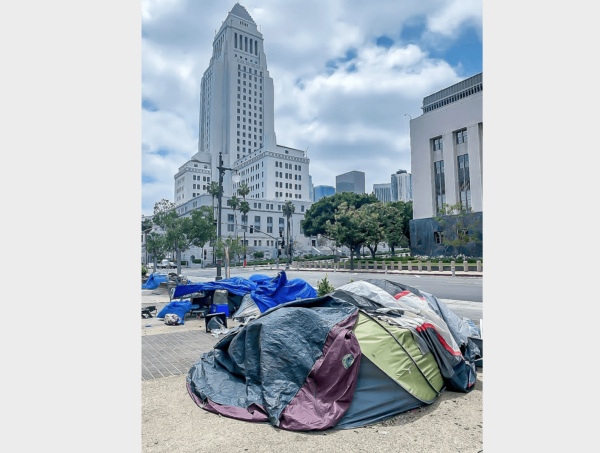
More than 43,000 people were experiencing homelessness in Los Angeles, according to the point-in-time count in January.
The report is online via the controller’s website.