

The U.S. Supreme Court on Wednesday declined to consider an emergency bid by a group of California Republicans to block newly redrawn, voter-approved congressional districts in effect for the midterm election this fall.
In a one-sentence order with no dissenting opinions, the nation’s high court rejected the emergency request by the California Republican Party, 19 individuals and later the U.S. Department of Justice, according to court documents.
The Supreme Court rejection enables California to use the newly drawn lines for most of its 52 House districts during the congressional elections in November.
California Democrats launched a redistricting effort in response to mid-decade redistricting by Texas Republicans last year. Texas Gov. Greg Abbott and supporters aimed to help Republicans maintain their control of the House of Representatives.
California officials sought a map that would enable Democrats to gain five House seats, offsetting the Republican seats picked up in Texas.
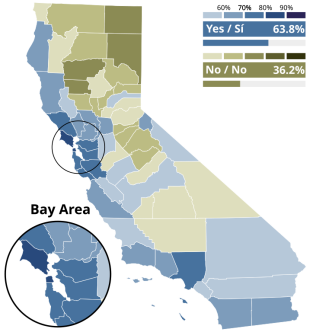
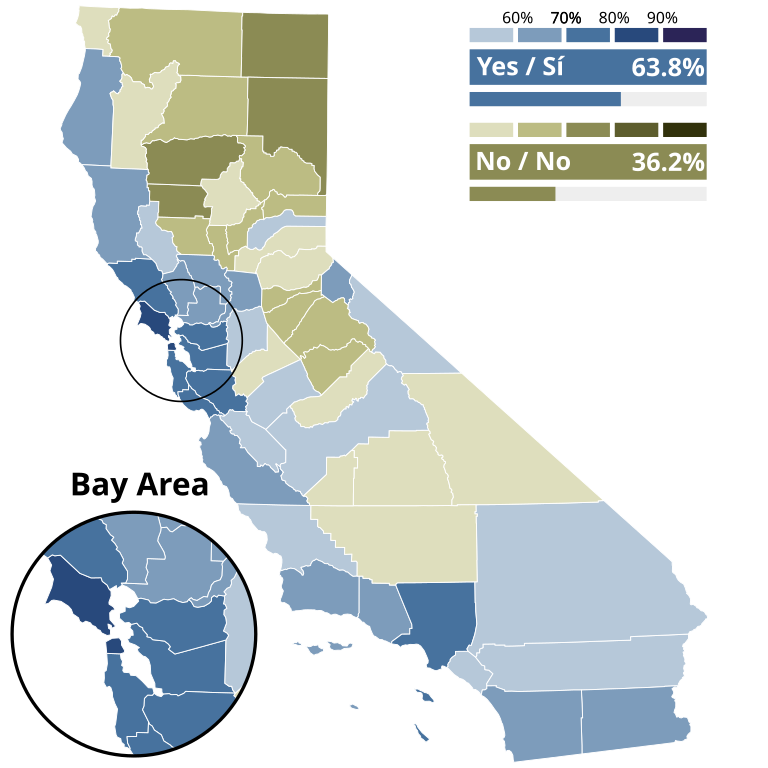
Voters in California supported Proposition 50 in November, enacting the new district boundaries in effect through the end of the decade.
Assemblyman David Tangipa, R-Fresno, the state Republican Party and a group of Republican voters, along with the U.S. Department of Justice, filed a lawsuit that claimed the redrawn lines were unconstitutional because they improperly used race as a factor in creating voter district boundaries.
The suit named as defendants Gov. Gavin Newsom, California Attorney General Rob Bonta and Secretary of State Shirley Weber.
The plaintiffs asked judges for an injunction to stop the new district boundaries from taking effect, at least temporarily so the state’s original map would remain for the 2026 midterm election.
Newsom applauded the Supreme Court’s decision Wednesday.
“Donald Trump said he was ‘entitled’ to five more Congressional seats in Texas,” Newsom said in a statement. “He started this redistricting war. He lost, and he’ll lose again in November.”
Bonta said the high court’s refusal to block use of the new maps was “good news not only for Californians, but for our democracy.”
“Let’s remember how we got here,” Bonta said in a statement. “President Trump told Governor Greg Abbott that Republicans were ‘entitled’ to five more Congressional seats, and Texas Republicans fell in line. In direct response, and for explicitly partisan reasons, Governor Gavin Newsom and our Legislature advanced Proposition 50, presented it to the voters, and Californians overwhelmingly supported it.
“With this latest win, my office has now successfully defended this critical ballot initiative on behalf of Governor Newsom and Secretary of State Weber on seven occasions — and we stand ready to continue defending it as necessary,” Bonta said.
The White House did not immediately respond to a request for comment.
On Jan. 14, a three-judge panel in Los Angeles federal court ruled against Republicans’ request to block the redistricting. The court’s 2-1 decision upheld the new districts, rejecting claims that the maps had been redrawn to favor Latino voters over other groups.
Judge Josephine Staton, an appointee of former President Barack Obama, wrote the ruling, with Judge Wesley Hsu, an appointee of former President Joe Biden, agreed. Judge Kenneth Lee, a President Donald Trump appointee, dissented.
“We find that Challengers have failed to show that racial gerrymandering occurred, and we conclude that there is no basis for issuing a preliminary injunction,” Staton wrote. “Our conclusion probably seems obvious to anyone who followed the news in the summer and fall of 2025. In the summer of 2025, the Trump administration began pressuring Texas to redistrict for the purpose of picking up five more Republican seats in Congress. The Texas Legislature obliged. In August 2025, Governor Gavin Newsom announced that California would “fight back” with its own Election Rigging Response Act.”
In his dissenting opinion, Lee wrote, “This court should have acted to prevent California from following an unlawful path that will inevitably sow racial divisions and upset the melting pot that makes California great.”
According to Lee, “The Democratic supermajority in the California state legislature wanted to curry favor with Latino groups and voters — and to prevent Latino voters from drifting away from the party. One way to do that was to accede to Latino organizations’ request for Latinomajority congressional districts.”
Prop. 50 establishes new congressional district maps for the 2026 midterm elections, as well as the 2028 and ’30 elections. The measure passed with over 64% of the statewide vote.
According the election news website Ballotpedia, the redistricting would move five Republican-held congressional districts to the Democrats’ side of the aisle.