

The city of Riverside is partnering with two local school districts and several local colleges to explore ways of creating more jobs and long-term growth in the aviation, aerospace and related technology businesses via the Learning Institute for Flight Technology, officials said last week.
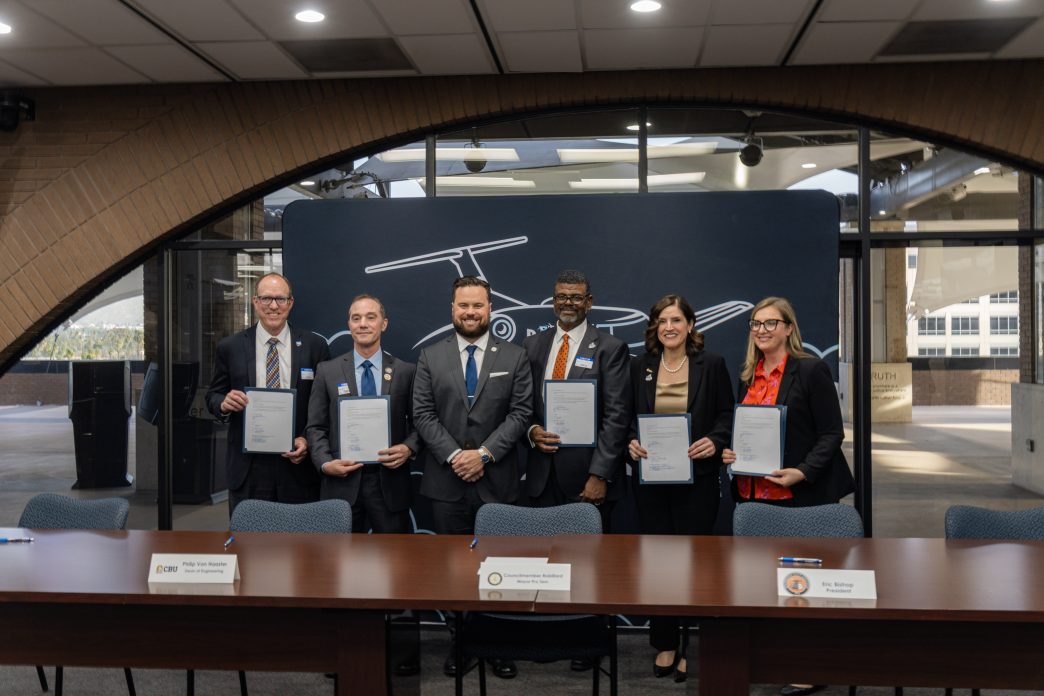
The collaborative effort includes the city, Riverside Unified School District, Alvord Unified School District, Riverside City College, California Baptist University and the University of California, Riverside. According to the city, LIFT will allow the organizations to work together to evaluate how existing school curriculum, industry needs and regional assets could be improved over time to generate more career awareness, improve skills development and build a more skilled workforce.
Through LIFT, the partner agencies will explore how curriculum, training and workforce pipelines can be intentionally coordinated to ensure Riverside residents are prepared for emerging career opportunities in high-demand industries, according to officials from Riverside City College.
“This will ensure Riverside remains proactive, not reactive, about aerospace and advanced manufacturing jobs,” City Councilman Steven Robillard, who proposed the idea, said in a statement. “This is an opportunity to explore partnerships and have a dialogue about what we can bring to our city.”
Riverside City College Interim President Eric Bishop said, “We are excited to be working with each other and with industry to keep talent in the Inland Empire. This partnership reflects our shared commitment to creating clear, accessible pathways that connect education to meaningful careers and economic mobility.”
The organizations recently put in writing via a memorandum of understanding their intention to combine shared assets to study the role of technology within aviation, aerospace, and related fields. Supporters hope the effort will create awareness of emerging trends and potential applications, and how career readiness can be enhanced through focused education, training and workforce development.
One option includes examining how Riverside Airport can be leveraged as part of this effort, according to city officials. The Airport is the busiest FAA Federal Contract Tower airport in California and ranks 116th nationwide in operations that include emergency services, air ambulance flights and firefighting missions.
“The Airport is part of Southern California’s rich aviation legacy, providing training and general aviation opportunities for current and future aviators,” the city statement said.
The airport is currently home to flight schools and FAA STEM programs, officials said.
“We are laying the foundation tonight,” Robillard said. “This positions Riverside to compete and keep our job pipelines local.”
The effort to enhance the skills and educational opportunities of local students comes amid significant employment opportunities in several aviation fields, officials said. The Federal Aviation Administration projects a need for 8,900 new air traffic controllers and a 10% to 20% shortage of aviation technicians and mechanics by 2028. The FAA also anticipates a shortage of 24,000 pilots in 2026.
“Providing opportunities like this for our students is really what makes a difference in our lives,” Krista Fairley, assistant superintendent of educational services at Alvord Unified School District, said in a statement.
Riverside Community College District Chancellor Wolde-Ab Isaac highlighted the broader impact of the partnership on students and the region.
“This collaboration reflects our collective responsibility to ensure that students and residents of Riverside have access to opportunities that lead to economic mobility and community prosperity,” Isaac said in a statement. “By aligning education with workforce needs, we are strengthening the region’s talent pipeline and positioning Riverside for long-term growth.”
A city staff report noted the region’s aviation history.
“Southern California’s aviation legacy is unparalleled in the United States,” according to the report. “Beginning in the early 20th century, the region transformed from agricultural groves into a global aerospace hub. Companies like Douglas Aircraft, Lockheed, and Hughes established manufacturing plants that produced iconic aircraft during World War II and the Cold War. These efforts not only helped secure Allied victory, but also propelled technological advancements in jet propulsion, stealth technology, and space exploration.
“The Inland Empire became a critical aviation corridor during the 20th century,” the report continues. “Its vast open spaces and proximity to Los Angeles made it ideal for airfields and military installations. During World War II, the region hosted numerous training bases and aircraft production facilities, supporting troop deployments and logistics.
March Air Reserve Base opened in 1918 and is one of the nation’s oldest continuously operated military airfields.
“March Field evolved from a training ground for biplane pilots into a strategic hub for bomber operations during WWII and later a center for jet-age and Cold War missions,” according to city officials.
Riverside Airport’s roots go back to the early 1920s, when local aviation pioneer Roman Warren, known as the “Cowboy Aviator,” built a small landing field near the Santa Ana River. Warren used a 15-acre pasture with a 900-foot runway for his surplus JN-4 aircraft, marking the start of the civil aviation era in Riverside.
“By the mid-20th century, the airport — then known as Riverside Arlington Airport — expanded its facilities,” according to the report. “In 1956, Runway 9/27 was paved, enabling larger aircraft operations. Soon after, Bonanza Air Lines began scheduled flights, later joined by Air West, offering service to destinations like Los Angeles, Las Vegas, and Palm Springs. Through the 1970s, Golden West Airlines operated Twin Otter flights to LAX, reinforcing Riverside’s role in regional connectivity.”
Riverside Airport currently spans 525 acres with two asphalt runways and a helipad. The airport “serves as a general aviation hub and an aeronautical education center, hosting multiple flight schools and aviation programs,” city staff reported. “A notable milestone occurred in 2013, when FedEx Express donated a Boeing 727-200F to California Baptist University, creating a hands-on laboratory for aviation science students.”