

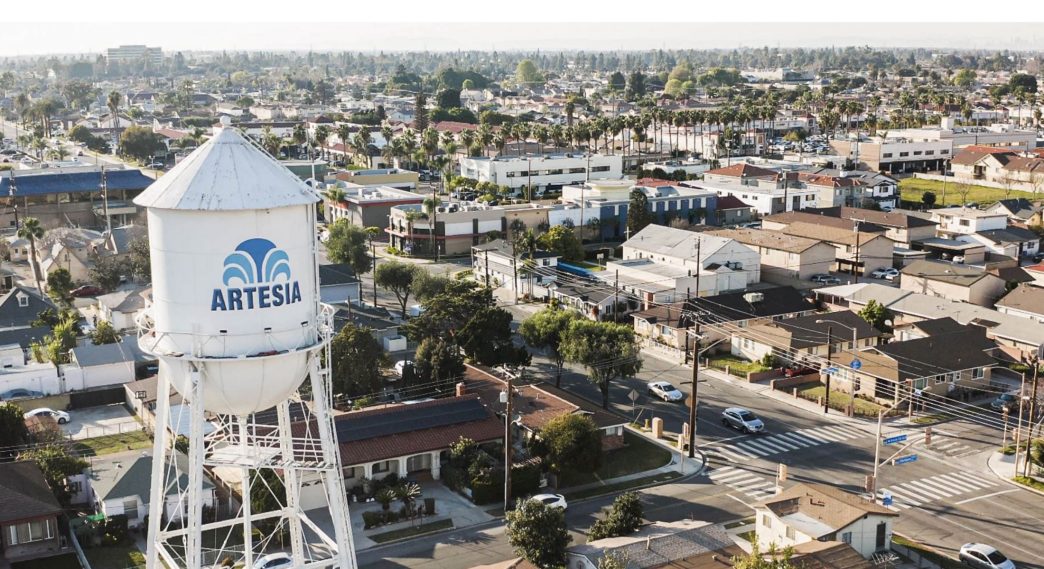
Artesia agreed Tuesday to revamp the city’s housing policy that state officials alleged was out of compliance with the Housing Element Law.
The agreement establishes deadlines for city officials and staff to revise the 2021-29 housing element, holds the city accountable for its failure to complete the revision before the legally mandated deadline and clarifies the consequences of further noncompliance with housing law, according to Attorney General Rob Bonta’s office.
Artesia’s deadline for submitting a housing plan for state approval was Oct. 15, 2021, court documents show. Three years later, the state Department of Housing and Community Development, or HCD issued a violation notice after city officials missed a second deadline and submitted unacceptable “informal drafts” of a housing plan.
“Artesia has wasted time and money stalling on their obligations when they could have instead been providing necessary housing for the families in their community,” Gov. Gavin Newsom said in a statement. “Every jurisdiction must do their part to create more housing and make their communities more affordable.”
Artesia Mayor Ali Sajjad Taj asserted the city government takes the regional and statewide housing crisis seriously.
“While the Housing Element has been delayed, the actions taken by the city over the last 18 months, including the approval of 179 new housing units, proves that we take our role seriously and we are committed to doing our part in addressing the state housing crisis,” Taj said in a statement.
Artesia officials released a statement following the agreement announcement:
“The city of Artesia understands the importance of planning for housing needs across the state of California, and continues to work diligently towards gaining certification for the 6th Cycle Housing Element. Artesia’s delay in achieving an approved Housing Element is not a result of intentional delay or wasted time and money, and it would be mischaracterization to attribute it to intentional stalling.
“Rather, the delay has been caused by the harsh realities of being a small, 1.62 square mile city with very limited resources, trying to keep up with constantly changing housing laws,” the statement continued. “Despite these challenges, Artesia has been able to approve and entitle 179 new housing units, which is more than many cities in the region.”
City officials noted that since March 2024, “Artesia has been working closely with HCD to ensure that the city will stay on track to get the Housing Element approved by our self-imposed January 2026 deadline. Further, the city has worked diligently to put in place the mechanisms which are necessary to implement the Housing Element once it is approved.”
In July, the city approved an ordinance that enables more building density and affordable housing and in August, the City Council OK’d the Artesia Downtown Specific Plan, officials said. The downtown plan “provides additional development opportunities to provide housing surrounding the new Southeast Gateway Line transit stop. This ensures long-term planning tools are in place before the station becomes operational.”
The Housing Element Law requires every city and county in the state to periodically update housing plans to meet the Regional Housing Needs Allocation, which refers to a local jurisdiction’s share of regional and statewide housing.
The agreement holds Artesia — located in southeast Los Angeles County with a population of over 15,000 — to a binding timeline for compliance, with clear legal and financial consequences for further delays.
“I commend the city of Artesia for doing the right thing. Instead of continuing to kick the can down the road, the city has finally committed to do its part to plan for the region’s housing needs,” Bonta said in a statement. “Cities and counties that still have not adopted compliant housing elements should pay close attention. The deadline for compliance passed years ago, and so, this settlement includes new enforcement tools.”
The attorney general added that “planning for housing is not an abstract exercise. Californians need quality homes that they can afford. Governor Newsom, HCD Director Velasquez, and I will continue fighting to ensure that every local government — no matter how small or big — follows state law and helps address our state’s housing crisis.”
According to the agreement:
- Artesia officials must approve a compliant housing element no later than Feb. 18, according to court documents. The housing element will plan for 1,069 new homes, including 608 that will be affordable for very low-, low- and moderate-income residents.
- The city will face civil penalties, assessed at the statutory minimum, of $10,000 a month from Jan. 1, 2025, to the compliance deadline of Jan. 20, 2026. “These penalties will be suspended but, if Artesia fails to meet any further deadlines, the penalties will immediately become due and will accrue until the City comes into compliance,” according to the AG’s office.
- Artesia must acknowledge that the “Builder’s Remedy” is in effect until the city has a state-approved housing element and processes development permit applications accordingly. The Builder’s Remedy is a provision in the state Housing Accountability Act that requires cities and counties to approve permits for certain housing developments that might not comply with zoning regulations or general-plan directives.
- “Until the stipulated judgment is satisfied, the City will be subject to additional penalties if it wrongfully denies certain housing development projects,” according to Bonta’s office.
“This outcome further reinforces California’s housing laws that ensure every locality is doing its part to build homes and address this crisis,” HCD Director Gustavo Velasquez said in a statement. “HCD stands ready to help Artesia and all local jurisdictions comply with state housing law, and we will continue to demand accountability from jurisdictions falling short of that critical responsibility.”
A compliant housing element must include an assessment of housing needs, an inventory of resources and relevant constraints and a plan to implement housing policies, goals and objectives. After a City Council adopts a housing element, it is implemented via zoning ordinances and other moves that facilitate building new residences for people of all income levels, officials said.
According to the AG’s office, the housing element is crucial for adding housing for moderate-, low- and very low-income residents and “redressing historical redlining and disinvestment.”
In LA County, the median annual income for a one-person household is $74,600, HCD reported. A one-person household earning under $84,850 is low-income, and less than $53,000 is defined as very-low income.
Copies of the petition and proposed judgment are available on the attorney general’s website.
Last week officials announced a settlement agreement between the state and Norwalk, another southeast LA County city about 5 miles north of Artesia.
The agreement between Artesia and the state is a proposed stipulated judgment that must receive court approval.
Updated Sept. 11, 2025, 12:59 p.m.