

A judge in downtown Los Angeles on Friday rejected the Trump administration’s effort to end a 28-year-old legal mandate governing how government agencies detain immigrant children.
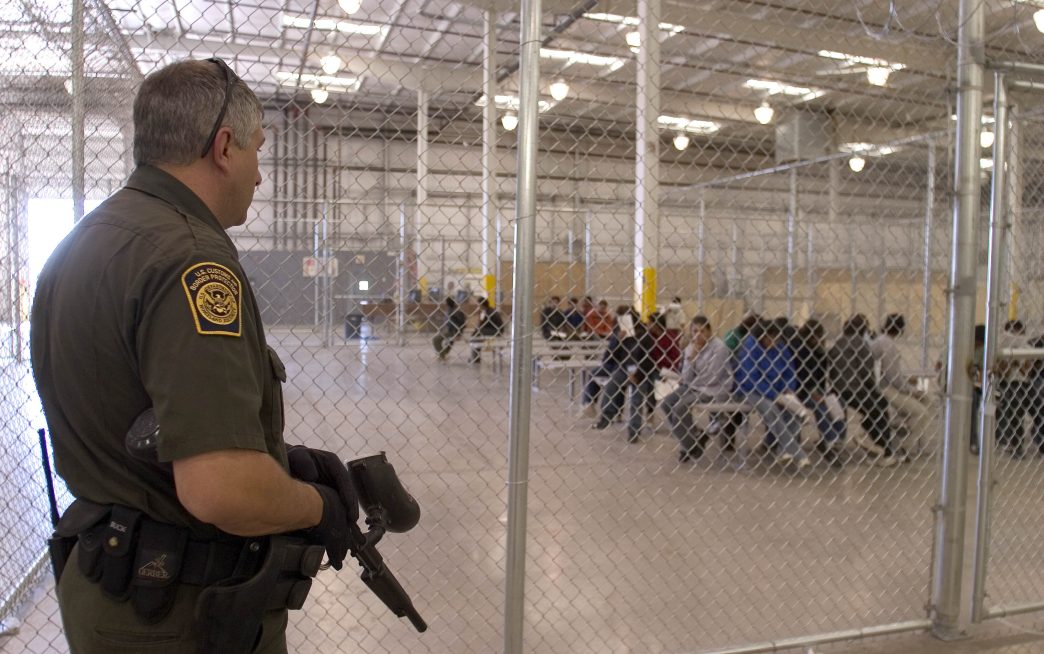
The “Flores agreement” is overseen in the federal court for the Central District of California and is one of the only legal tools to prevent the prolonged incarceration of immigrant children at U.S. border crossings.
The 1997 settlement is named for lead plaintiff Jenny Lisette Flores, a 15-year-old detained when the class-action complaint was filed in 1985. The Flores agreement requires that children be held in licensed facilities and released to family members or guardians as quickly as possible. The settlement also requires attorneys to have access to detention facilities where children are being held and hear directly from them about their treatment and their length of time in custody.
U.S. District Judge Dolly Gee, who oversees the Flores agreement, found Friday that “defendants fail to identify any new facts or law that warrant the termination of the Flores Settlement Agreement at this time.”
Federal government attorneys in their motion to terminate the agreement claimed it is out of date and should be dissolved because of changes to law, compliance, “facts,” shifts in policies and executive function in the wake of the second Trump administration.
During an Aug. 8 hearing, U.S. Justice Department attorney Tiberius Davis argued that the Flores agreement unusually “dictates the operation of immigration law,” should be under the supervision of the executive branch, not the court.
“It does not dictate the operation of immigration law,” the judge rebutted, adding that the settlement dictates the conditions of specifically children in immigration custody. Gee also noted that the government bound itself to the nearly 30-year-old consent decree.
Immigrant-rights advocates have alleged violations of the settlement’s protections, including the long-term detention of children in punitive conditions.
“I will never forget meeting with a mother and her two young daughters who described being detained in a cell with over 40 people that was littered with trash and an overflowing toilet,” Mishan Wroe, directing attorney at the National Center for Youth Law, said in a statement. “They could not use the bathroom privately, and the girls were struggling to sleep in a crowded cell on the floor with nothing more than a mat and a mylar blanket. These young girls, like all children, deserve safety and dignity. We are pleased the court understands the value of the Settlement in protecting the rights of children and refuses to allow the government to shirk its basic responsibilities.”
Joshua McCroskey, a Justice Department attorney, said at the hearing earlier this month that “there have always been difficult cases where processing takes longer periods of time. … (U.S. Customs and Border Protection) does try to transfer minors out of its custody as quickly as possible.”
The Justice Department declined to comment, but the White House issued a statement to HeySoCal.com following the ruling.
“The lower court’s attempt to maintain a nearly 40-year consent decree micromanaging the Executive Branch’s immigration policies will not be the final word on the matter,” White House Principal Deputy Press Secretary Harrison Fields said. “Over the past four decades, this consent decree has harmed the American national interest and facilitated increased illegal immigration to the detriment of our communities. Continued intervention in the Trump administration’s immigration policies are inappropriate and contrary to law. The Trump administration plans to immediately appeal and looks forward to vindication.”
Friday’s ruling is available on the court’s website.
Updated Aug. 18, 2025, 1:58 p.m.