


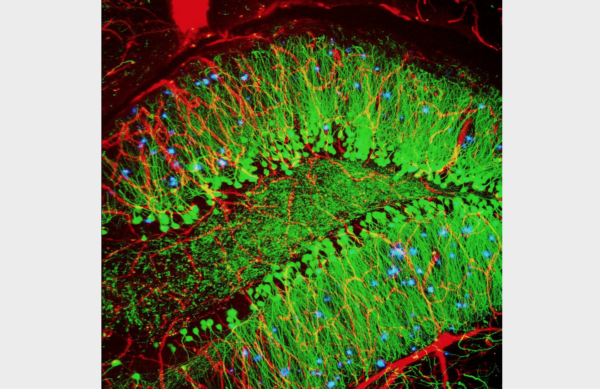
A mutation in a newly discovered small protein is connected to a significant increase in the risk for Alzheimer’s disease, expanding the known gene targets for the disease and presenting a new potential avenue for treatment, according to a USC study published Wednesday.
The protein, called SHMOOSE, is a “microprotein” encoded by a newly discovered gene within the cell’s energy-producing mitochondria, researchers said. A mutation within the gene partially inactivates the SHMOOSE microprotein and is associated with a 30% higher risk for Alzheimer’s disease across four different cohorts.
Nearly a quarter of people of European ancestry have the mutated version of the protein, according to the researchers.
“This discovery opens exciting new directions for developing precision medicine-based therapies for Alzheimer’s disease, focusing on SHMOOSE as a target area,” said Pinchas Cohen, USC professor of gerontology, medicine and biological sciences and senior author of the study. “Administration of SHMOOSE analogs in individuals who carry the mutation and produce the mutant protein may prove to have benefit in neurodegenerative and other diseases of aging.”
The researchers said both the substantial risk and high prevalence of the previously unidentified mutation distinguish it from other proteins involved in Alzheimer’s disease. Apart from APOE4 — the most potent known genetic risk factor for the disease — only a limited number of other gene mutations have been identified and those only mildly increased risk by less than 10%.
Also, because the microprotein is approximately the size of the insulin peptide, it can be easily administered, which increases its therapeutic potential.
The research appears in the journal Molecular Psychiatry, and can be found at www.nature.com/articles/s41380-022-01769-3.