

Feb. 15 – March 25
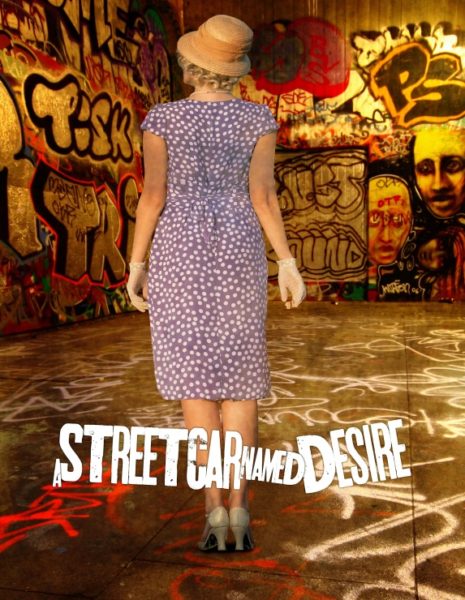
Boston Court Performing Arts Center presents a reimagined modern take of Tennessee Williams’ A Streetcar Named Desire (February 15 – March 25, 2018; press opening, February 24). This radical re-envisioning of Streetcar will feature a multicultural cast and modern setting, pushing on the play’s present-day relevance.
Director Michael Michetti plans to strip away decades of “Southern gothic gauze” to reveal striking themes of class, race, and gender—reinvigorating the classic which shocked audiences in its debut 70 years ago. By placing a traditional, 1940s era Blanche within a contemporary, multicultural and urban environment familiar to modern audiences but foreign to her, this new production highlights the pertinence of this play for our divided America.
Tickets, priced from $20 – $39, are available at BostonCourt.com or by calling 626.683.6801.
A Streetcar Named Desire originally opened on Broadway in 1947. Directed by Elia Kazaan, the show starred Jessica Tandy, Marlon Brando, Kim Hunter and Karl Malden. The play would go on to win the Pulitzer Prize for Drama and Tandy would win the Tony Award for best actress in a play. In 1951, the play became a film. Kazan again directed and Brando, Hunter and Malden reprised their roles. Vivien Leigh played Blanche in the film and won an Oscar for lead actress, along with Malden for supporting actor and Hunter for supporting actress. The property has also been adapted as an opera, ballet, and numerous times for television.
The original New York Times review by Brooks Atkinson explains Blanche as, “a gently reared Mississippi young woman who invents an artificial world to mask the hideousness of the world she has to inhabit.” In previous productions, Blanche is often portrayed as a woman whose luck has led her to live in a small, squalid apartment with nothing left but costume jewelry and delusions of grandeur.
However, Michetti sees her somewhat differently. Michetti says, “To me, Blanche represents the last desperate cries of privilege. The drama arises as she tries to cling onto a world that no longer exists and refuses to embrace the actual world that she inhabits. In this production, Blanche is an interloper, surrounded by people of different classes and races who speak truthfully and often bluntly about the world in ways that discomfort Blanche. And in the end, her inability to adapt sends her into a downward spiral. I think this production also speaks to current discussions of nationalism.” A Streetcar Named Desire is made possible through the generous support of The David Lee Foundation.